In Russia, a parallel combine driving system based on machine vision and artificial intelligence is being tested for the first time. This technology allows harvesting even in the absence of communication and navigation data. This was reported by the press service of the company "Progress Agro."
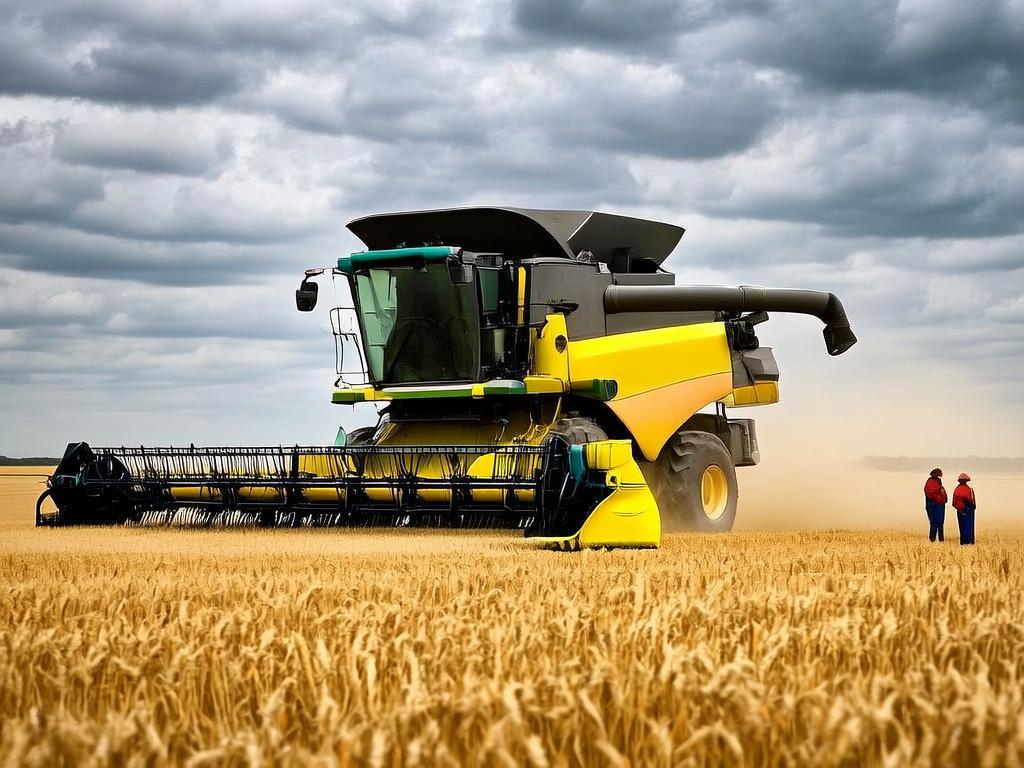
When there are problems with the quality of the GPS signal and the existing equipment starts to work with errors, AI and video cameras come to the rescue. Video stream processing is performed online, a straight line is built along which the equipment needs to move, and the parallel driving system corrects the position of the equipment in the field. Thanks to this technology, we do not lose in equipment performance, and the quality of the operation does not deteriorate.
After checking the equipment on combines, specialists are going to test it on tractors during pre-sowing preparation and sowing.
Parallel driving systems are actively used in agriculture. They operate on the basis of GPS and GLONASS, providing high accuracy of equipment control. Stations installed in the fields provide centimeter-level accuracy. This improves sowing, inter-row cultivation, harvesting and other agricultural operations. Such systems facilitate the work of machine operators, increase the accuracy of harvesting, save time and reduce fuel costs. They also reduce the load on equipment.
When working with navigation systems, the company's specialists encountered problems due to interference in GPS and GLONASS. In response, they began testing a new technology. It uses video from cameras on the combine. The cameras allow the machine to "see" the edge of the field and adjust movement. This reduces the need for operator intervention and increases the accuracy of the equipment. This Russian development is currently experimental. But the first results show that it can significantly improve the efficiency of agricultural machinery, providing higher accuracy.
Testing is carried out with the participation of the Kuban State Agrarian University (KubGAU). Now, during the harvesting of rapeseed and wheat, the company and the university will have to evaluate the results of the experiment and compare them with the indicators of the control fields. This will help to understand how effective and profitable the new model is.
The key point here is the practical approach: how new technologies work in the field, how they behave in our weather conditions and on different crops. It is also important to consider how the system functions in conditions of poor visibility, insufficient lighting or dustiness.
Earlier, Rostselmash released a new forage harvester F 2750. It became the most powerful in the country and continues the F 2000 series. Previously, foreign manufacturers were the leaders in this segment.
Read materials on the topic:
Corn harvesting speed increased 3 times: the advantages of the F 2650 combine from Rostselmash are named
510 hp engine: the advantages of the F 1500 combine from Rostselmash are named
Combine operators in Russia began to be trained using 3D simulators
Never miss our newsAdd this site to your preferred sources to see us more oftenAdd on Google

















