Aspire Space, founded by Russian engineers, has announced the relocation of its operations to Dubai (UAE) to develop a reusable rocket capable of competing with SpaceX Falcon 9. The project combines the experience of veterans of the Soviet space program and advanced artificial intelligence technologies.
Sergey Sopov, former head of the Sea Launch cosmodrome and participant in the Buran and Energia programs, has become the technical director of Aspire Space. Together with a team of engineers from post-Soviet countries and the Noyron neural network (developed by the startup LEAP 71), the company plans to create a rocket with a payload capacity of up to 15 tons.
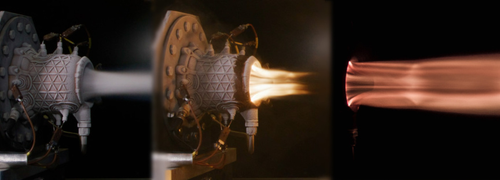
LEAP 71, based in the UAE, uses AI to design liquid rocket engines. Last year, the company announced the creation of two types of rocket engines from scratch: liquid and air-breathing. The development took no more than three weeks for each type. Prototyping of the models was carried out by contractors from Germany using 3D printing technology. The tests took place at a test site in the UK.
The first rocket launch is scheduled for 2030, and tests of the second stage engines are scheduled to begin in the third quarter of 2026. The project is funded from the personal funds of the founders of Aspire Space, and its total cost is estimated at $1 billion.
Read more on the topic:
The Soyuz-2.1a launch vehicle successfully put the Progress MS-31 space truck into orbit
New Russian programs for modeling rocket engines are ready to launch
Never miss our newsAdd this site to your preferred sources to see us more oftenAdd on Google

















