Translated with AI from the Russian original.
New anti-drone quick-assembly hangars made of metal chain-link mesh, metal cables, and profiles will be built for military aviation in Russia. The shelter diagram was published by a retired military pilot, blogger Fighterbomber.
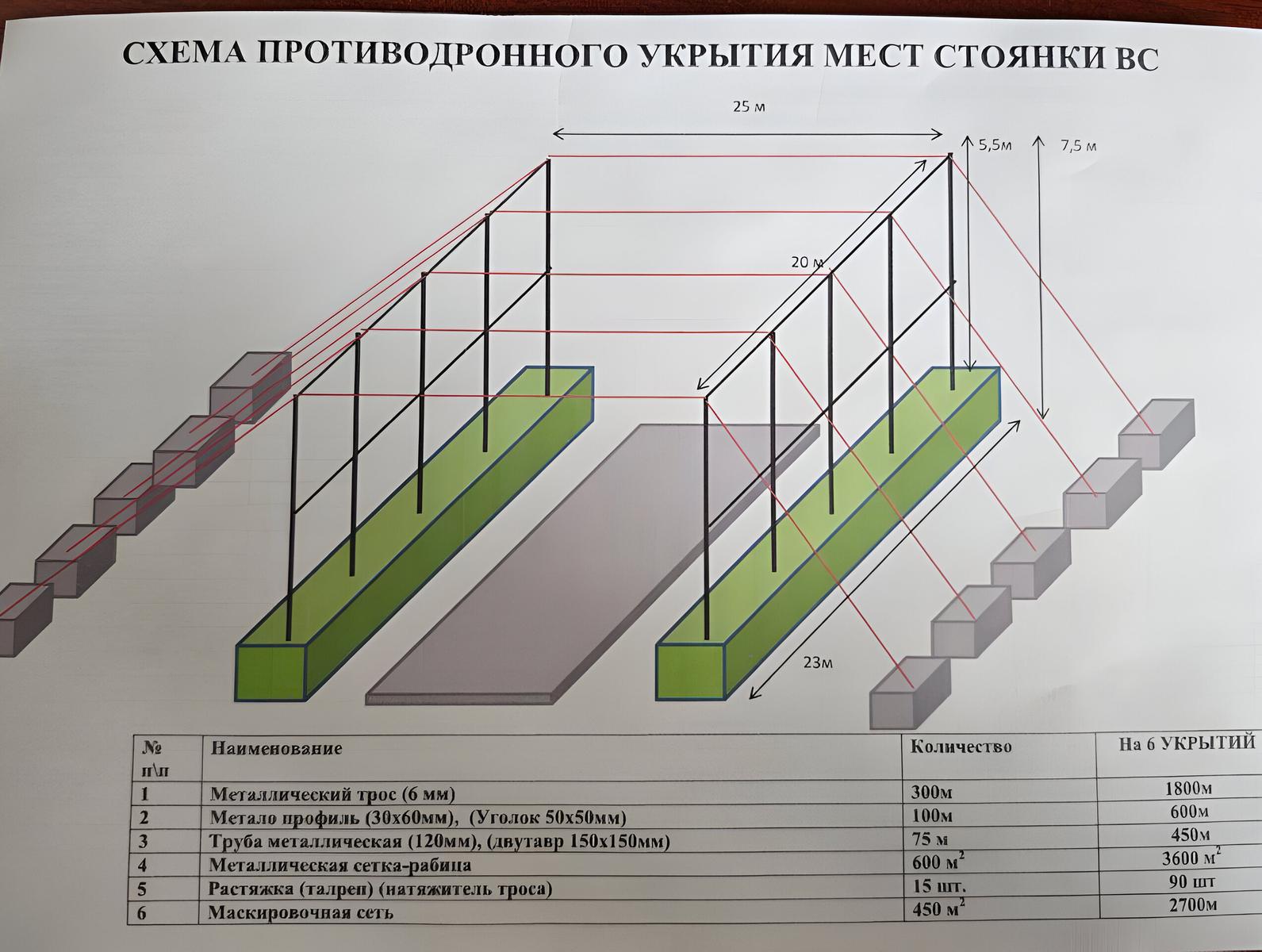
Judging by the presented diagram, the hangar is 25 m high, 7.5 m wide, and 23 m long.
Six such shelters will require 1800 m of 6 mm wide metal cable, 600 m of 30x60 mm diameter metal profile, 450 m of 120 mm thick metal pipe, 3600 sq. m of metal chain-link mesh, 90 cable tensioners, and 2700 m of camouflage netting.
As you can see, there is no mention of reinforced concrete shelters in this case. Fighterbomber expressed skepticism about the success of the standard shelter project for equipment.
So, in essence, nothing has changed. If this shelter falls on a helicopter from a breeze and breaks something off, the money will be collected from the person who built it. Because the aircraft mechanics and drivers who will build these shelters are not very certified builders. Not at all. Therefore, everyone will pay for the shelter, and the appointed unfortunate will pay for the broken helicopter.
Earlier, www1.ru reported that the manufacturer of advanced missiles for Su-57 fighters will expand production.
Read more materials:
India will equip MiG-29 and Su-30MKI with Russian new-generation R-77 missiles
Russian tanks equipped with steel needles: an unusual idea of the military has been implemented
Never miss our newsAdd this site to your preferred sources to see us more oftenAdd on Google

















