Translated with AI from the Russian original.
Scientists from Novosibirsk State University (NSU) have presented a new approach to developing materials for organic light-emitting diodes (OLEDs) using artificial intelligence. The method is based on graph neural networks that predict the properties of molecules with thermally activated delayed fluorescence (TADF), which accelerates the creation of more efficient emitters for next-generation displays.
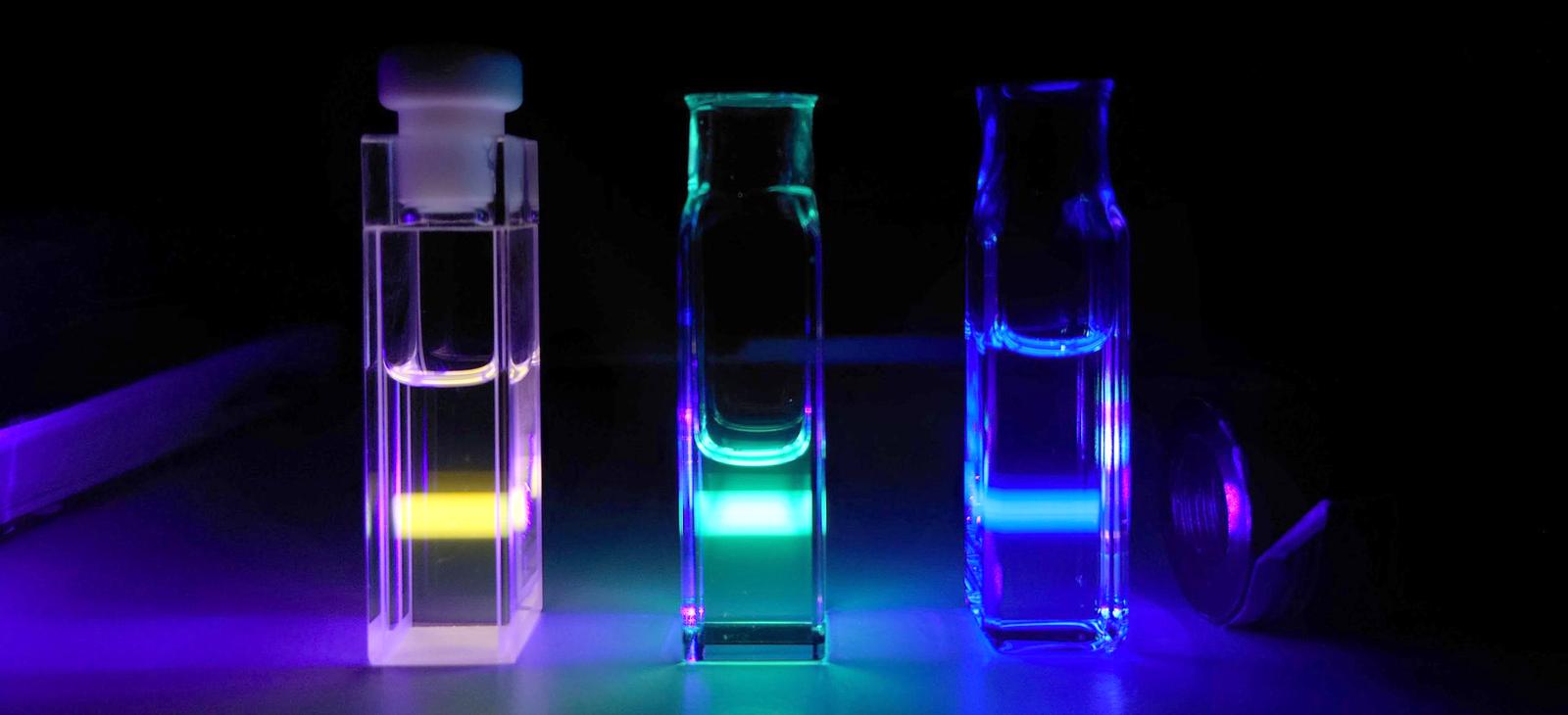
TADF is a special type of molecular luminescence that allows for the creation of more efficient and brighter OLED displays. It works as follows:
- Ordinary fluorescence - a molecule receives energy (e.g., from electricity) and immediately emits light.
- Problem with classic OLEDs - some energy is lost in the form of "dark" states (triplets) that do not emit light.
- TADF solves this problem - thanks to the special structure of the molecule, the energy of triplets is converted back into light using the thermal motion of atoms.
OLED technology is widely used in smartphones, televisions, and wearable devices due to its high contrast and energy efficiency. However, the development of new materials requires complex calculations and experiments. Novosibirsk researchers have proposed a solution: instead of traditional quantum-chemical modeling, they used graph neural networks that analyze the structure of molecules and predict their optical properties.
Due to their organic nature, such materials allow for very light, bright, high-contrast, and energy-efficient displays for smartphone screens, laptops, smartwatches, and many other devices. The world is actively searching for such new efficient materials that can be used in OLED technology. Computer modeling allows predicting many properties with fairly good accuracy and studying the properties of molecules in silico before they are synthesized in a flask. Such studies are also conducted in our laboratory.
Special attention is paid to multi-resonant TADF emitters, which have a narrow emission band, which is critical for accurate color reproduction. Unlike traditional OLED materials, where donor and acceptor groups are connected by flexible bonds, the new approach uses rigid structures based on boron and nitrogen atoms. This reduces energy loss and improves color purity.
Modern OLED emitters are a pair of electron-donating and electron-accepting groups connected through a bridge. This union of donor and acceptor ensures a minimal difference in energy between the two excited states of such a molecule - singlet and triplet - and allows converting all "dark" (non-emitting) triplet states into singlet states capable of emitting light through TADF. However, this design has a significant drawback, as the parts of the donor and acceptor are not rigidly connected, and the geometries of the excited and non-excited states differ greatly, which consumes a lot of energy, leading to a broadening of the molecule's emission spectrum. The width of the spectrum directly affects the color perception of the pixel, for example, it becomes not blue, but blue-green.
The first molecule with a narrow emission band (25 nm) has already been synthesized, demonstrating bright green fluorescence. The next goals are blue and red emitters, necessary for full-color displays.
The work was carried out as part of a project supported by the Ministry of Science and Higher Education of Russia.
Read more related materials:
New method for measuring the temperature of microscopic objects created by Kazan scientists
Lightning under a microscope: what the modeling of a high-voltage discharge showed
A unique laboratory for growing cells for disease research has opened in Tomsk
Never miss our newsAdd this site to your preferred sources to see us more oftenAdd on Google

















