The low-observable kamikaze drone "Geran-3" has achieved operational readiness in the troops and significantly differs from its predecessor "Geran-2" with improved characteristics. Military expert Evgeny Damantsev named all the pros and cons of the munition.
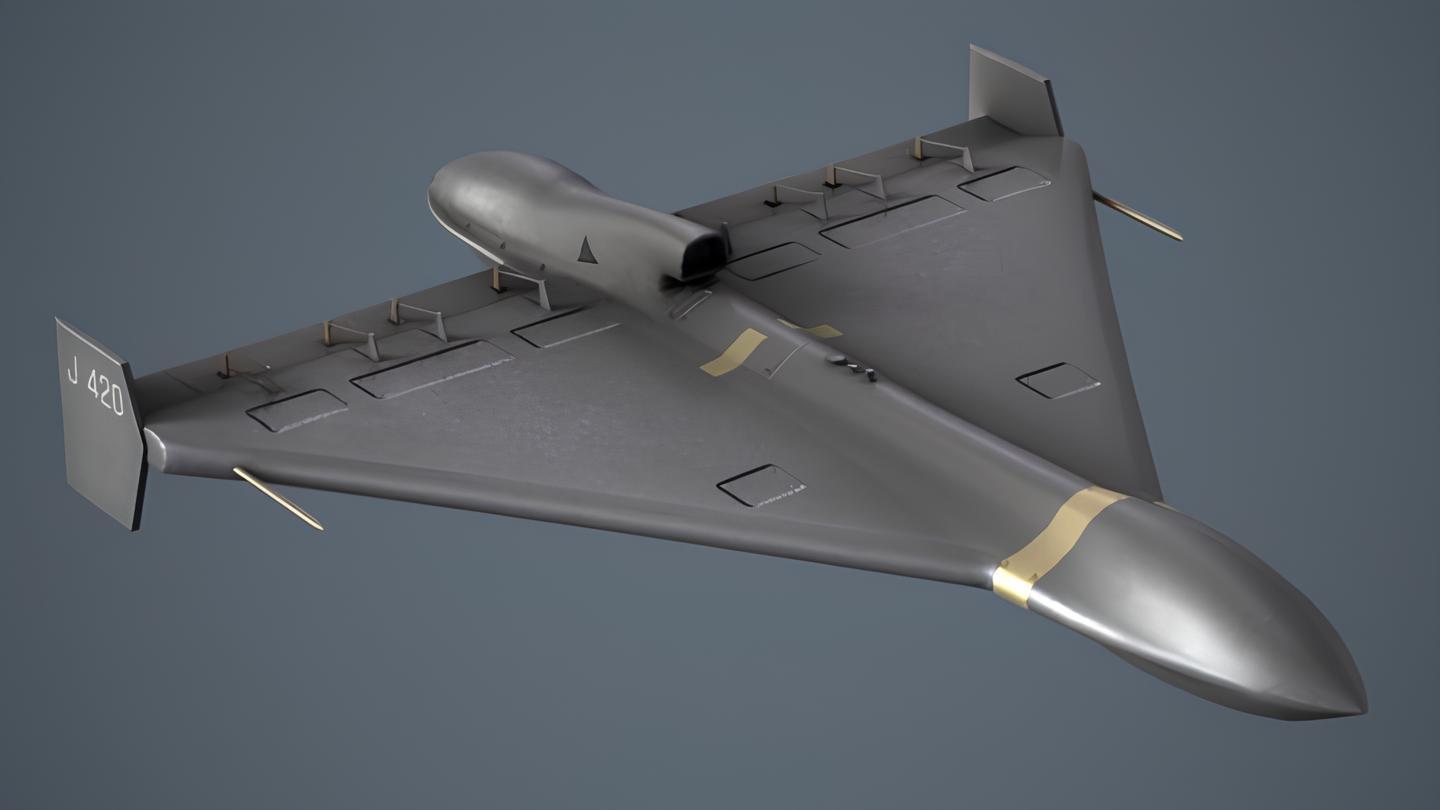
According to him, "Geran-3" accelerates to 600 km/h, making it more difficult to shoot down with conventional machine guns or artillery. The drone is also capable of accelerating to 700 km/h in dive mode.
Modern guidance systems with infrared sensors or passive radar guidance make intercepting the drone even more difficult. The length of the drone is 3.5 m, the wingspan is 3 m. "Geran-3" can ascend to a height of up to 9.1 km and stay in the air for up to 2 hours.
However, it also has disadvantages, for example, a higher cost than the "Geran-2", and the jet engine makes the drone more expensive and difficult to manufacture.
A significantly larger infrared signature - the hot exhaust of the jet engine makes the drone vulnerable to anti-aircraft missiles. Limited use: due to the higher cost, it may not be launched in such large quantities as the "Geran-2".
Main differences between "Geran-3" and the previous version:
- "Geran-3" is equipped with a compact turbojet engine with a thrust of 250-300 kg, while "Geran-2" has a piston engine developing 200 km/h. This makes the new drone faster;
- Modernized flying wing design;
- Combat mass of 300 kg, which is 6 times more compared to the "two", whose combat mass did not exceed 50 kg;
- The mass of "Geran-3" has increased to 380 kg against 250 for "Geran-2".
Earlierwww1.ru reported thatthe characteristics of the ZA-SpN "Titan" armored vehicle shown at the parade in Moscow have become known.
Read more materials on the topic:
The full configuration of the armament and protection of the T-90M "Proryv" tank has been revealed
The newest submarine "Krasnoyarsk" returned to base after successful launches of "Caliber"
Never miss our newsAdd this site to your preferred sources to see us more oftenAdd on Google

















