Translated with AI from the Russian original.
KAMAZ has introduced a new painting technology for the "Compass" series truck cabs. The painting process has been moved from the press-frame plant to the cab frame plant, where the "wet-on-wet" method is used - one of the most advanced technologies in the global automotive industry.
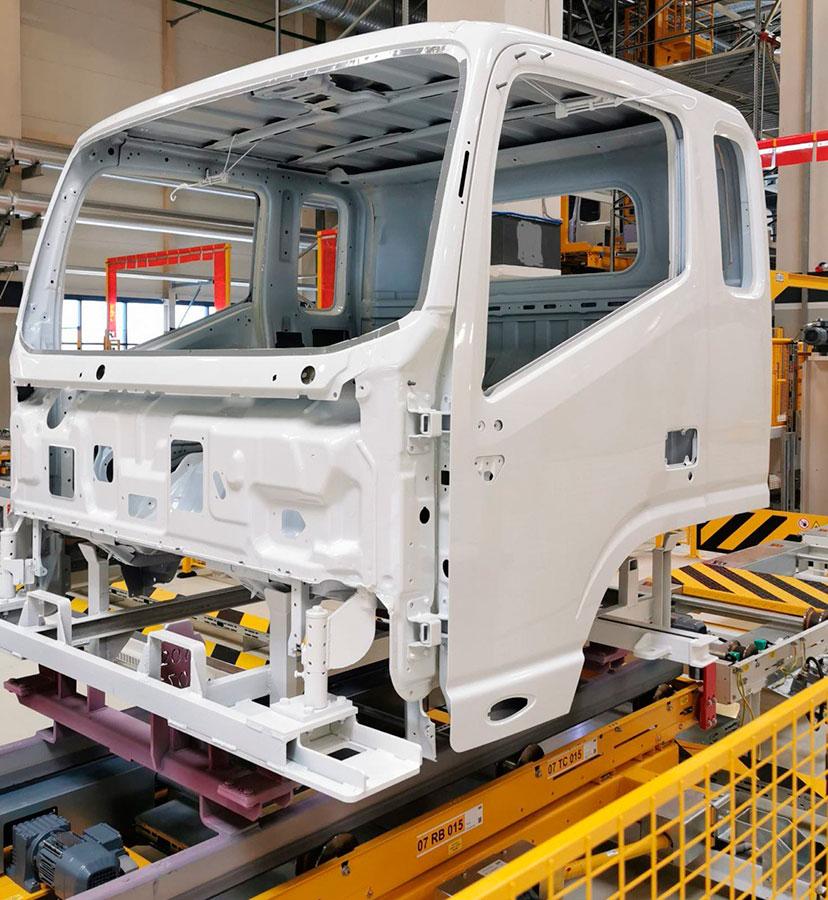
Currently, two models of the family are undergoing serial painting: "Compass 9" with and without a sleeping compartment, as well as "Compass 12" with a sleeping compartment. The "Compass 5" model is planned to be mastered in the second quarter of 2025.
The full painting cycle at the cab plant includes many stages. The process begins with automated surface preparation and cataphoretic priming followed by drying. The frames pass through 12 baths.
In the first eight stages, preliminary processing and cleaning of the cab frame take place. An automatic chemical dosing system is used here. A rotary conveyor is used to achieve the best coating.
Next is the stage of applying an electrolytic coating by immersion. A rotary conveyor is used to improve quality. This technology ensures uniform coating of the entire surface of the product with an epoxy layer, creating a strong chemical bond.
The electrolytic coating process, known as "cataphoresis", occurs using an electric field acting on a bath containing a special water-based primer. These products settle on the entire surface of the product, including hard-to-reach areas, providing high resistance even with a small coating thickness.
Next, the phase of applying sealant to the welded seams of the cab manually begins, followed by curing in the oven, quality inspection of the cataphoretic coating and PVC mastic, and then preparation of the cab frames for painting by manual wiping.
The process of applying paints and varnishes is carried out automatically using "wet-on-wet" technology. The secondary primer and enamel are applied in one chamber without intermediate drying in the oven. This allows efficient use of space and reduces drying time. Curing occurs at a low temperature of 80 °C for 30 minutes.
Painting is carried out using four seven-axis robots. Two robots are installed in each painting chamber to open the doors. After applying wax to the hidden cavities of the cab, the cab is sent to the warehouse and then shipped to the supplier.
Due to the fact that the cabs undergo a full technological cycle of painting using the most modern methods and tools, the quality of the products becomes significantly better, which guarantees the durability and resistance of the coating to external influences.
At the Cab Frame Plant of PJSC KAMAZ, only cabs of the new generation K5 trucks were painted before.
Earlier,www1.rureported that the technical readiness factor of fifth-generation KamAZ vehicles has increased to 95%. This was achieved through a comprehensive improvement in service, expansion of the dealer network and improved product quality.
Read more on the topic:
KAMAZ Plans to Bring Modern K5 Trucks to the Vietnamese Market
KAMAZ and Remdiesel are Preparing a New Brutal SUV: First Details
KAMAZ-54901 Truck Tractor Tested in Kazan
KAMAZ's K-6345 Wheeled All-Terrain Vehicle Successfully Completes Extreme Arctic Run
Never miss our newsAdd this site to your preferred sources to see us more oftenAdd on Google