On Wednesday, April 9, the cosmonauts on the International Space Station began the process of unloading the manned spacecraft "Soyuz MS-27". This was reported by Roscosmos.
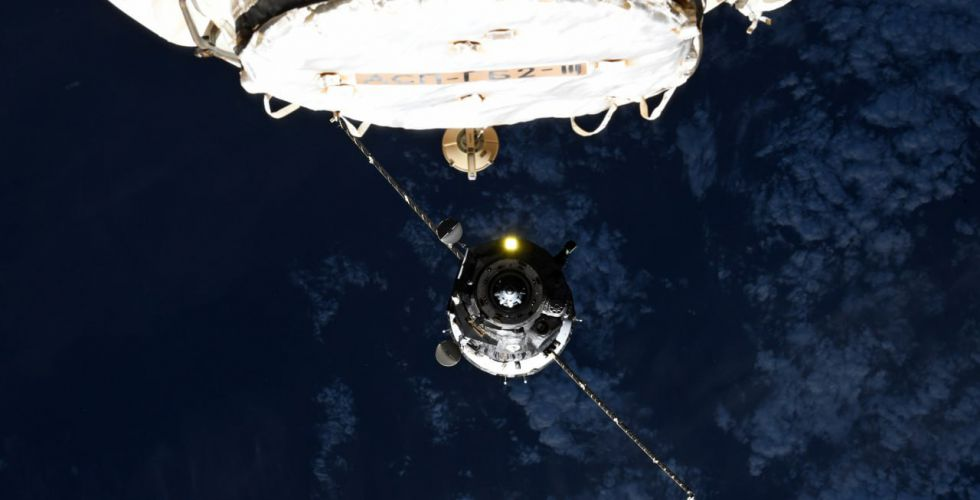
On April 9, according to the flight program of the Russian segment of the station, the transfer of cargo from the "Soyuz MS-27" spacecraft was completed.
The73rd long-term expedition arrived at the International Space Station on April 8, including Sergei Ryzhikov and Alexei Zubritsky. It is worth mentioning that this is Alexei Zubritsky's first spaceflight, while Sergei Ryzhikov already has experience.
Ryzhikov's first flight was from October 19, 2016, to April 10, 2017, where he became the commander of the "Soyuz MS-02" spacecraft and a flight engineer on the ISS-49/50. His second flight was on October 14, 2020, on the "Soyuz MS-17" spacecraft. In April 2025, Ryzhikov flew into space again and became the commander again.
Currently, there are a total of 5 Roscosmos cosmonauts on the ISS. In addition to unloading the manned spacecraft "Soyuz MS-27", they conducted the "Lazma", "Fagen", "Cascade", "Pegas-SP", "Quartz-M", "Ekon-M" experiments, aimed at studying life in space:
- "Lazma" experiment - study of blood microcirculation (blood movement at the micro level) and fluorescence of biological tissues (luminescence of living tissues) under microgravity conditions (absence of gravity);
- "Fagen" experiment - the effect of combined solar and galactic radiation on the genetic apparatus of bacteriophages (viruses that infect bacteria) under space flight conditions;
- "Cascade" experiment - study of the processes of cultivation (growing) of cells of various species under microgravity conditions;
- "Pegas-SP" experiment - systematic observation of the upper atmosphere;
- "Quartz-M" experiment - identifying the causes and locations of corrosion on the ISS to protect against its harmful effects;
- "Ekon-M" experiment - photographing the Earth to analyze the environmental situation.
The crew members also conducted training for emergency situations and completed physical exercises in full.
Read materials on the topic:
Rocket "Soyuz-2.1a" Launched the Spacecraft "Soyuz MS-27" into Orbit
Docking of the Manned Spacecraft "Soyuz MS-27" with the ISS was Successful
Space Embraces: Hatches Between the Spacecraft "Soyuz MS-27" and the ISS Opened
Never miss our newsAdd this site to your preferred sources to see us more oftenAdd on Google