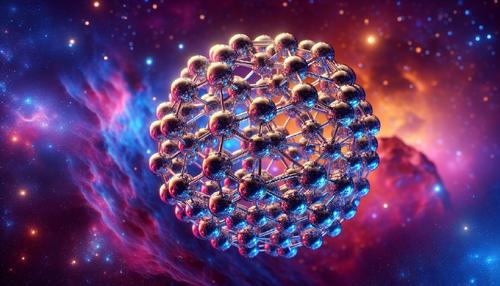
At the Siberian Federal University (SFU), as part of an international scientific team, a discovery was made in the field of protecting living organisms from low doses of radiation. Studies have shown that the introduction of fullerenols (molecules with a carbon skeleton resembling a soccer ball) reduces the negative effects caused by tritium.
Experts noted that the level of natural radiation varies from five to 20 microroentgens, while the dose during fluorography is 50 microroentgens. These values do not pose a danger to humans and other living organisms. However, even small doses of radiation can affect cells and damage genetic material.
Fullerenols are artificial agents. Like natural humic substances, fullerenols interact with radionuclides and their decay products, practically "taking the hit" themselves.
Fullerenols and their derivatives are water-soluble and retain anti-radical activity. This makes them promising radioprotectors.
We used the fact that the presence of tritium further increases the luminescence of luminescent bacteria. The introduction of fullerenol returns the level of luminescence to control values (without tritium), and the level of total enzymatic activity also changes slightly - therefore, they do not affect the metabolism of our microorganisms.
The introduction of these molecules also reduces the level of reactive oxygen species that contribute to cell damage. Scientists plan to clarify the mechanism of action of fullerenols on organisms.
Earlier www1.ru reported that Rostec presented a radiation-resistant complex for nuclear power plants.
Read materials on the topic:
A robot for remote assessment of radiation levels has been created in Moscow
Never miss our newsAdd this site to your preferred sources to see us more oftenAdd on Google

















