Hutches are protective structures that will ensure the radiation safety of scientists during experiments. In addition, they act as the "skeleton" of the CCP "Skif", to which pipeline networks for water cooling, gas supply, power cable networks, signaling and safety systems, ventilation and air conditioning system ducts, and much other engineering equipment are attached. Therefore, a certain safety margin is built into the hutches to withstand this load.

The size of each hutch varies and can reach up to 18 meters in length, up to 4.5 meters in height, and up to five meters in depth. The weight of one hutch with all attachments averages 40 tons.
The first examples of protective structures have already passed technical acceptance at the branch of the Tomsk Polytechnic University in Yurga, and, as noted, the expert commission highly appreciated the work of the university's engineers. In total, TPU is working on 12 hutches and 6 control cabins. They will be installed at five experimental stations of the first stage of the CCP "Skif".
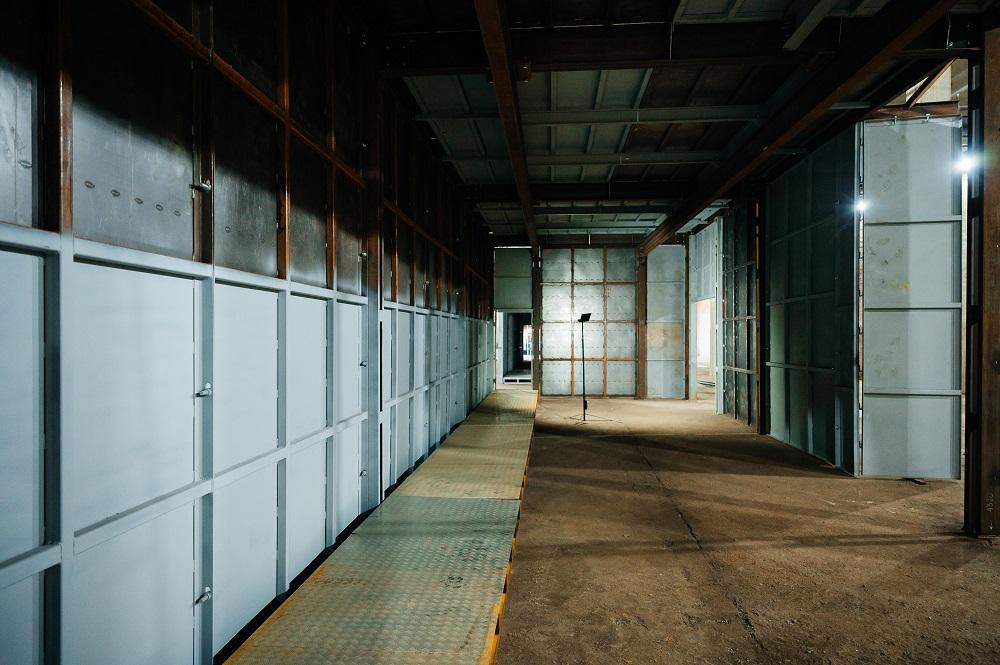
Currently, skeletons, frames, and radiation protection for the "Electronic Structure" and "Structural Diagnostics" stations have been manufactured and are ready for installation; by the end of August, structures for the "Microfocus" and "Fast-Flowing Processes" stations will be ready. The last frames for the "XAFS Spectroscopy and Magnetic Dichroism" station will be ready by the beginning of November. In total, the readiness of various systems manufactured by TPU engineers and scientists ranges from 65 to 100%. According to the plan, we will complete all work in November 2024.

After the technical acceptance procedure, the hutch frame structures will be dismantled, painted, and transferred to the CCP "Skif" site in Novosibirsk. There, the frames will be additionally "sheathed" with lead plates.
According to TPU, the installation of equipment can take up to four months, depending on the complexity of the equipment and the station, and the installation of protective structures and engineering networks-up to two months.
Tomsk Polytechnic, together with partners, is also creating two stations of the ring photon source: "Microfocus" and "Electronic Structure", and protective structures for other "Skif" stations.
SKIF
The "Siberian Ring Photon Source" (CCP "Skif") Center for Collective Use of the Institute of Catalysis of the Siberian Branch of the Russian Academy of Sciences is a megascience class project with a "4+" generation synchrotron. The Siberian Ring Photon Source is being created as part of the national project "Science and Universities" to develop a modern domestic network of new generation synchrotron radiation sources in Russia.
The center is a complex of 34 buildings and structures, engineering and technological equipment, providing the implementation of scientific research on synchrotron radiation beams.
The unique characteristics of the new synchrotron will allow conducting advanced research with bright and intense X-ray beams in many fields-chemistry, physics, materials science, biology, geology, humanities. Also, the CCP "Skif" will help solve urgent problems of innovative and industrial enterprises.
The test bench building (KSI) of the "Siberian Ring Photon Source" ("Skif") received the first girders with booster synchrotron equipment less than a month ago. The assembly of the most modern synchrotron radiation source in the world will begin soon: the engineering building is promised to be completed on July 20, 2024.
Read materials on the topic:
Never miss our newsAdd this site to your preferred sources to see us more oftenAdd on Google