Everything that finds itself at the epicenter of the Russian "Hazel" medium-range ballistic missile strike will turn to dust. This was stated by the President of the Russian Federation Vladimir Putin.
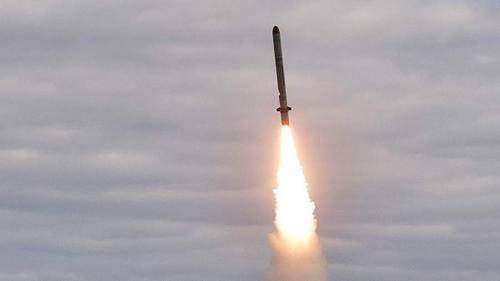
According to technical and military experts, in the event of a massive group use of several "Hazels" in a cluster in one strike, the power of this strike will be comparable to the use of nuclear weapons. Everything that is at the epicenter of the explosion is divided into elementary particles, turns to dust.
The "Hazel" missile cannot be shot down. This is probably only possible at an early stage of the flight, before reaching maximum speed. Therefore, the missile is launched from the depths of the country, from the Kapustin Yar test site. The range of the "Hazel" is 5500 km.
Earlierwww1.ru reported thatthe Russian "Iskander" for the first time destroyed the "Grom" OTRK on the front, footage of a precise hit appeared.
Read materials on the topic:
Nuclear flower: what the modernized 2S4 "Tulip" mortar is capable of for the Russian army
Never miss our newsAdd this site to your preferred sources to see us more oftenAdd on Google

















