Novosibirsk State University has launched the first segment of the computing cluster of the "Lavrentiev" supercomputer center. This part of the SCC "Lavrentiev" has a computing capacity of 360 teraflops (trillions of floating-point operations per second) and surpasses all similar servers beyond the Urals. The segment is designed to work with large language models and generative artificial intelligence.
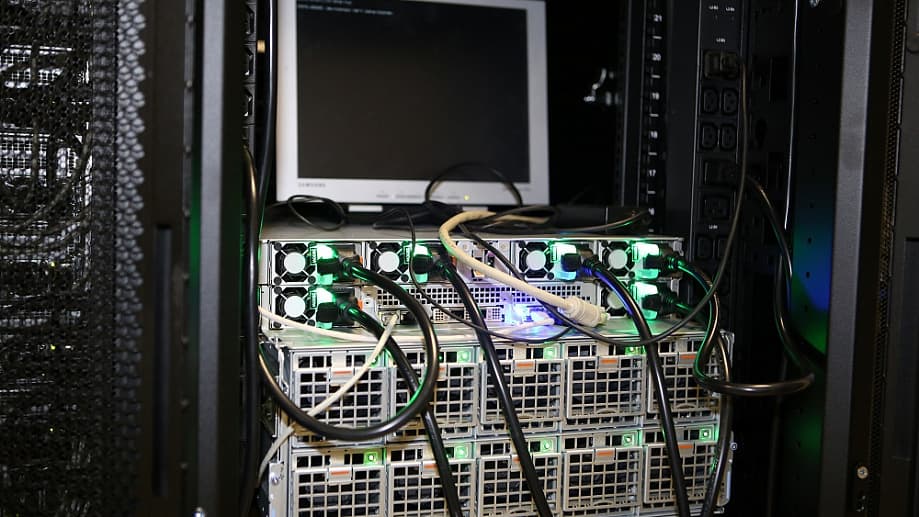
The first stage of the SCC "Lavrentiev" will be useful for testing the application of large language models for real-world devices: industrial artificial intelligence, transport, unmanned aerial systems, and other areas. For example, the computing power of the segment will help develop transport detectors and detectors of non-standard behavior for schools commissioned by Rostelecom as part of a partnership with the Research Center for Artificial Intelligence of NSU.
This server is equipped with graphics accelerators that allow for many parallel calculations, it has the necessary amount of graphic video memory so that we can use modern large language models like ChatGPT and GigaChat, fine-tune and customize them to solve specific tasks. The term "non-standard behavior" is quite difficult to formulate algorithmically. The task of recognizing non-standard types of behavior and their prevention can be solved using advanced artificial intelligence technologies, which large language models can provide us. This should increase the accuracy and robustness (resistance to interference) of our models.
Also, the "Digital Department" of NSU plans to launch the "Machine Learning" program. Students will practice on real projects related to the application of AI in various fields, with the help of the SCC "Lavrentiev".
In 2026, when the SCC "Lavrentiev" is fully operational, its maximum computing power will be 10 petaflops (quadrillions of floating-point operations per second). It will be included in the ranking of world supercomputers.
Read materials on the topic:
Russian company K2Tech launched two lines of supercomputers PAK-HPC and PAK-ML
A photonic supercomputer operating at a frequency of 1 trillion hertz will appear in Russia
Now on home

Start of deliveries scheduled for 2027

Over 51,000 new motorcycles were sold in Russia in 2025

The car will take at least a year to assemble

The application's audience has reached 20 million users

The model will be included in the list of cars for taxis, price - from 2.25 million rubles

All parking lots of the "Administrator of the Moscow Parking Space" are connected to the service

The cars will be supplied to the Moscow Transport Service Directorate

Deliveries to India may begin in 2028

The technology provides automated search for all types of defects in power units

The plane flew 500 km, accelerating to 425 km/h

The plant stated that the information about the termination of purchases for models 6 and 8 is not true

Scientists are using the "Ekran-M" installation