The Zvezda Design Center, in collaboration with the Agency for Technological Development, is developing two domestic controllers. They are needed to control servo motors and synchronous electric motors.

The first controller is intended for use in industrial equipment and light transport (cars, mini-trucks and excavators, ATVs). The second is planned to be used in the automation of production processes (welding, assembly, sorting) and for robots.
The developed inverters will use domestic microcontrollers from JSC "NIIET" and printed circuit boards from LLC "Rezonit". The remaining components are of Chinese production. The software will also be developed by the Zvezda Design Center.
The production of electric motors and robots is scheduled for April 2025. Industrial robots will appear on the market in October 2025.
Earlier, www1.ru reported that Mikron may start production of 65 nm topology microchips.
Read materials on the topic:
One of the world's largest chips for quantum computing tested in Russia
Russian "smart" meters and aviators will receive a stream of domestic microchips
"Bestau" starts production of more than 1 million microchips per year
Now on home
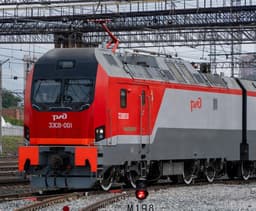
The holding acquired 258 electric locomotives and 141 diesel locomotives

The aircraft with hydraulic cylinders and a rotary wing design will be able to carry up to 40 people

TPU Improves Thermal Conductivity and Mechanical Properties of Metal Matrix Materials

Russia's share in the hydrogen market is planned to increase by 20% by 2030

The devices complement air defense, aviation, and anti-sabotage units

New equipment at Barnaultransmash will improve the quality of crankshafts for units

Models are not available for Moscow, St. Petersburg, and other cities
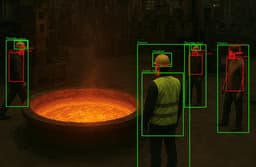
The development allows for comprehensive monitoring of production processes

Carriers are asking to introduce regional quotas for non-localized cars

Designers Share Secrets of the Durability of the Most Stressed Engine Parts

Substances from bracket fungi protect against the side effects of chemotherapy

As early as 2026, the number of unmanned trucks will increase from 90 to 111 units