During an audit of UAC plants producing the SJ-100, MC-21, Il-114, and Tu-214, consultants from Sberbank and Gazprom Neft concluded that there is no"economically justified demand" forthe production of a thousand domestic aircraft by 2030. It is currently unknown whether a new comprehensive aviation industry development program (CAIDP) will appear by 2030 after the audit, or whether the old CAIDP will be adjusted.
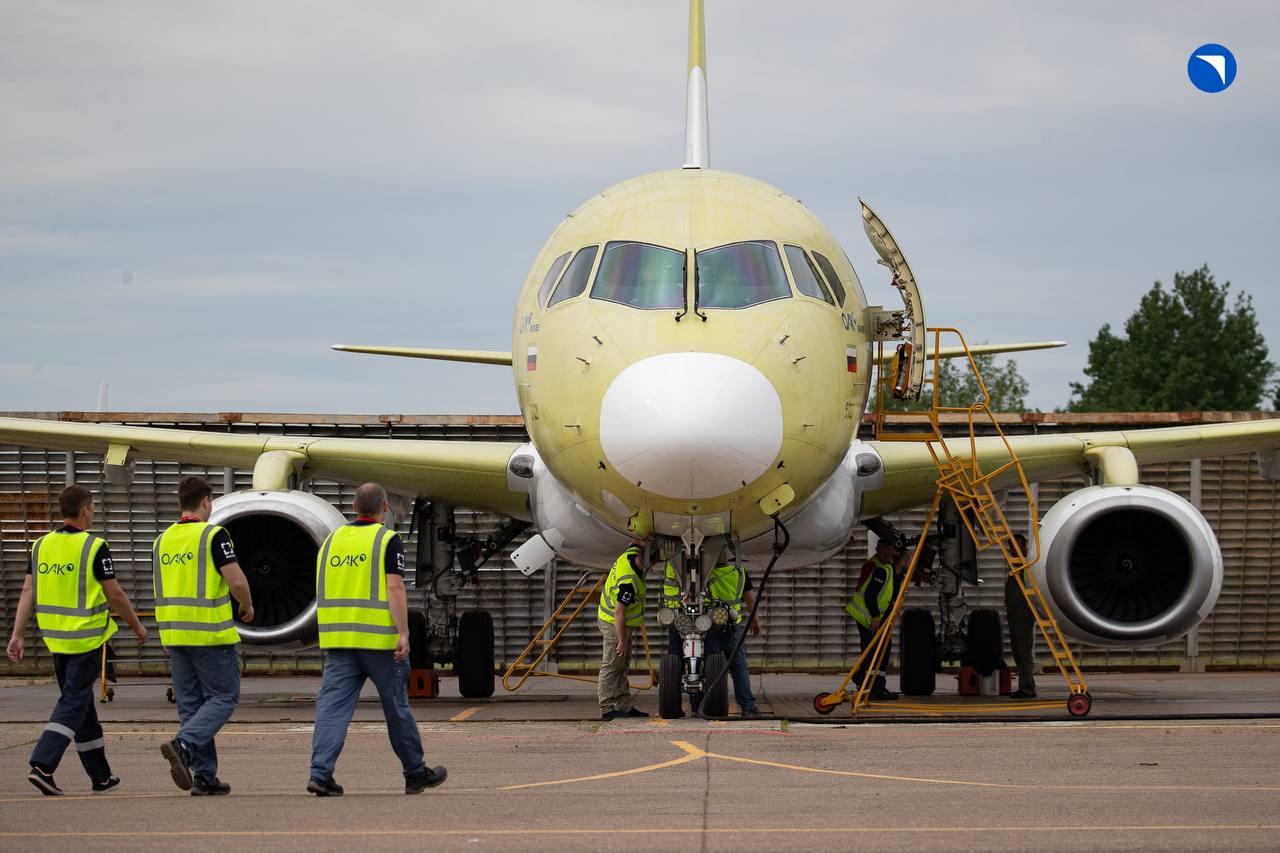
The Kommersant newspaper, citing its sources in the aviation industry and in structures close to the audit, reported on the fact of the audit and the conclusions reached by the auditors.
It turned out that:
- with a planned production of 140 to 270 aircraft per year, the real need for their production is estimated by auditors at 50-60 aircraft;
- the MC-21 has become the most demanded aircraft among interested parties and may even become scarce. At the same time, demand for the Tu-214 will be limited in time, and the SJ-100 turned out to be in surplus after Aeroflot abandoned this aircraft. But it is unlikely that any of the less successful types of aircraft than the MC-21 will be abandoned in mass production;
- due to the extension of flight hours for foreign aircraft, demand for domestic aviation industry models will be lower;
- betting on sales to foreign airlines from friendly countries may be premature. During the audit, consultants estimated export deliveries of the MC-21 at 150-300 aircraft per year to countries in Asia, the CIS, Iran, Turkey, and the UAE, but sources believe that we can only talk about single sales;
- due to the increase in the cost of SJ 100 and MC-21, they cost almost as much as their foreign competitor aircraft, which are now unavailable for Russia to purchase due to sanctions. The supplied components have become more expensive, and labor costs for workers have increased, which could not but affect the final price of the aircraft;
- manufacturers have not yet determined the conditions and approximate cost of maintaining the airworthiness of MC-21 aircraft, and this makes it difficult to calculate compensation for the costs of their operation;
- risk of cash gaps throughout the entire cooperation chain: manufacturers' expenses are not covered by advances and are provided by loans or their own funds. This may interfere with the timely delivery of aircraft and lead to delays in the purchase of components.
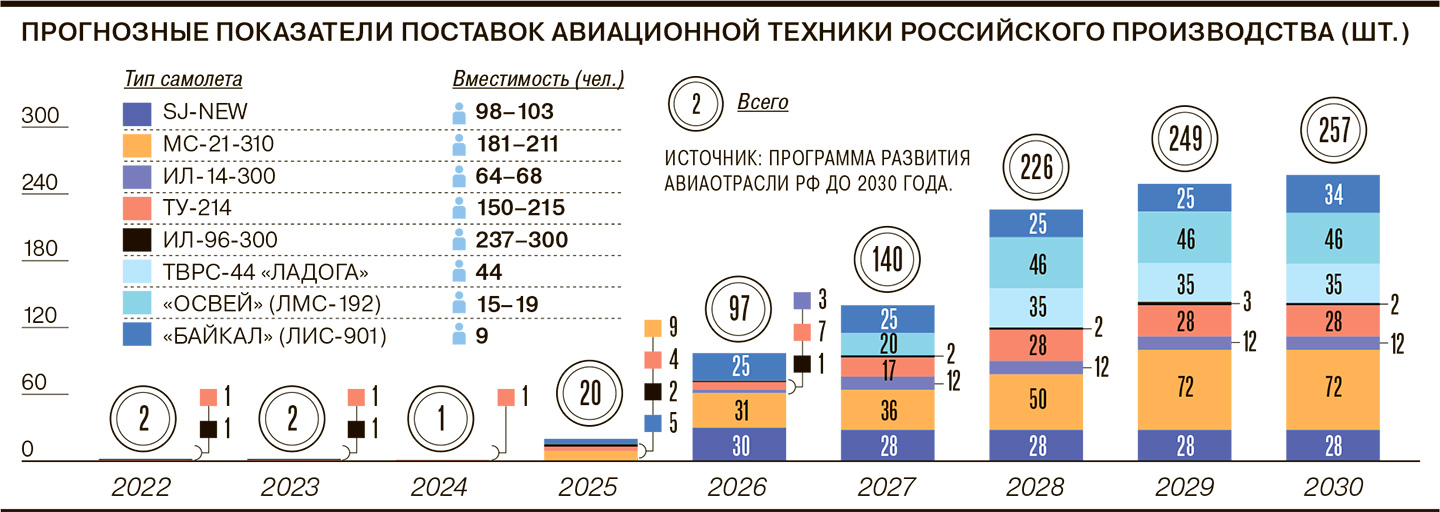
According to Kommersant's sources in the aviation industry, following the audit, the Ministry of Transport, with the participation of UAC and airlines, was proposed to develop a new target transportation model with an optimal route network and types of aircraft. At the same time, it will be necessary to take into account"more realistic indicators for transportation and economically justified orders for Russian aircraft, taking into account the realities that have changed over two years."
The Ministry of Transport, the Ministry of Industry and Trade, Rostec, UAC, and PJSC Yakovlev refrained from commenting to the publication, and Sberbank and Gazprom Neft did not respond to a request for comment. However, no refutation of the data presented by the publication's sources has yet been received.
Read materials on the topic:
Rostec at the Army-2024 forum presented the IM-133 multifunctional indicator for small aviation
Russia is creating a new commercial transport aircraft Il-76TD-90A
The Russian-Belarusian aircraft Osvey will be put to the test as early as 2025
And they "ate" Airbus: Ural Airlines is dismantling Airbus A320 for spare parts
Never miss our newsAdd this site to your preferred sources to see us more oftenAdd on Google

















