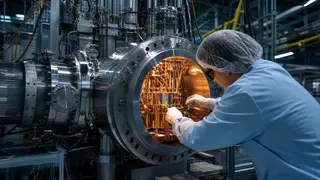
Ultra-thin flexible solar panels have been created at the St. Petersburg National Research Academic University named after J. I. Alferov (Alferov University). This was reported by the press service of the NTI competence center "Photonics".

The thickness of the batteries is several microns. The development reduces the cost of solar cells.
The epitaxial lift-off method is proposed for the production of thin-film solar cells from gallium arsenide. In this method, a thin film is separated from the substrate by selective etching of the protective layer. This allows the film to be transferred to a flexible carrier and the substrate to be reused, which significantly reduces production costs.
The separated layers have high efficiency, flexibility and low weight. This makes it possible to improve the weight and size characteristics of solar cells several times in comparison with similar batteries.
Solar cells can be used with other power sources (electric vehicles, drones, etc.). They will allow recharging batteries during operation.
The development can also be used in remote areas with limited charging capabilities.
Earlier,www1.ru reported that tested Russian solar batteries "Arktika-M".
Read materials on the topic:
Reshetnev employees came up with how to make solar panels for Russian satellites lighter and simpler
Universal solar batteries for the Arctic and space are being created in Russia
Russian military engineers will have power banks on solar batteries [Updated]
Never miss our newsAdd this site to your preferred sources to see us more oftenAdd on Google