According to the head of the state corporation "Rosatom," Alexey Likhachev, Turkey has made a "political decision" to transfer the site for the construction of a second nuclear power plant to the company. The first plant, "Akkuyu," is already under construction.
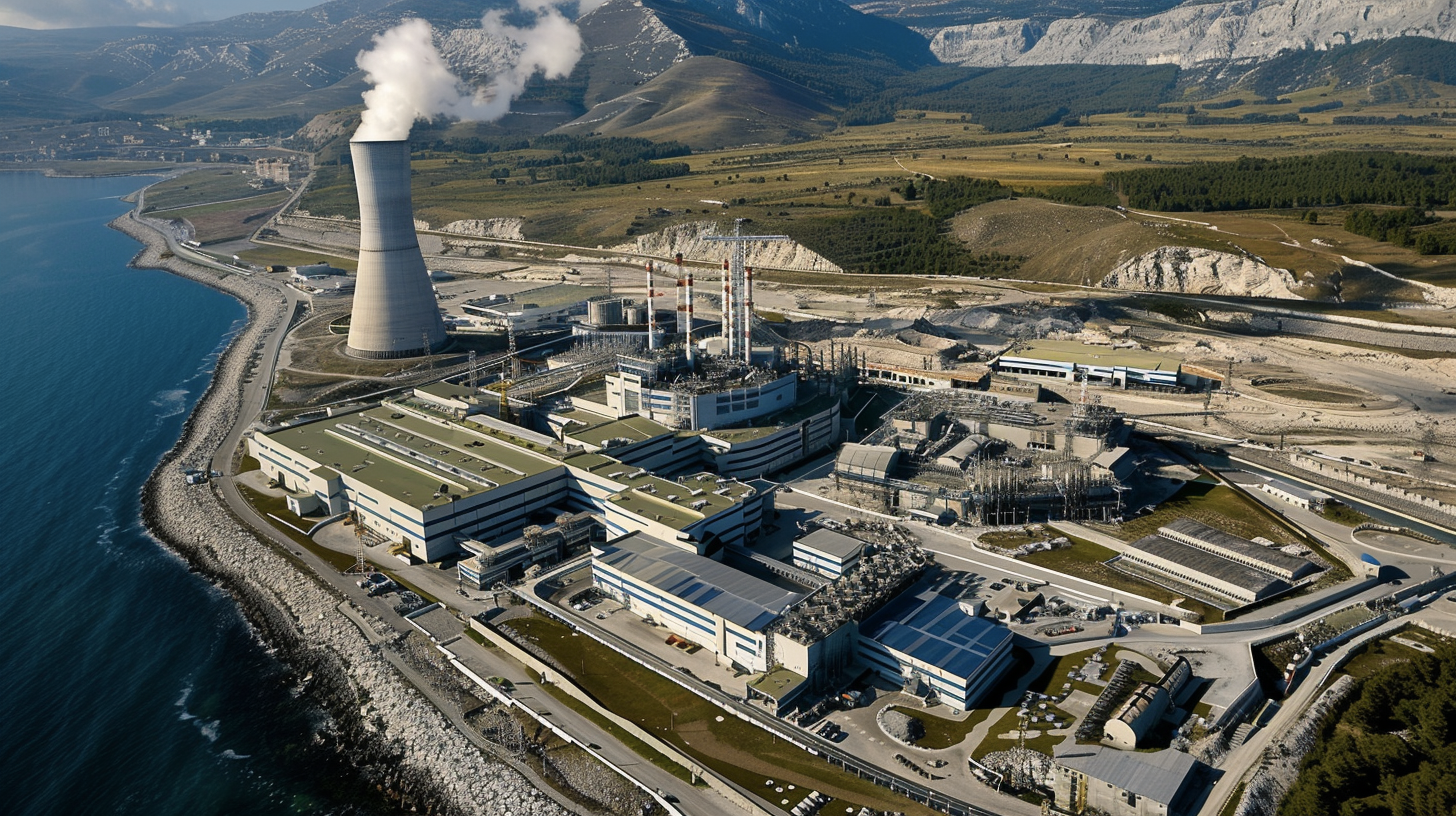
According to Likhachev, the decision to allocate the site to Rosatom was made personally by Turkish President Erdogan. During his visit to Sochi in the fall of 2023, the President of the Turkish Republic himself unequivocally hinted that it was time to expand towards a second nuclear power plant.
The development of the "Akkuyu" NPP is going well, in full swing. The steps taken regarding the first unit are also very good. I think we will also take a step towards the construction of the Sinop NPP
Mr. Likhachev notes that the details of this decision are currently being studied, but it is likely that the new site will indeed be located near the city of Sinop on the Black Sea.
At the same time, a TASS source from the Turkish Ministry of Energy says that negotiations with Russia on this issue have not yet been completed.
This is a long process, and it has been going on for a long time. There is no information about any final decisions yet.
Where Did the Nuclear Power Plant in Sinop Come From?
In order to understand this issue, we need to go back 11 years, when Turkey, dependent on energy resource supplies, suddenly announced a very ambitious plan. From an importing country that buys 72% of all consumed energy, the Turkish Republic plans to re-qualify and become an exporting country. To do this, it is only necessary to build three nuclear power plants: one in Mersin on the Mediterranean coast, one in Sinop on the Black Sea coast, and one in Igneada, 10 km from the border with Bulgaria. And if everything is more or less clear with the nuclear power plant in Mersin - its construction according to the build-own-operate scheme is being carried out by "Rosatom" [the construction of the first "Akkuyu" nuclear power plant started in 2018, and the agreement itself was signed between Russia and Turkey in 2010 - ed. note], then with the other two projects, nothing has been decided for sure in 11 years.
In May 2013, the then Prime Minister of the Turkish Republic, Recep Tayyip Erdoğan, shook hands with his Japanese counterpart, Shinzo Abe. The handshake sealed an agreement on the construction of a second nuclear power plant with a declared cost of 22 billion dollars. For the Japanese, this project became the first after the Fukushima accident in 2011, so it was especially emphasized that safety would be the main priority in the construction of the plant. As part of the agreement, in addition to the Japanese Mitsubishi Heavy Industries, the French Areva and the Turkish EÜAŞ were also to be involved in the construction. They were to receive 30%, 21% and 49% control, respectively. It was expected that about 30% of the project cost would be covered by the consortium, and the rest would be covered by loans from the Japan Bank for International Cooperation and other creditors. It was planned that the first unit of the Sinop NPP would be commissioned by 2023, and the fourth power unit would be commissioned by 2028. In April 2018, the estimated cost of the project doubled and exceeded 46 billion dollars.
The reason for this was the tightening of safety requirements by the Japanese MHI and the collapsed Turkish lira. Turkey stated that the feasibility study prepared by the Japanese side did not correspond to the original agreement in terms of both cost and timing, and announced that it had decided not to continue cooperation with the Japanese side on this issue.
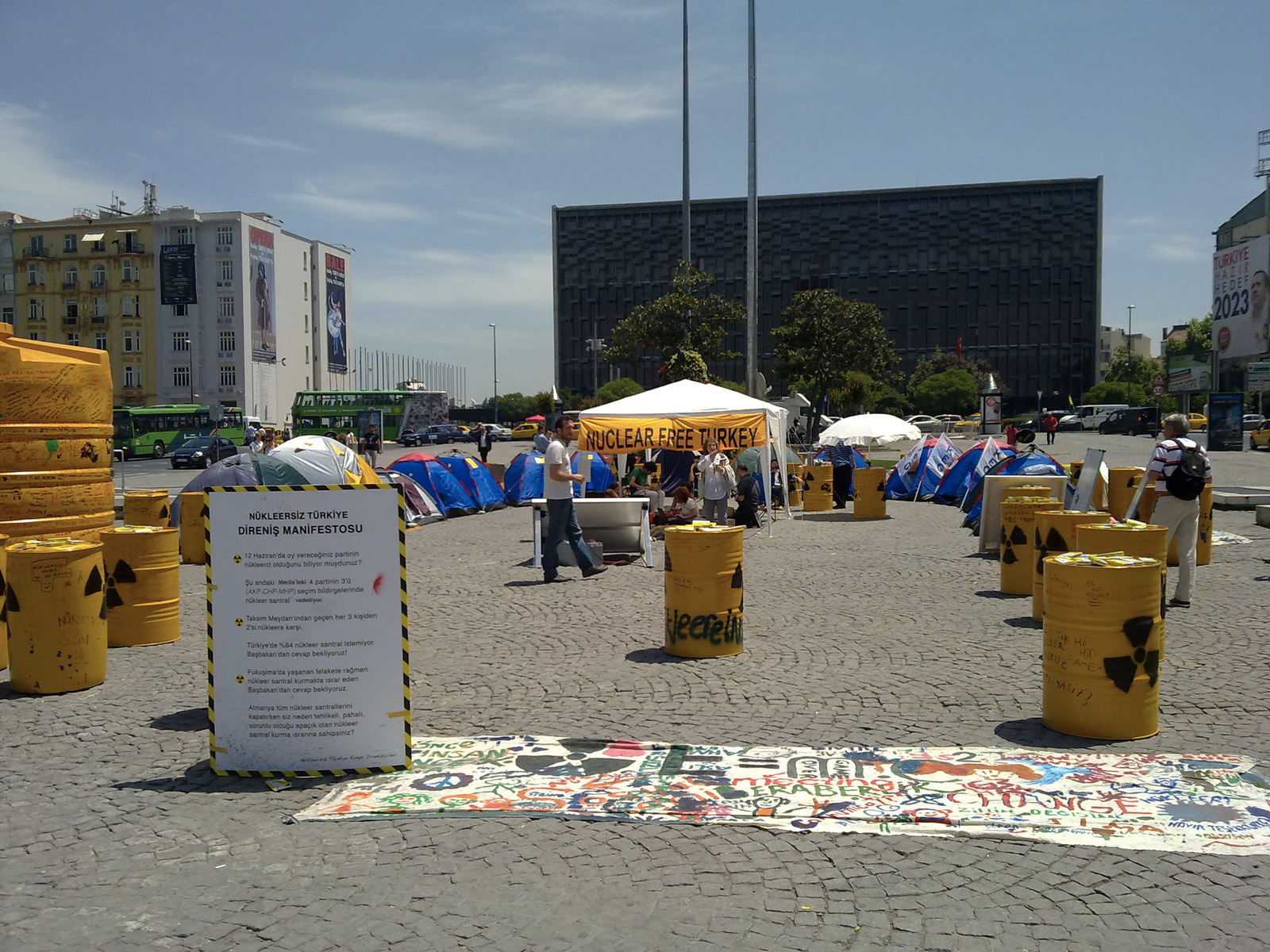
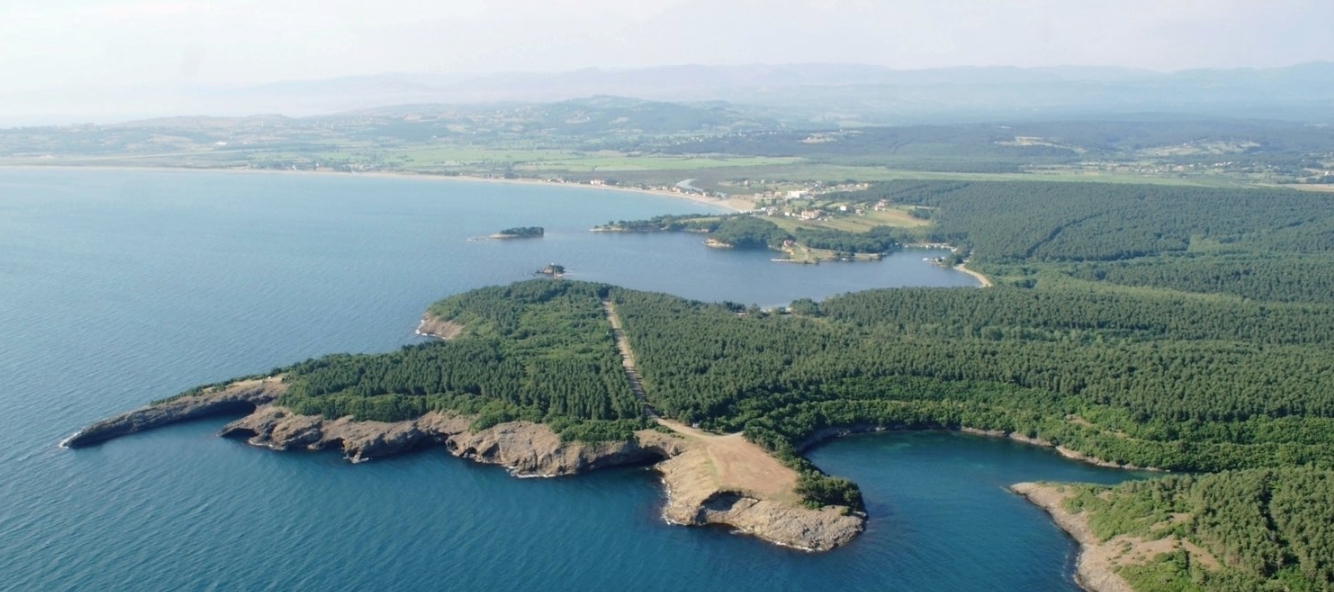
Despite this, the government of the Turkish Republic has already managed to prepare the ground for the construction of the Sinop NPP. In the region where the construction was supposed to begin, 650,000 trees were cut down. Local environmentalists and residents did not like this.
The Ince Burun Peninsula and its surroundings are designated as forest areas, and their immediate surroundings are a natural wildlife reserve. Cooling water for the power plant will be taken from the sea, boiled and discharged back into the sea. The province of Sinop is one of the most important centers of Turkish fishing in the Black Sea. Fishing will disappear
Contrary to the appeals of environmental activists, in September 2020, EÜAŞ shows a report prepared by the Ministry of Environment and Urbanization on the environmental impact assessment of the Sinop nuclear power plant project, which is planned to be built in the village of Abalı. According to the ministry, the nuclear power plant will not pose a threat to the environment, and it can be built. It is important to note that this report was created based on calculations for the construction of four power units with a total capacity of 4800 MW on PWR-type reactors of the "III+" Atmea generation.
Two years ago, Recep Tayyip Erdoğan, coming to a meeting with Putin in Russia, already suggested to his colleague to take a closer look at projects in Sinop and Igneada
We have a goal to build three nuclear power plants. I asked (Vladimir) Putin whether we can build the remaining two nuclear power plants together. Then, together with the "Akkuyu" NPP, we will have three nuclear power plants.
"Rosatom" then diplomatically responded to the proposal that they are always ready to discuss cooperation options. On the one hand, the choice in favor of a Russian partner is obvious. Only Russia managed to implement the construction of a nuclear power plant on Turkish soil. "Rosatom" already has experience in logistics of supplies, a developed network of partnerships with Turkish construction companies, and even its own Turkish "daughter" to solve bureaucratic issues. It would seem that everything is fine, and it would be necessary to "shake hands".
But! At the end of 2022, reports began to arrive that Korea could become a new partner for the Sinop NPP. Already in February 2023, the Korean Electric Power Corporation (KEPCO) submitted a preliminary application to Turkey for the construction of four APR-1400 nuclear reactors in the Sinop-Inceburun area. Korea Electric Power Corp., the largest electric power company in South Korea, estimated that the size of the contract for the construction of a nuclear reactor, which will be signed with Turkey, will be about 40 trillion won (30.7 billion dollars).
And now, almost a year later, when all the original commissioning deadlines have long passed, and construction has not yet begun, Turkey is still finding a partner for the nuclear power plant project in Sinop. It is planned that the second plant will be similar to "Akkuyu," having four VVER-1200 power units with a capacity of 1.2 GW each.
And Who Will Pay for All This?
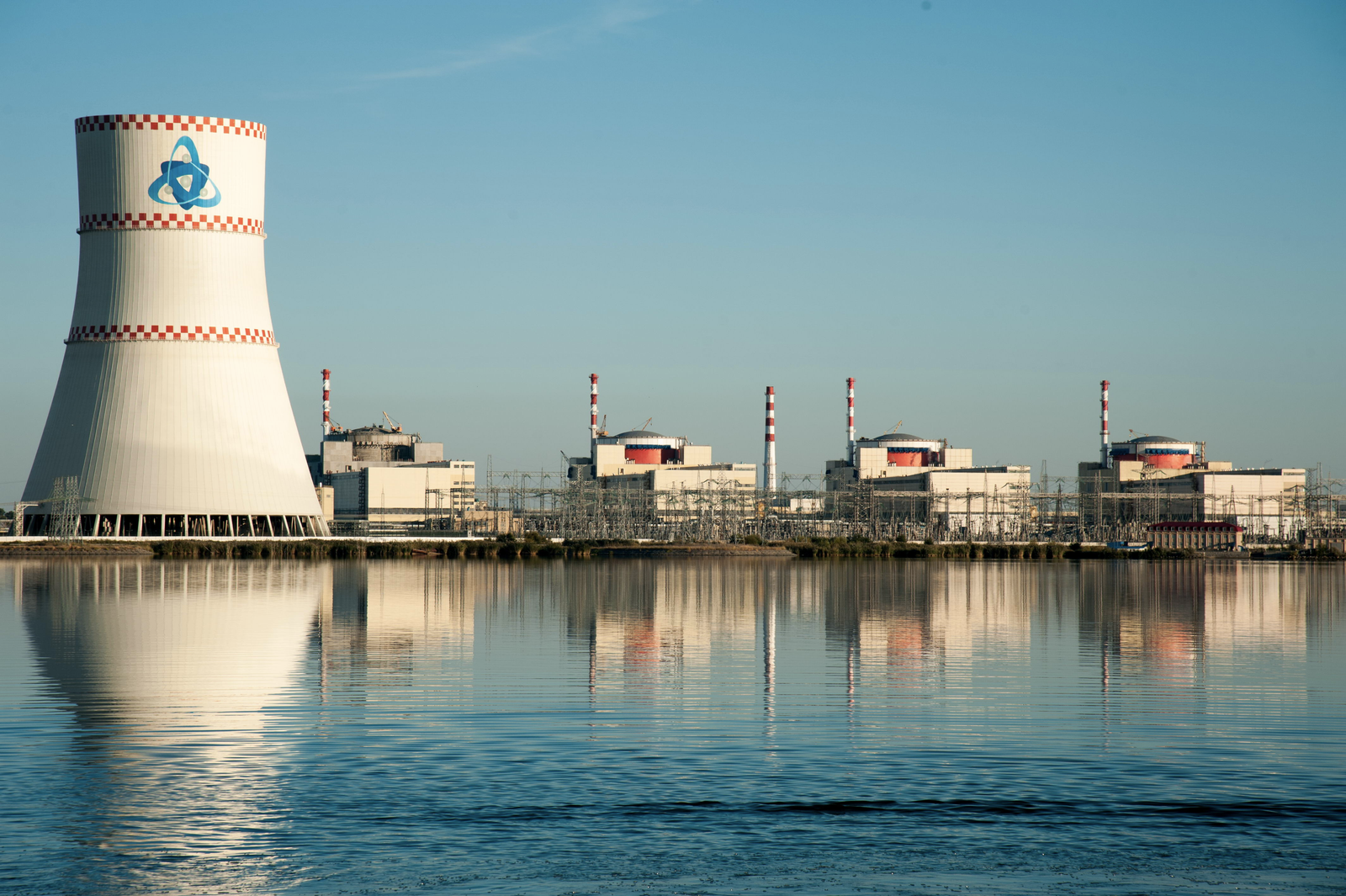
"Rosatom" is developing a financing plan for a possible second nuclear power plant (NPP) in Turkey, modeling possible sources of financing, including revenue from the sale of electricity from the first "Akkuyu" NPP. The first power unit of "Akkuyu" is planned to be launched in 2024. According to analysts, the income from "Akkuyu" will cover the cost of the second plant in ten years. This proposal is becoming especially attractive in the context of increasing demand for energy and the need to reduce dependence on gas and coal.
The head of "Rosatom," Alexey Likhachev, confirmed the possibility of using revenue from "Akkuyu" for the construction of a second nuclear power plant, noting that "in the second half of the twenties," when "Rosatom" will have "decent revenue" from the sale of energy in Turkey, the corporation will receive a "Turkish investment resource," which will be invested in the construction of a new nuclear power plant. Russian President Vladimir Putin confirmed that the construction of "Akkuyu" is going according to plan, and the first power unit is planned to be launched in 2024.
Turkey's energy consumption continues to grow, and the country is striving to reduce its dependence on imported gas and coal. The construction of a second nuclear power plant will be a significant step in this direction, especially given the proposed financing scheme, which ensures a stable flow of income and attracts foreign investment.
Will Income from Akkuyu Sponsor Another Nuclear Power Plant?
"Rosatom" is also considering participating in a tender for the construction of a third nuclear power plant in Turkey. We talked about it in passing at the very beginning.
In 2014, Turkey was negotiating with the Chinese SNPTC and the American Westinghouse on the construction of a third nuclear power plant with four power units on PWR third-generation "III+" water-cooled reactors - AP1000 and CAP1400. This project included the entire production cycle, from the construction of power units to the provision of nuclear fuel and its disposal.
The selected construction site is located in Igneada, next to Bulgaria. The region was chosen because of its high seismic resistance, making it one of the safest in the country. Igneada was the first candidate site for nuclear energy in Turkey, and its proximity to Istanbul (250 km) had both positive and negative aspects, which required careful study of all the consequences of building a plant here.
It was planned that the station would be launched in 2023, but the project was suspended, and instead, Turkey's attention was focused on the construction of the "Akkuyu" and "Sinop" NPPs.
Whether "Rosatom" will follow the same financing scheme as with the "Sinop" NPP or will require money from Turkey is still unknown.
Never miss our newsAdd this site to your preferred sources to see us more oftenAdd on Google

















