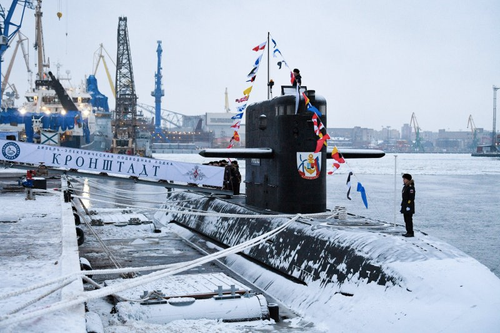
The first serial non-nuclear submarine (SSK) of project 677 "Lada" was solemnly transferred to the Russian Navy at the "Admiralty Shipyards" in St. Petersburg. The new ship was named "Kronshtadt" and became the first in the line of ships of this project.
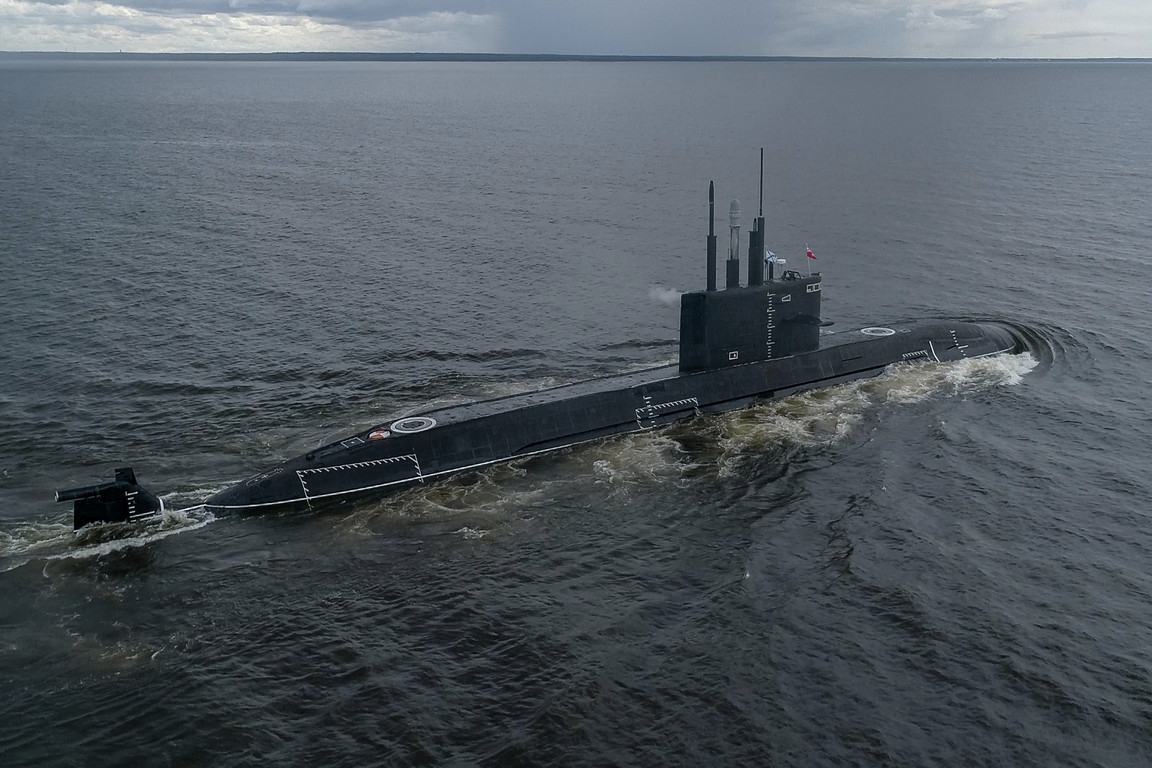
We are receiving a new generation boat, which is based on new physical principles, which carries formidable weapons. It is no coincidence that it bears the proud name "Kronshtadt" - this boat will join the Northern Fleet brigade.
According to Admiral Evmenov, during state tests, the new SSK proved itself, showing all its best qualities that the designers put into it: stealth, maneuverability, and reliability.
The Central Design Bureau of Marine Engineering "Rubin", when developing the ship, relied on the tasks set: the boats of project 677 provide for combating ground targets, submarines and surface ships of the enemy, as well as conducting reconnaissance, ensuring the protection of sea communications, protecting the coast and naval bases. "Rubin" took into account the experience of operating the first ship when developing an improved technical project, which served as the basis for the construction of "Kronshtadt" and the subsequent series of boats at the "Admiralty Shipyards".
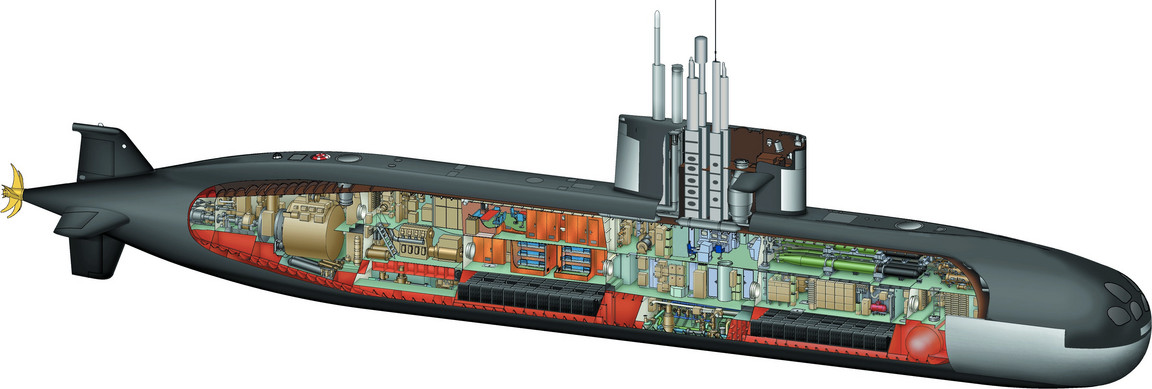
A lot of new equipment was developed for "Lada", and many new technical solutions were used in the project. The architecture of the ship is new. The entire power plant is new. Most of the radio-electronic armament is new. A new radio communication complex, a new external coating and much more
The interval between the commissioning of the first and second ships made it possible to make changes to the component base, modernize equipment and increase its functionality and reliability.
This is not just a diesel-electric submarine, as they are used to seeing. This is a fundamentally new warship that surpasses its predecessors in its capabilities.
Despite the fact that "Kronshtadt" does not have a nuclear reactor on board, the fourth-generation warship is in the same class as nuclear submarines of projects 955 "Borei" and 885 "Yasen". The implementation of serial production of non-nuclear submarines of project 677 is one of the main priorities within the framework of the state defense order.
Main characteristics of project 677 "Lada":
Weight during surface running - 1765 tons, when submerged - 2650 tons
SSK length - 66.6 meters, width - 7.1 meters
Maximum immersion depth - up to 300 meters
Speed in surface position - 10 knots, when submerged - 21 knots
The submarine's armament includes 6 bow torpedo tubes with a diameter of 533 mm with a total ammunition load of 18 torpedoes and rocket torpedoes.
The crew consists of 35 people (including officers) and has the ability to swim autonomously for 45 days.
The Navy expects 3 more SSKs of this project. The next in line is "Velikiye Luki", which has already been built and is undergoing testing at the shipyard. Two other submarines of this type, "Vologda" and "Yaroslavl", were laid down on the same day - June 12, 2022, and are under construction at the "Admiralty Shipyards".
The implementation of project 677 is being closely monitored abroad, and the entry into service of the first serial ship is of great importance. For foreign partners among friendly countries, an export version of the submarine called "Amur-1650" is offered, as well as project 636, which has already proven its effectiveness on the world market due to its powerful missile armament. It is expected that the "Amur-1650" project, which is the next generation of submarines, will become an important element in exports over the next decades.
Never miss our newsAdd this site to your preferred sources to see us more oftenAdd on Google