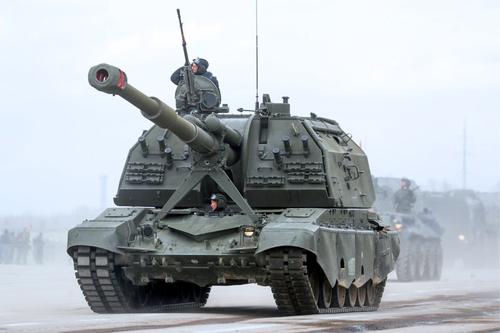
Russian Defense Minister Sergei Shoigu inspected the fulfillment of the state order for the production of self-propelled howitzers at the Ural Transport Engineering Plant in Yekaterinburg. During his visit, it became known that in February 2024, the Russian army will receive the first batch of the latest Koalitsiya-SV self-propelled howitzers.
In February, we will receive the first six vehicles
He ordered that the supply of shells be ensured for the new artillery systems. The head of the enterprise, Oleg Emelyanov, informed the minister that in 2023, the production volume of self-propelled howitzers increased 6 times compared to the figures for 2022.
If there are opportunities to increase production, then we need to use these opportunities
The Koalitsiya-SV differs from its predecessors in its long range - up to 70 km and its rate of fire - up to 16 rounds per minute. The self-propelled howitzer is automated and can be controlled remotely.
Russian military personnel have already dubbed Koalitsiya-SV a combat robot, calling it the best howitzer in the world.
Never miss our newsAdd this site to your preferred sources to see us more oftenAdd on Google

















