The new Russian fifth-generation light fighter Su-75 Checkmate has every chance of becoming the first trulymass-produced aircraft of the new generation in domestic aviation. Its predecessor, the Su-57, took almost two decades to reach mass production, and is now being produced at a rate of about 10-12 aircraft per year.
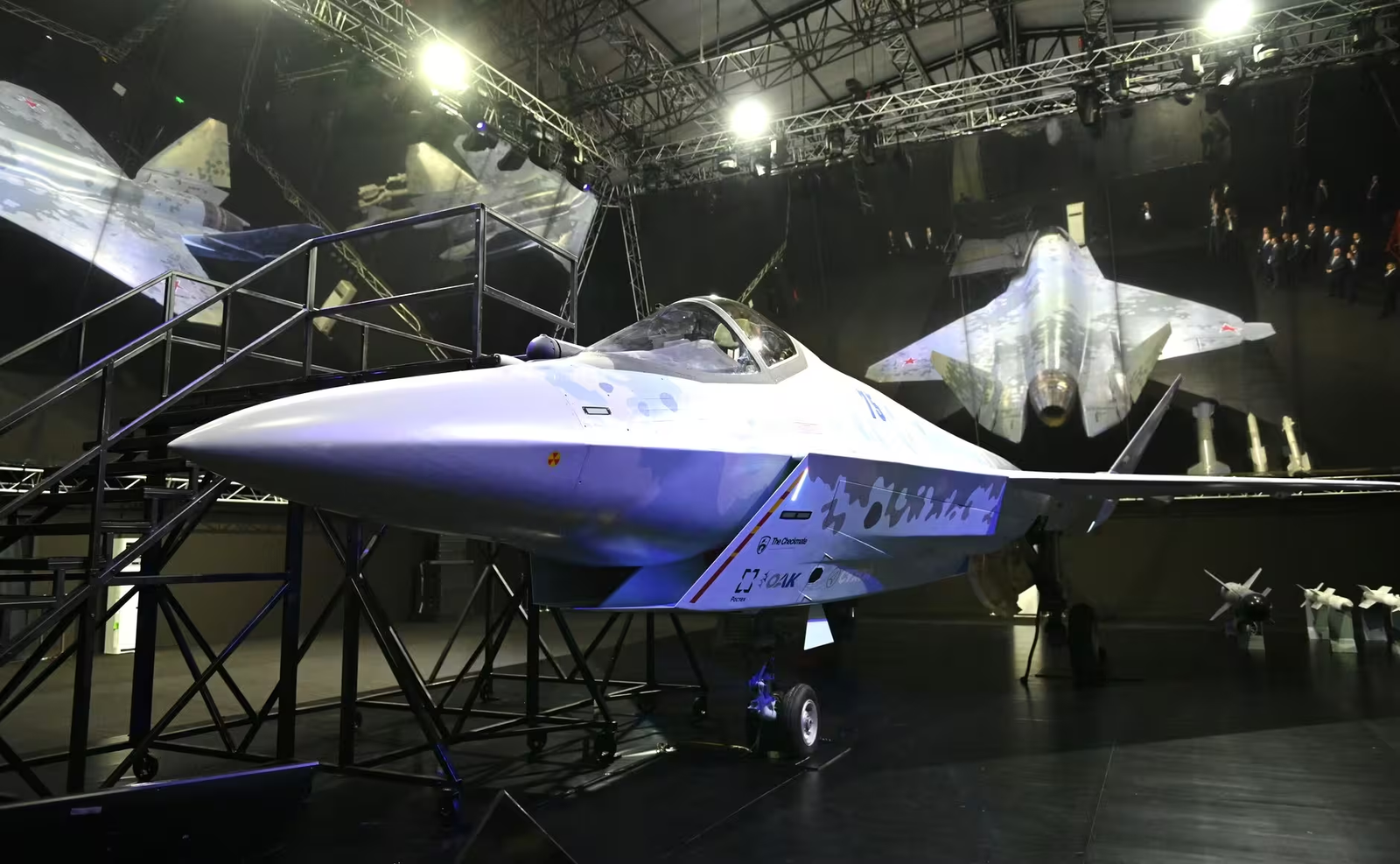
However, the Su-75 has a different situation - its development is based onthe principles of unification, modularity and already existing technologies.
Why the Su-75 will break ahead
The main trump card is the absence of"childhood diseases" of the pioneer. The Su-57 was created from scratch - new materials, avionics, stealth coatings and engines required many years of testing. But now all this has already been worked out. The Su-75 is assembled literally from technological blocks tested on previous projects.
We are talking about the reliable and long-certified AL-41F-1 engine (product 117S) from the Su-35S. Avionics and electronic warfare systems - from the Su-57 and MiG-35, already adapted to modern software.
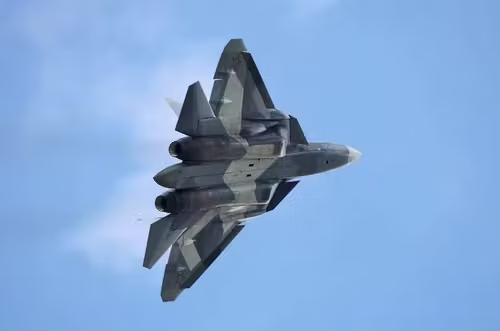
Stealth technologies were also completely adopted from the Su-57 and the S-70 Okhotnik UAV.
Single-engine revolution
The Su-75 will be the first Russian fifth-generation fighter with one engine, which will drastically reduce production and operating costs. Fewer parts - higher production rate and easier maintenance. According to rough estimates, the cost of the aircraft will be almost half that of the Su-57.
In addition, the project was initiallyexport-oriented, which speeds up all stages - from testing to certification. Already, countries in the Middle East and Asia are showing interest in the aircraft, looking for an alternative to the American F-35.
Evolution, not simplification
The Su-75 is not a "cut-down Su-57", but the next step in the evolution of Russian combat aircraft. It inherits all the best from its predecessors, avoiding their mistakes.
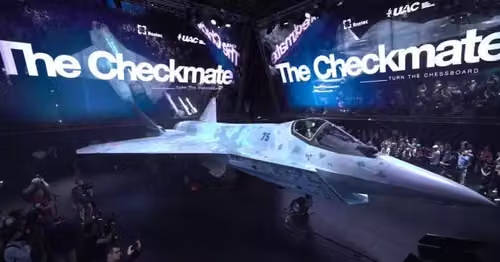
And if the Su-57 became an expensive lesson for the industry, then the Su-75 is a diploma of completed training. That is why it will enterlarge-scale production much faster than the fifth-generation flagship.
Earlier www1.ru reported that the latest Sarmat intercontinental missiles will go on combat duty in 2026.
Read also materials:
Never miss our newsAdd this site to your preferred sources to see us more oftenAdd on Google

















