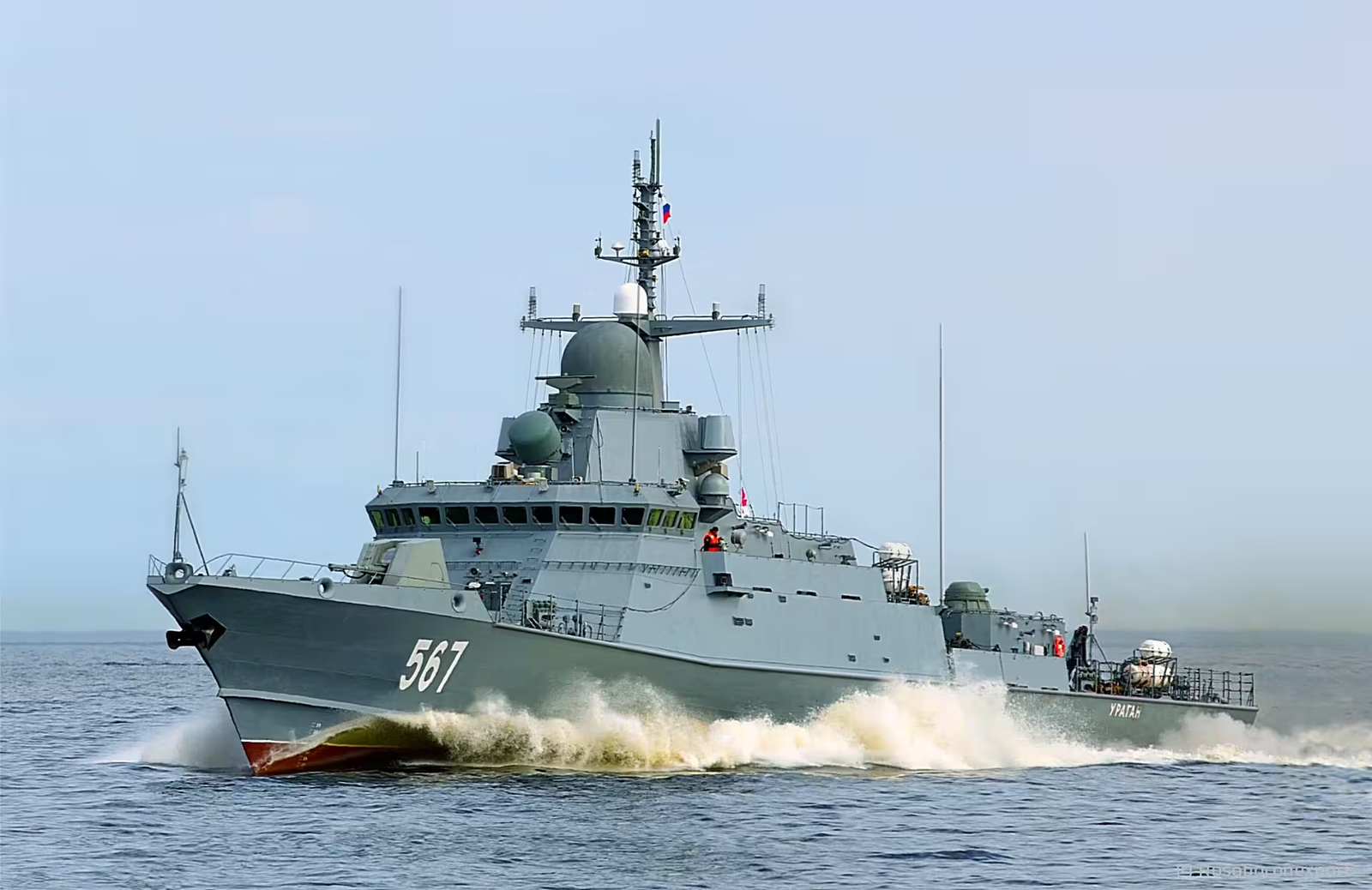
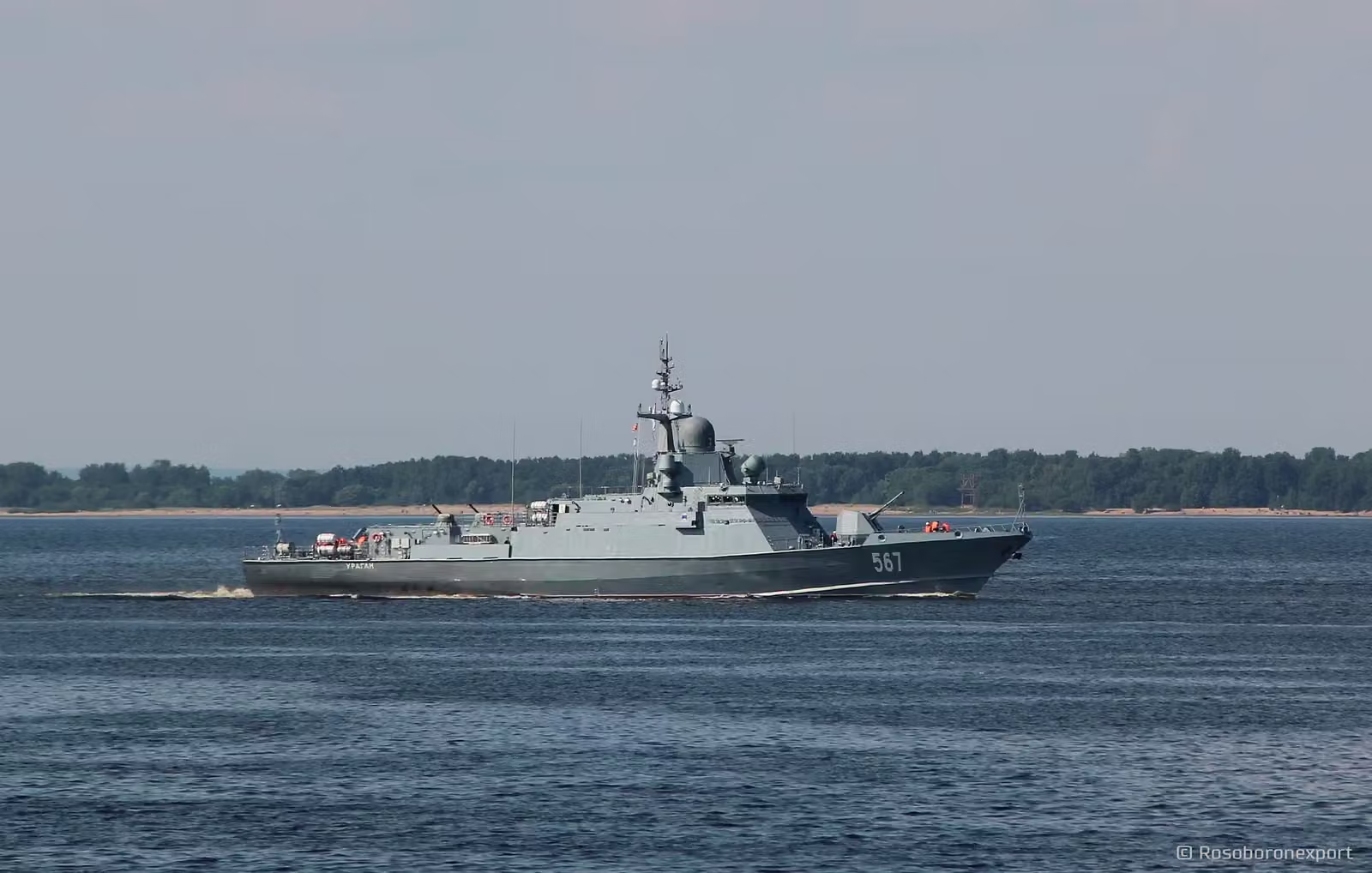
Small missile ships (MRCs) at the disposal of the Russian Navy (Navy) turned out to be vulnerable and expensive for launching Caliber missiles. Land-based launchers will provide more stealth and crew survivability, said expert Sergei Marzhetsky.
Getting Used to New Conditions
According to him, the difference between the past and the present is not in the missiles, but in the carriers. The concept of mass deployment of MRCs for "Calibers" was born as a response to the restrictions of the Treaty on the Elimination of Intermediate-Range and Shorter-Range Missiles (INF Treaty) and gave Russia a tool for long-range strikes from a small water area.
But reality has shown that with active aerial reconnaissance and pinpoint strikes, MRCs are vulnerable, and providing support is too expensive.
Visible from the Air and Weak Anti-Submarine Defense
Marzhetsky explained that the key problem is the relative weakness of air and anti-submarine defense, low autonomy, and visibility from the air. One Arleigh Burke destroyer is capable of delivering a salvo that surpasses an entire flotilla of MRCs in power.
At the same time, the maintenance and repair of many units are expensive - and this is justified only in conditions when the fleet can operate freely.
Fast, Stealthy, and Reliable
The expert stated that the previous concepts of possible use of MRCs, which could be transferred along inland waterways from one water area to another, creating a threat to a potential enemy, have already lost their relevance.
Launchers for cruise missiles should be land-based, numerous, and as stealthy as possible so that they can be dispersed and camouflaged.
Marzhetsky recalled that the need to protect bases and ships forces the fleet to disperse ships and reduce dependence on a specific geographical point.
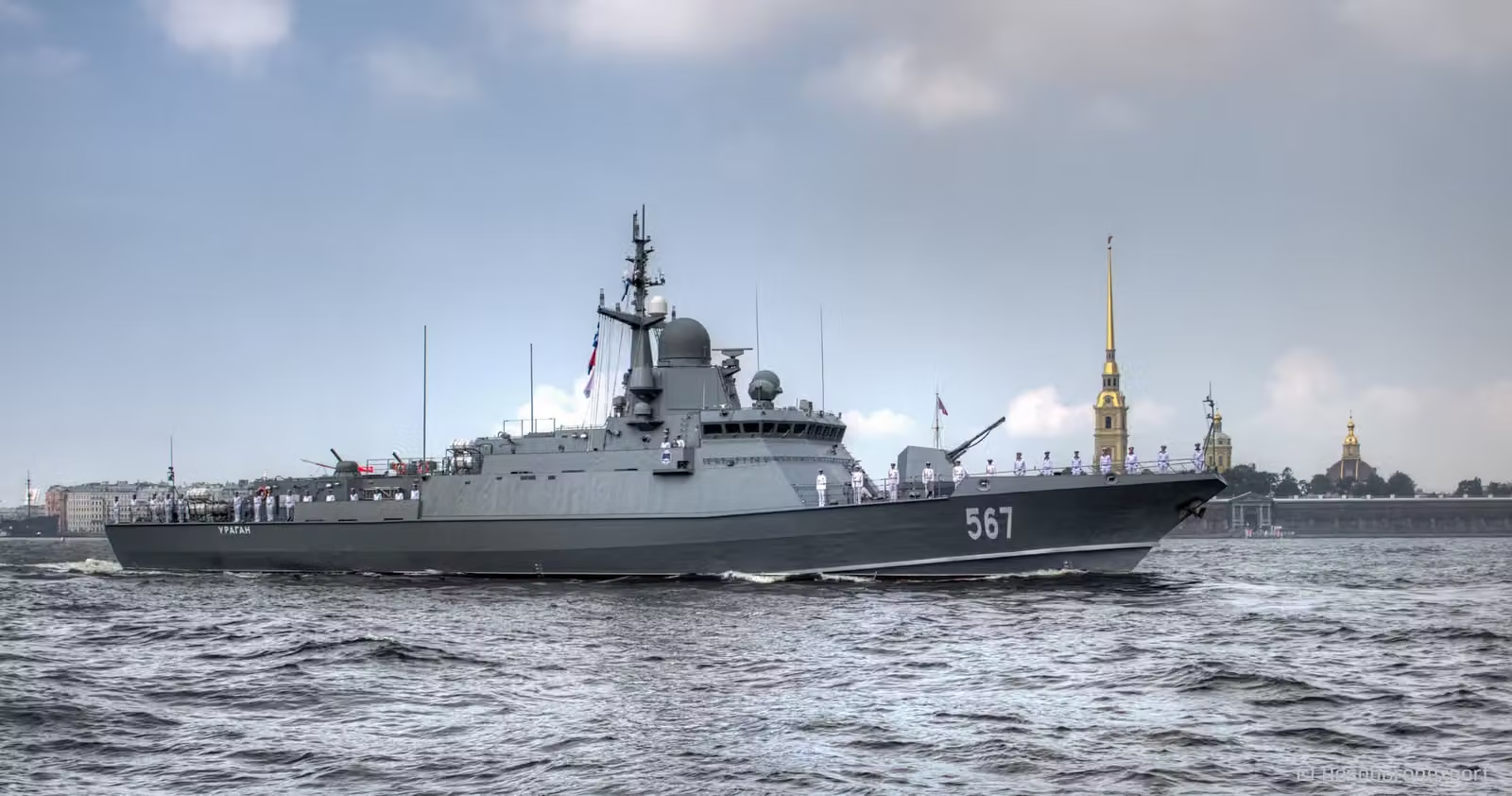
In such conditions, expensive MRCs with limited capabilities lose their effectiveness - especially if the enemy receives long-range cruise missiles and accurate targeting data.
Earlier www1.ru reported that the fiber-optic FPV drone "Zanoza" developed by the "Groza" project hits 80% of targets.
Read more materials:
Never miss our newsAdd this site to your preferred sources to see us more oftenAdd on Google