Translated with AI from the Russian original.
Engineers from Novosibirsk have patented an electric arc plasmatron design in which the wear of the consumable electrode is compensated directly during operation. The rod electrode is fed into the working area as it is consumed, and new parts can be attached to it without stopping the plasmatron. The developers expect this to increase the continuous operation resource and the reliability of the unit.
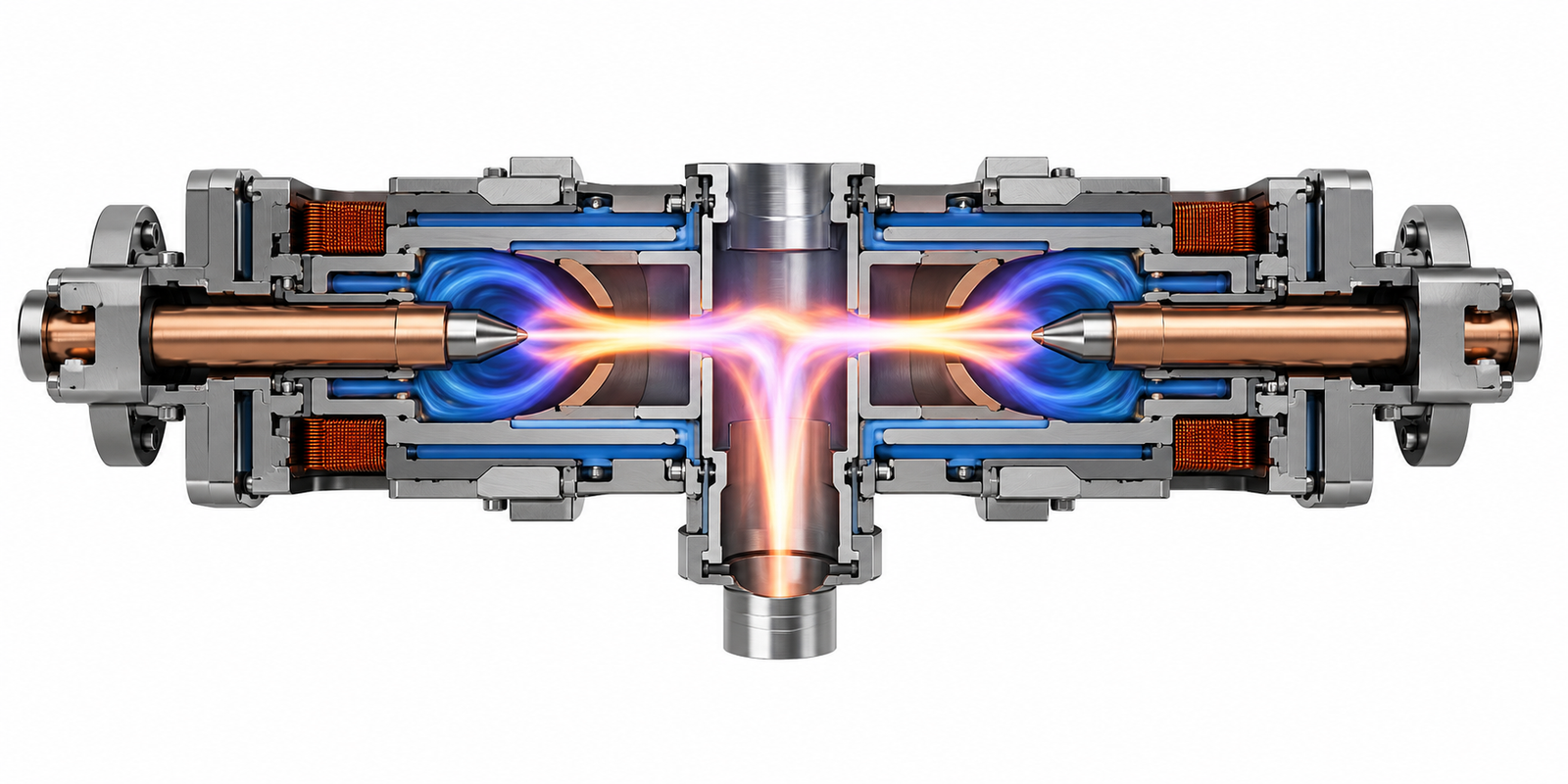
The plasmatron forms a plasma jet in a common mixing chamber, with two identical vortex chambers located on either side of it. Each contains a cooled cylindrical channel, a solenoid for arc stabilization, a diaphragm, and a rod electrode with a mechanism for holding and feeding it. The plasma-forming gas enters the chambers through separate channels, after which the plasma jets combine in the common chamber and exit through a side opening.
The key difference in the design is related to the consumable electrodes. They can be automatically fed into the working area as they erode. In addition, the patent provides for extending the rod by fastening or screwing new parts directly during the continuous operation of the plasmatron.
For electric arc plasmatrons, the limited resource of electrodes is one of the main problems. The patent description notes that spent electrodes have to be periodically replaced, and such an operation involves shutting down the plasmatron. Electrode erosion can also change the arc length and lead to pulsations in the power and temperature of the plasma jet.
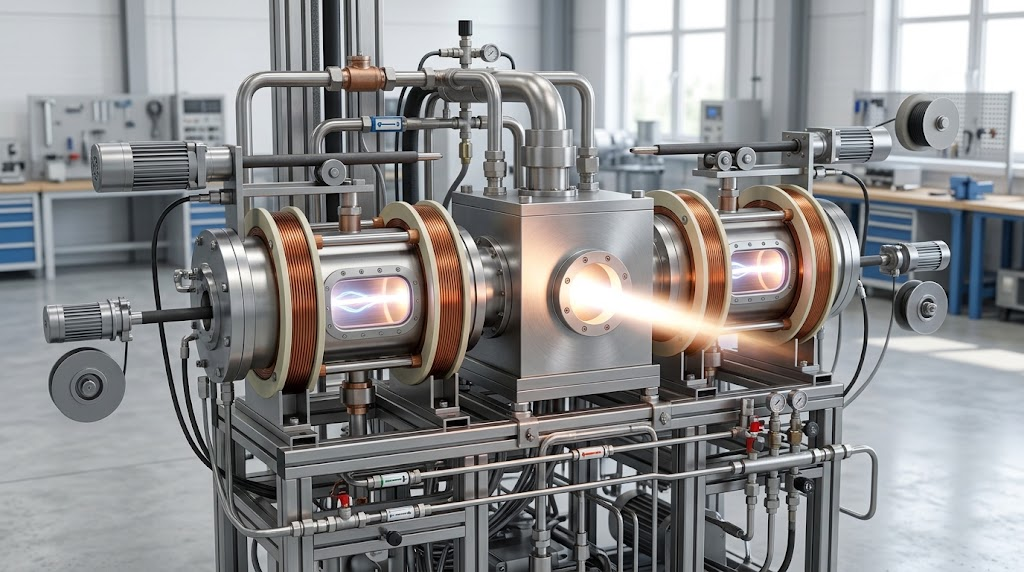
The patent claims an increase in continuous operation resource up to 1000 hours or more, as well as an increase in the thermal efficiency of the plasmatron. In the experimental example provided, the unit was tested on a stand at an arc power from 55 to 500 kW. The thermal efficiency was more than 80%, and the operating mode was stable and continuous. However, the document does not state that the 1000-hour resource has already been confirmed by tests.
The design is intended for operation with various plasma-forming gases — oxidizing, reducing, aggressive, and condensing media. Possible areas of application indicated in the patent include metallurgy, chemical industry, mechanical engineering, energy, and ecology.
Read more on the topic:
Never miss our newsAdd this site to your preferred sources to see us more oftenAdd on Google

















