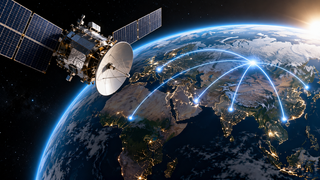
The Russian orbital constellation has reached almost 400 spacecraft and satellites. Since early 2026, about 60 spacecraft have been launched into orbit, Roscosmos Director General Dmitry Bakanov announced at a meeting with Prime Minister Mikhail Mishustin.
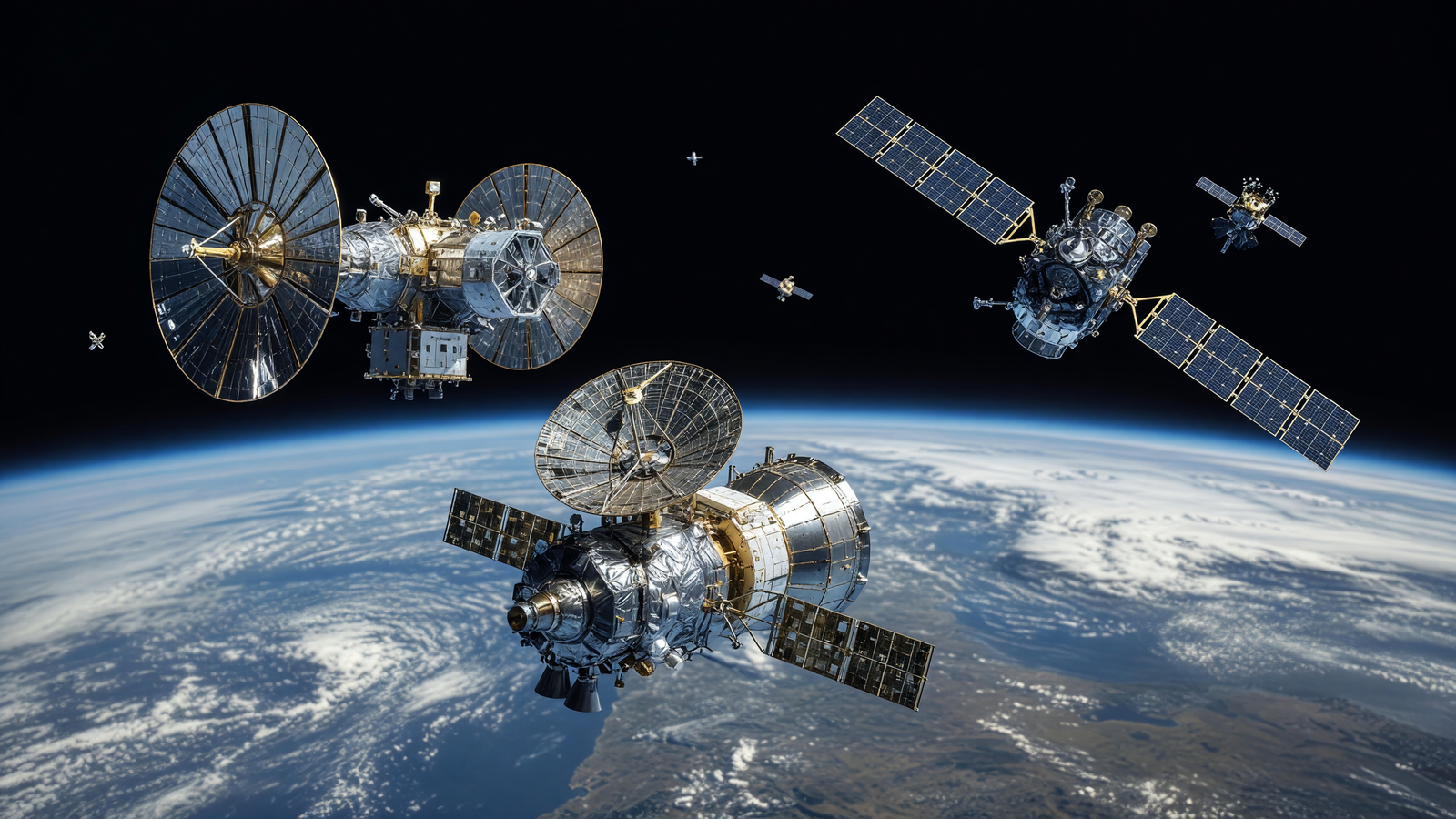
According to the head of Roscosmos, the new spacecraft belong to several main areas: telecommunications, navigation, and Earth remote sensing. This means we are talking not about a single satellite system, but about a combination of spacecraft for various purposes.
www1.ru provided the previous estimate of the Russian constellation's size in April. At that time, 364 spacecraft were reported in orbit. The new estimate means that within a few months, the publicly stated number has approached the 400 mark.
Meteorological observation remains one of the directions. Bakanov specifically mentioned the Electro-L satellite, which, according to him, allows updating meteorological data every 15 minutes. Several spacecraft of this series are already operating in the Russian constellation. In August, Roscosmos reported the commissioning of Electro-L No. 5.
Another example is the Obzor spacecraft, designed for radar Earth observation. Unlike optical systems, a radar satellite can obtain data regardless of cloud cover and lighting conditions. Such spacecraft allow the use of space imagery not only for mapping but also for operational monitoring of changes on the Earth's surface.
A separate segment is developing in the field of satellite communications. Previously, Pervyy Tekhnicheskiy wrote about plans to create new telecommunication spacecraft Express-AMU51 and Express-AMU52, which should expand communication capabilities in remote regions of Russia.
However, the current figure of almost 400 spacecraft is not the final one. According to Bakanov, two high-resolution optoelectronic observation spacecraft from private Russian companies have already passed tests and been sent to the Vostochny Cosmodrome. Their launch is scheduled for October.
The growth of the Russian constellation is associated not only with an increase in the number of spacecraft. At the same time, the range of tasks they solve in orbit is expanding: communication, navigation, meteorology, and remote Earth observation.
However, Roscosmos did not disclose the exact composition of the almost 400 spacecraft by type and operational status during today's meeting.
Read more on the topic:
Never miss our newsAdd this site to your preferred sources to see us more oftenAdd on Google