Quantum computers can now not only be tested via the cloud but also ordered as a ready-made installation. "Kvantum Park" of Bauman Moscow State Technical University and FSUE "VNIIA" has started sales of the SnowDrop line. The cost of the basic version starts from 170 million rubles, and a total of four models with 4, 8, and 10 computational qubits are available.
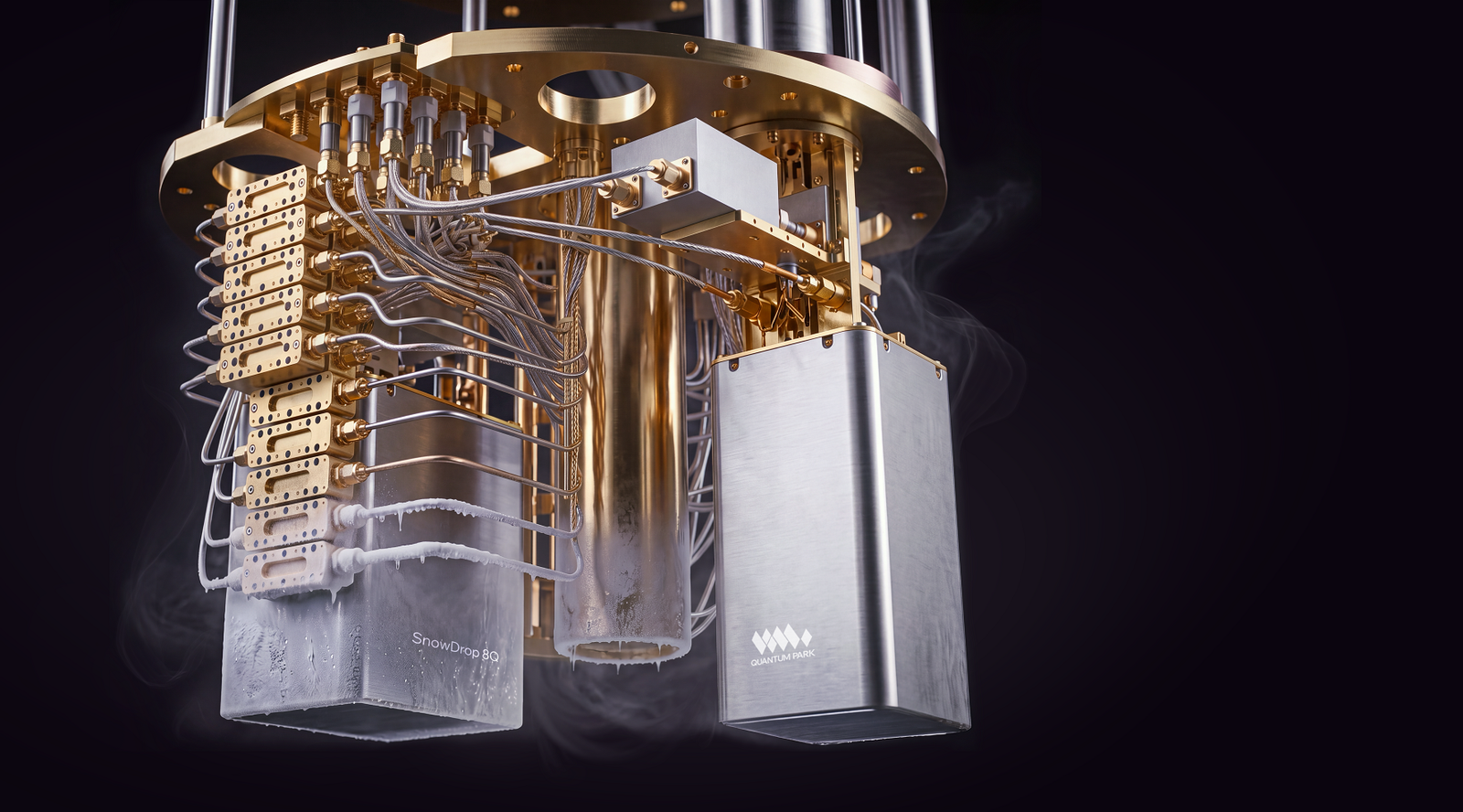
SnowDrop is a hardware-software complex with a quantum coprocessor, a readout system, a YARANGA ultra-low temperature cryostat, control electronics, and a software environment for running quantum algorithms.
The line includes four configurations: SnowDrop 4QTCS, SnowDrop 8Q2TCS, SnowDrop 8QGCL, and SnowDrop 10QGCL. They use superconducting coprocessors with transmon qubits.
The basic SnowDrop 4Q model is designed for four computational qubits. More powerful versions have eight or ten qubits. Moreover, the supplied platform can be further upgraded, increasing the dimensionality of the quantum coprocessor to 48 qubits.
Before entering the market, the SnowDrop architecture underwent beta testing on the Bauman Octillion cloud platform. Since July 2025, over 103,000 hybrid quantum-classical algorithms have been launched there using SnowDrop 4Q and 8Q coprocessors. The total continuous operating time of the system exceeded 9000 hours.
The developers expect to use such complexes for developing and testing quantum algorithms, modeling materials and quantum systems, optimization problems, and studying quantum processes. Possible applications also include machine learning, cybersecurity, energy, logistics, and the development of drugs and chemical compounds.
Kvantum Park already has several SnowDrop customers, but their names are not disclosed. In the future, developers plan to produce 10–20 multi-qubit quantum computers per year.
Why Quantum Computers Are Needed and What Qubits Are
Quantum computers run special algorithms for tasks that require working with a huge number of possible combinations. For example, they can model molecules and materials, find optimal routes and solutions to complex combinatorial problems, or explore new methods of cryptography.
Qubits are the analog of bits in a conventional computer, but they operate according to the laws of quantum physics. While a regular bit stores 0 or 1, a qubit can be in a quantum state that combines these options. The more controllable qubits in a system, the more complex quantum algorithms can be run on it.
Read more on the topic:
Never miss our newsAdd this site to your preferred sources to see us more oftenAdd on Google