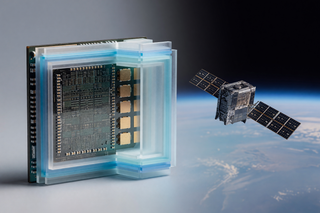
Nearly 5 billion rubles will be allocated to create materials essential for modern microelectronics production. Russia plans to develop and launch serial production of 98 new domestic materials, with the first 18 types expected to enter production by 2026.
The Russian Ministry of Industry and Trade plans to spend 4.68 billion rubles on this work between 2026 and 2028. This was reported by CNews, citing a presentation by Sergey Grachev, Deputy Director of the Metallurgy and Materials Department of the Ministry of Industry and Trade. In 2026, 1.6 billion rubles are allocated for research and development, 970 million in 2027, and 1.02 billion rubles in 2028. An additional 660 million, 300 million, and 130 million rubles, respectively, will be provided as subsidies.
Among the materials planned for production starting in 2026 are neutron-transmutation-doped monocrystalline silicon, photomasks for projection and contact lithography, silicon-on-insulator structures, and other types of products. Another 23 materials are currently in the development stage.
The number of domestic materials is intended to increase gradually. In 2024, 34 items were created, and in 2025, 51. By the end of 2026, the figure should reach 69, and by 2028, 98 materials.
This involves not only the development of new materials but also their preparation for serial production for the electronics industry. The Ministry of Industry and Trade expects that the introduction of new materials will generate 5.29 billion rubles for the budget and create 160 jobs by 2028.
The program is part of a larger plan for the development of electronic engineering. By 2030, Russia expects to replace about 70% of the equipment and materials used in microelectronics with domestic solutions. The total budget funding for this program exceeds 240 billion rubles.
Read more on the topic:
Never miss our newsAdd this site to your preferred sources to see us more oftenAdd on Google