Translated with AI from the Russian original.
Russia has sharply increased the intensity of using jet drones. According to The Sunday Times, about 2800 launches of jet UAVs were recorded in August, compared to approximately 350 in June. The figure increased by about eight times.
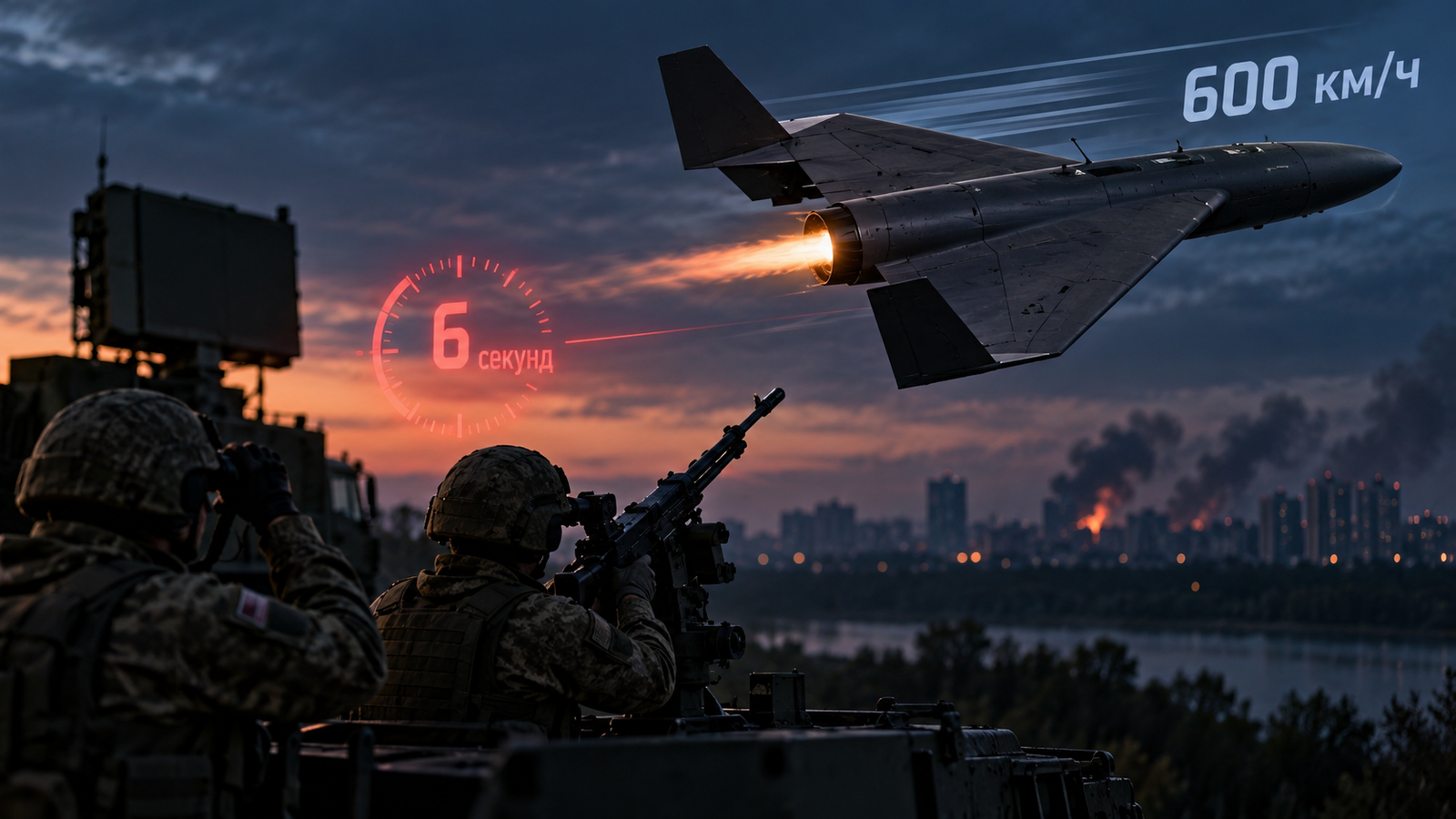
The increase in quantity is accompanied by a change in drone application tactics. Jet aircraft develop significantly greater speed than earlier versions of the Geran family UAVs with piston engines.
Only seconds left for interception
According to The Sunday Times, a mobile fire group attacking a slower drone had about 60 seconds to detect and engage the target. For jet UAVs, this interval, according to the newspaper's estimate, is reduced to about six seconds. This refers to jet drones as a class, and not only to the Russian Geran-5.
The difference is primarily explained by speed. For comparison, previously published data indicated a speed of about 180 km/h for Geran-2, while for Geran-5, values up to 600 km/h are cited in open sources.
At a speed of 600 km/h, the aircraft travels approximately 167 meters per second. Therefore, even a small delay between target detection, information transfer, and opening fire becomes significant.
Jet versions change air defense requirements
The Sunday Times also cites an estimate according to which the interception efficiency of older types of Gerans could reach 95%, while for faster jet drones, the figure was estimated at about 60%. These figures refer to the enemy's estimates cited by the newspaper and are not official Russian statistics.
As an example of the new generation of Russian aircraft, the publication considers the family of jet Gerans. At the same time, the specific characteristics of individual modifications remain the subject of open source assessments.
Geran-5 has repeatedly been the subject of publications due to the transition to a jet propulsion system. Pervyy Tekhnicheskiy previously reported speeds of up to 600 km/h and the appearance of machine vision elements in the aircraft.
At the same time, the manufacturer and the Russian Ministry of Defence have not publicly disclosed official technical characteristics, so the parameters provided refer to open source estimates.
The rapid reduction in reaction time also changes the requirements for interception means: systems designed for slower drones have significantly less time to operate.
Read more on the topic:
Never miss our newsAdd this site to your preferred sources to see us more oftenAdd on Google

















