Translated with AI from the Russian original.
Universities are testing a new version of "Antiplagiat" that will be able to track the creation of a thesis in real-time. The system will record copying, text changes, and the use of artificial intelligence, and students will be able to explain in advance where a particular fragment came from. There will be no need to install a special program on the computer; everything works in the cloud.
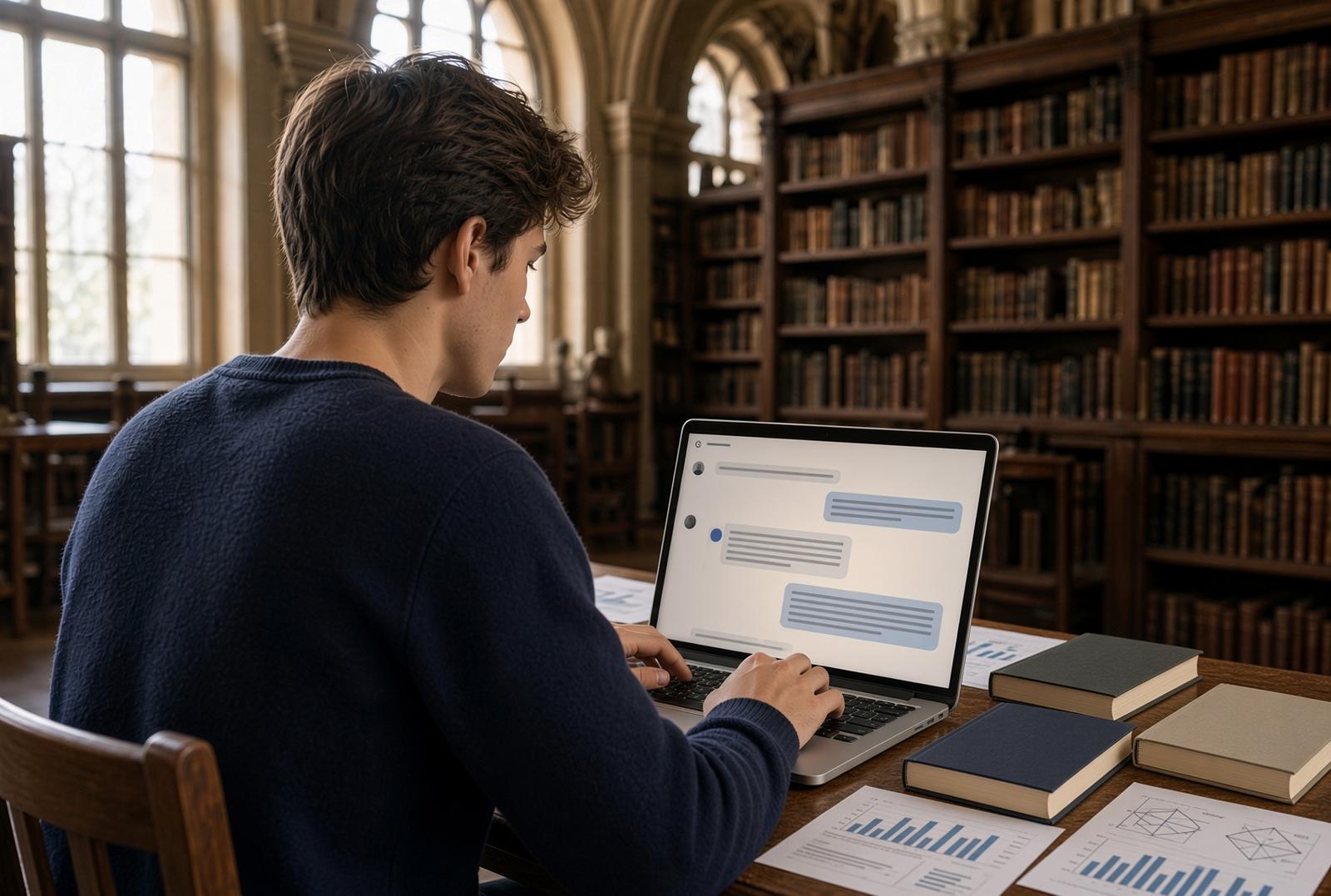
The "Antiplagiat 2.0" system has passed the first stage of testing in 28 universities, and in ten more educational institutions, it was tested in the second stage. A full release is scheduled for the end of October.
Boris Thorikov, scientific director of the "Antiplagiat" company, said that in the new system, AI will act as a student's assistant. For example, the neural network will not write the entire thesis on command "write my thesis," but will help formulate thoughts, correctly format citations, and mark in the system which text was generated at the user's request.
According to Thorikov, it will be possible to work on the text at home. Students will be able to write part of the work offline, then transfer it to the system and indicate that it was their home draft. After that, the text will be checked for originality and traces of AI. If one neural network is used first, and then the resulting text is uploaded to "Antiplagiat," this should also be reflected in the report.
Experts on the new anti-plagiarism format
Experts commented on the possibilities of practical use of such software. Some specifically draw attention to the accuracy of determining text created by artificial intelligence. Last spring, students reported cases where "Antiplagiat" found signs of AI in independently written works. At the same time, there were also inverse situations when obviously generated text passed the check.
Alexey Karlov, director of Angel Relations Group and lecturer at HSE, believes that it will still not be possible to fully check theses in this way. According to him, the stricter the system, the harder it is to circumvent, but it is impossible to completely exclude such a possibility.
The question is: will the thesis defense itself change, how professors ask questions, what they clarify, and so on? The system itself, which is somewhat outdated, does not change. On the other hand, among the advantages, I would add that a student can, at the stage of preparing the work, add a note explaining why they did it, and not invent an answer to the examiner's or admissions committee's question when submitting the work, but refer to a pre-prepared text.
Leonid Golovko, Head of the Department of Criminal Procedure, Justice and Prosecutorial Supervision at the Faculty of Law of Moscow State University, pointed out the importance of checking the work by students' scientific supervisors. In addition, people write works differently — some at night, some in the morning, and some need certain conditions.
A person gets used to their system, in which they are accustomed to working, and to force them to log in at some time and type something manually overnight — well, that's not really right and, I'm sure, impossible. After all, the creative process is individual. This is an internal human kitchen, and I would not interfere with it.
Connecting many students to a single system requires serious infrastructure stability, added Artem Garin, head of the Digital Laboratory of the Institute of Oriental Studies of the Russian Academy of Sciences. However, the scientist noted that this would be an impetus for the development of more advanced IT solutions in education.
The closer the deadlines for submitting works, the greater the load on the services will be. The main thing is that the infrastructure withstands this load and does not give reasons to say that the thesis or dissertation was not written only due to system failures. We all understand that most often this is the responsibility of the author of the work, but such a scenario should not be ruled out. The very appearance of new anti-plagiarism will add discipline, help to better understand the material and improve writing skills, which is an integral part of the educational process. There is also a large field here for developing new solutions for working with AI and its "memory."
The final decision on the implementation of "Antiplagiat 2.0" will be made by each university independently. The full release is expected at the end of October.
Read more on the topic:
Never miss our newsAdd this site to your preferred sources to see us more oftenAdd on Google

















