In the autumn of 2026, residents of Russia will be able to observe two comets – 220P/McNaught and 161P/Hartley-IRAS. The first will be available for observation in September, the second in October and November. Both comets can be seen with large amateur telescopes, said Mikhail Maslov, leading engineer of the Vega observatory at Novosibirsk State University.
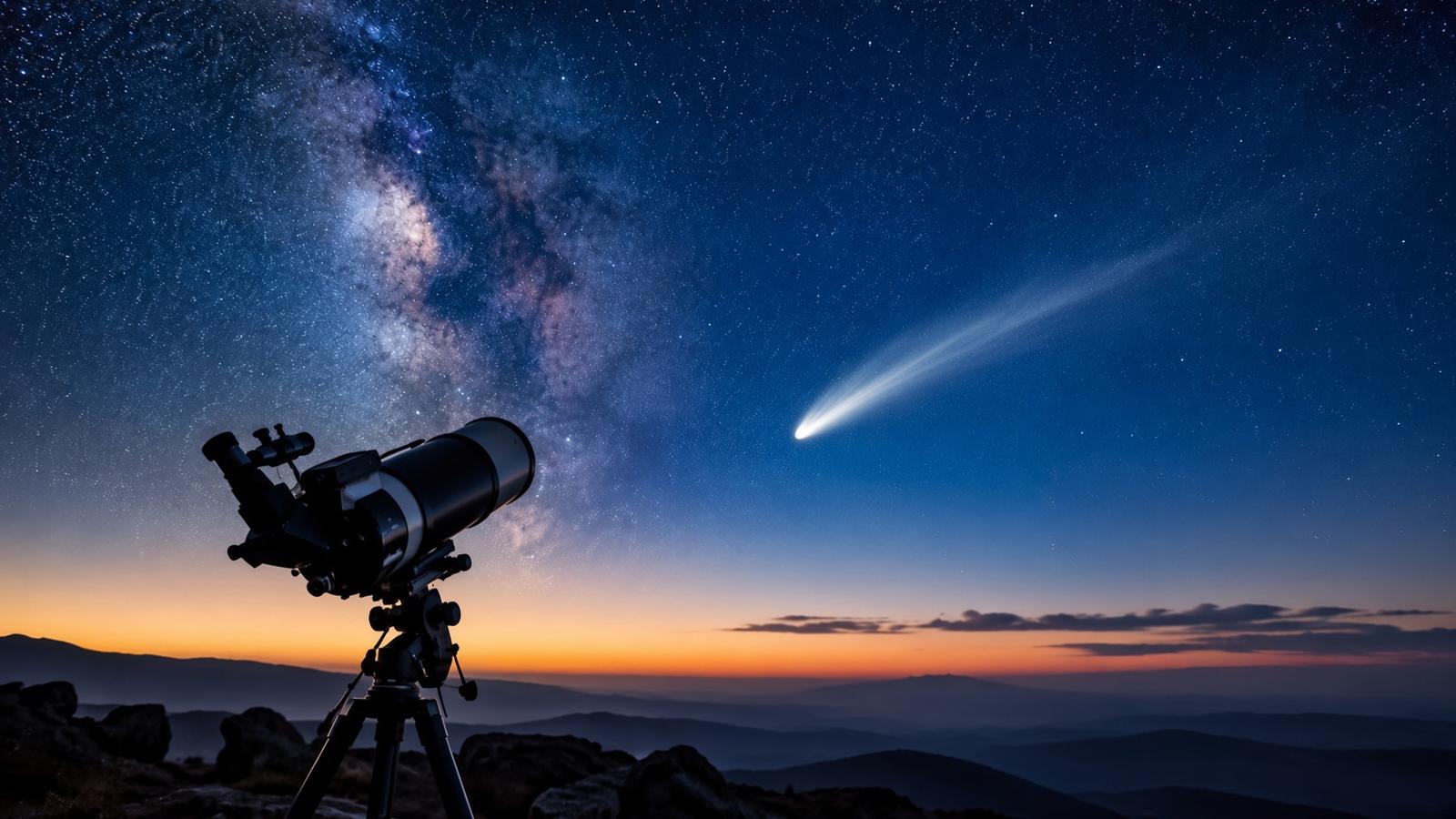
Russians will be able to see comet 220P/McNaught with large amateur telescopes throughout the month. Its brightness will decrease from 10 to 12 stellar magnitude. The comet will be best visible in the second half of the night. At this time, it will be located on the border of the constellations Taurus and Cetus.
The second comet 161P/Hartley-IRAS will appear in view in October and November. It is expected to look quite standard for short-period comets: a green spherical coma (a gaseous envelope around the comet's nucleus) with a small, indistinct tail.
The comet's brightness will be about 10–11 stellar magnitude. 161P/Hartley-IRAS can be observed primarily in the evening, before midnight.
In October, the comet will cross the constellations Aquarius, Equuleus, and Delphinus. In November, it will be in the constellations Aquila and Sagitta.
This comet has a rather long orbital period around the Sun – 21 years. It was last seen in 2005. Therefore, 161P/Hartley-IRAS is not often found in the inner regions of the Solar System.
Read more on the topic:
Never miss our newsAdd this site to your preferred sources to see us more oftenAdd on Google