Researchers at NRNU MEPhI have patented a method for producing epoxy composite materials based on an oxidized PAN precursor (polyacrylonitrile fiber). The development is intended for creating high-strength polymer composites that can be used in aviation, space industry, and mechanical engineering.
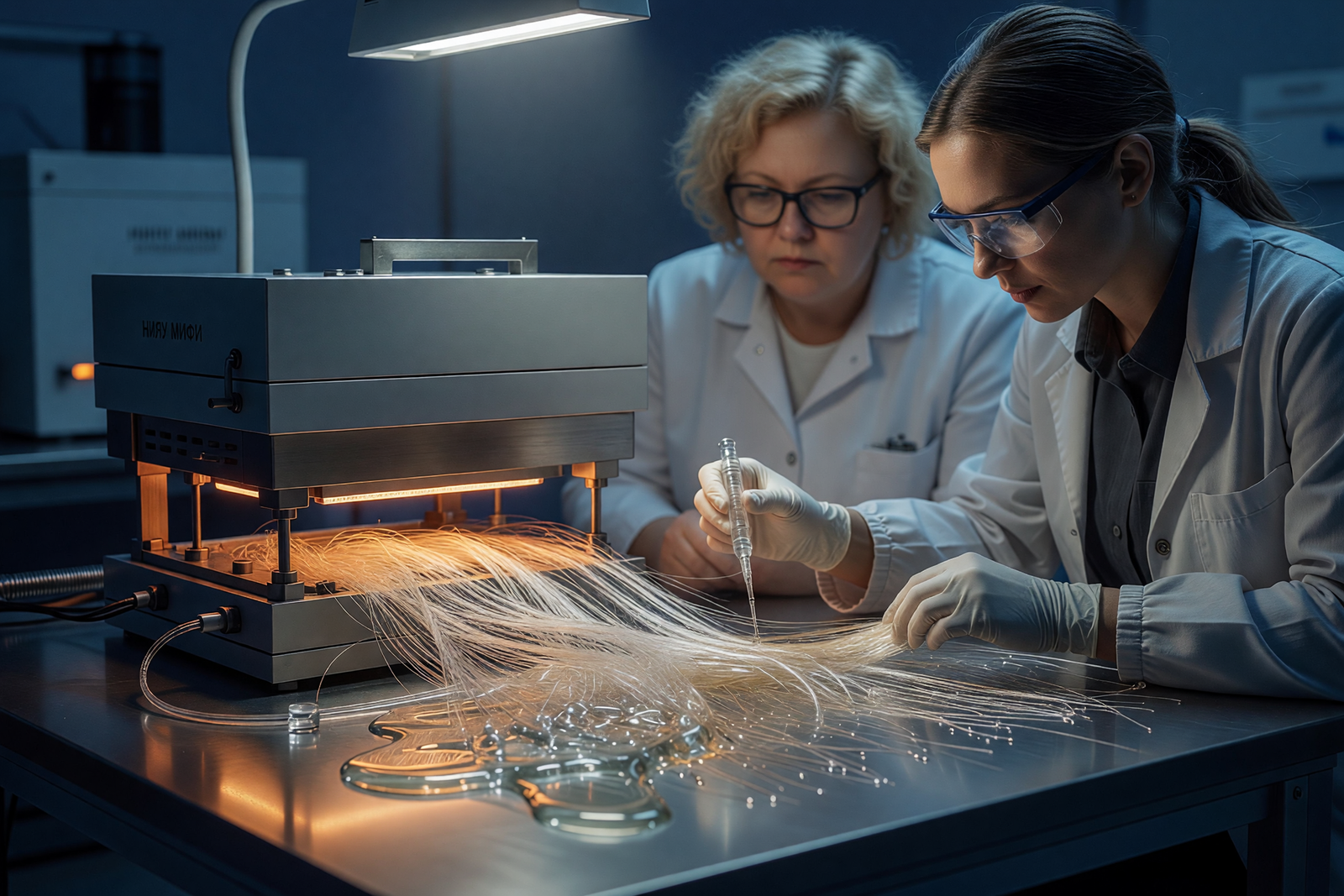
The fibrous filler is impregnated with an epoxy compound, and then molded under pressure. The composition includes approximately equal parts — about half fiber and half binder. To improve properties, the filler is treated with a special modifier. The resulting material is pressed under a pressure of 4.5–5.5 MPa and heated to a temperature of about 110 °C for one hour.
As noted in the patent description, the developed method provides increased composite strength and reduced water absorption.
The new material can be used for manufacturing parts operating under high loads and aggressive environments. The development can find application in the aviation, space, and automotive industries. The technology allows creating materials with specified properties and can be adapted to specific customer requirements.
Earlier, "Pervy Tekhnichesky" wrote that MAI created a technology for strengthening polymer composites using carbon nanotubes: an additive of only 0.05% by weight of the material increases fatigue strength by 45% and triples resistance to cyclic loads — a fundamental indicator for aviation structures.
A similar logic — improving the properties of the epoxy matrix — underlies the MIPT development: ultra-strong epoxy resin obtained by plasma-chemical synthesis increases the strength of the base material by 3–10 times, and the resulting carbon composite approaches aluminum in strength with less weight and cost.
Parallel work is also being carried out with metal-matrix systems: Tomsk scientists have developed a method for creating metal composites with an aluminum matrix, reinforced with tungsten, silicon, and boron carbides — the hardness of such materials is four times higher than that of commercially available analogues. The new NRNU MEPhI patent continues this line, offering a polymer route based on an oxidized PAN precursor with an emphasis on reducing water absorption — an important criterion for operation in aggressive environments.
Read more on the topic:
- Glues aircraft in minutes: Russian chemists create unique epoxy compound for aviation and shipbuilding
- For aircraft fuselage, body, and wings: PNRPU scientists found a way to improve the properties of polymer resins
- Strength Increased by 45%: Composite Reinforcement Technology for Aviation Developed at MAI
Never miss our newsAdd this site to your preferred sources to see us more oftenAdd on Google