A Russian inventor has received a patent for a bullet model that can be used to combat UAVs, as well as in other areas. As stated in the patent abstract, the technical result of the development is to increase the projectile's destructive capability by expanding the damage area while simultaneously reducing the risk of injury to bystanders.
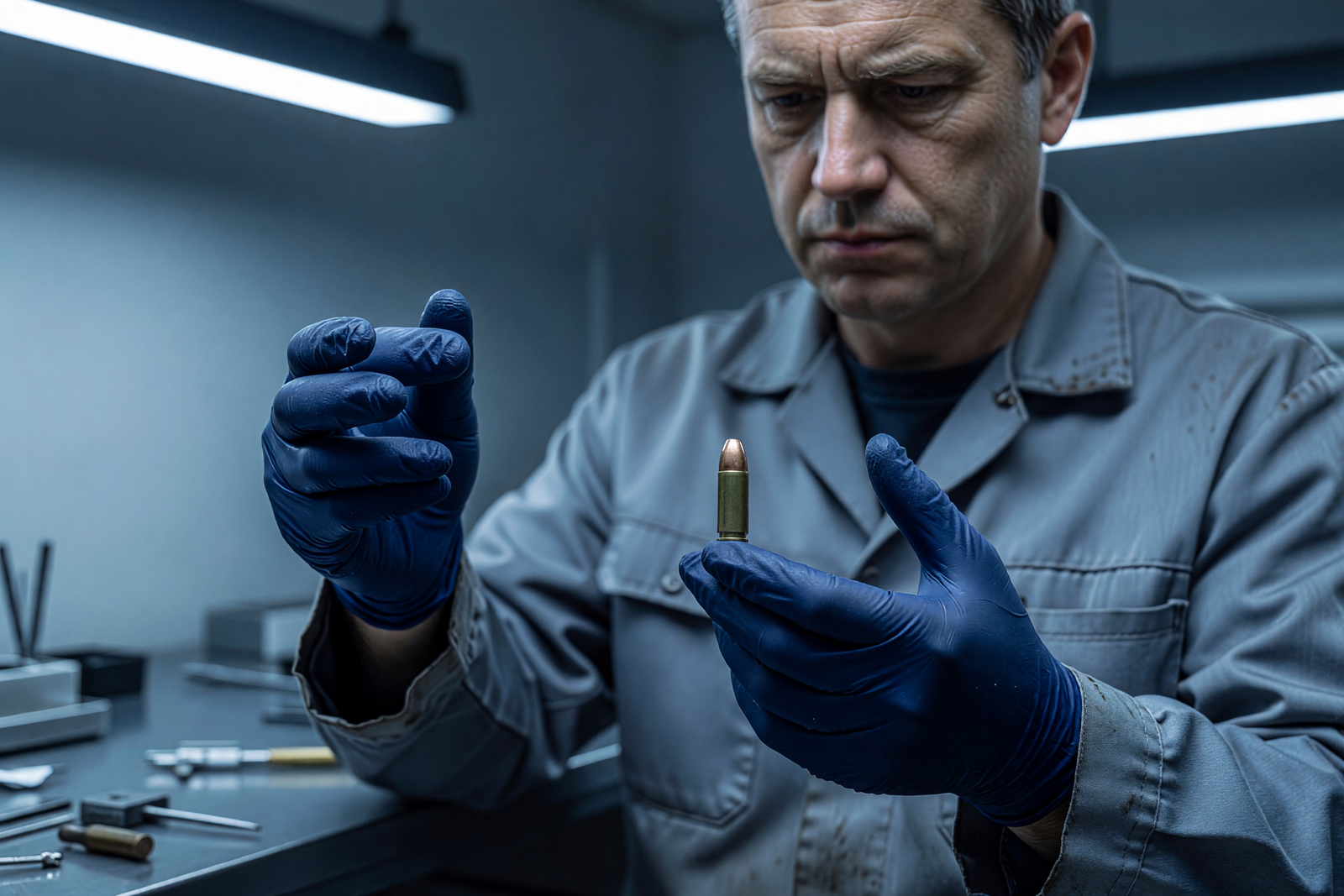
The bullet contains a core located along the projectile's axis. Around it, damaging steel elements are layered spirally, covered from above by a special plastic casing – a wad-container. This design allows for a wide fan of damage upon firing, which is critically important when shooting at fast and maneuverable targets such as drones.
The development can be used in both rifled and smoothbore weapons. A feature of the design is the reduced risk of hitting accidental objects due to controlled dispersion of damaging elements, making the bullet promising for use in urban environments and during anti-terrorist operations.
Similar technologies are actively being developed worldwide to counter drone swarms. For example, in the USA, bullets with steel balls and fletching for stabilization are being patented, as well as systems with electronic fuses for detonating ammunition in close proximity to the target. The Russian development offers a simpler and cheaper solution that does not require complex electronics.
In February 2025, an assault rifle cartridge with buckshot, equipped with six metal balls with a spread of up to 50 meters, was reported to have shown high effectiveness when fired from a Kalashnikov light machine gun. Shortly thereafter, engineers from Novosibirsk State University presented a shotgun cartridge with aerodynamic inserts: a design feature is shot pellets of different sizes and weights, connected by thin threads that entangle drone propellers.
More complex systems are also under development. Specialists from the Research Institute of Applied Chemistry patented a cartridge with an increased proportion of heavy shot and a modified wad-container, allowing targets to be hit at distances of up to 100 meters. Among the unconventional solutions is a bidirectional projectile, in which the explosive charge is located in the center of the casing, and a counterweight of loose material compensates for recoil upon firing.
Read more on the topic:
Never miss our newsAdd this site to your preferred sources to see us more oftenAdd on Google