Scientists from MIPT and Skoltech have developed a stabilization algorithm for miniature flapping-wing robots that mimics the flight characteristics of a bumblebee. The development allows the drone to stay in the air even in strong gusts of wind. The research group stated that if customers are interested in the project, a prototype could be assembled within six months.
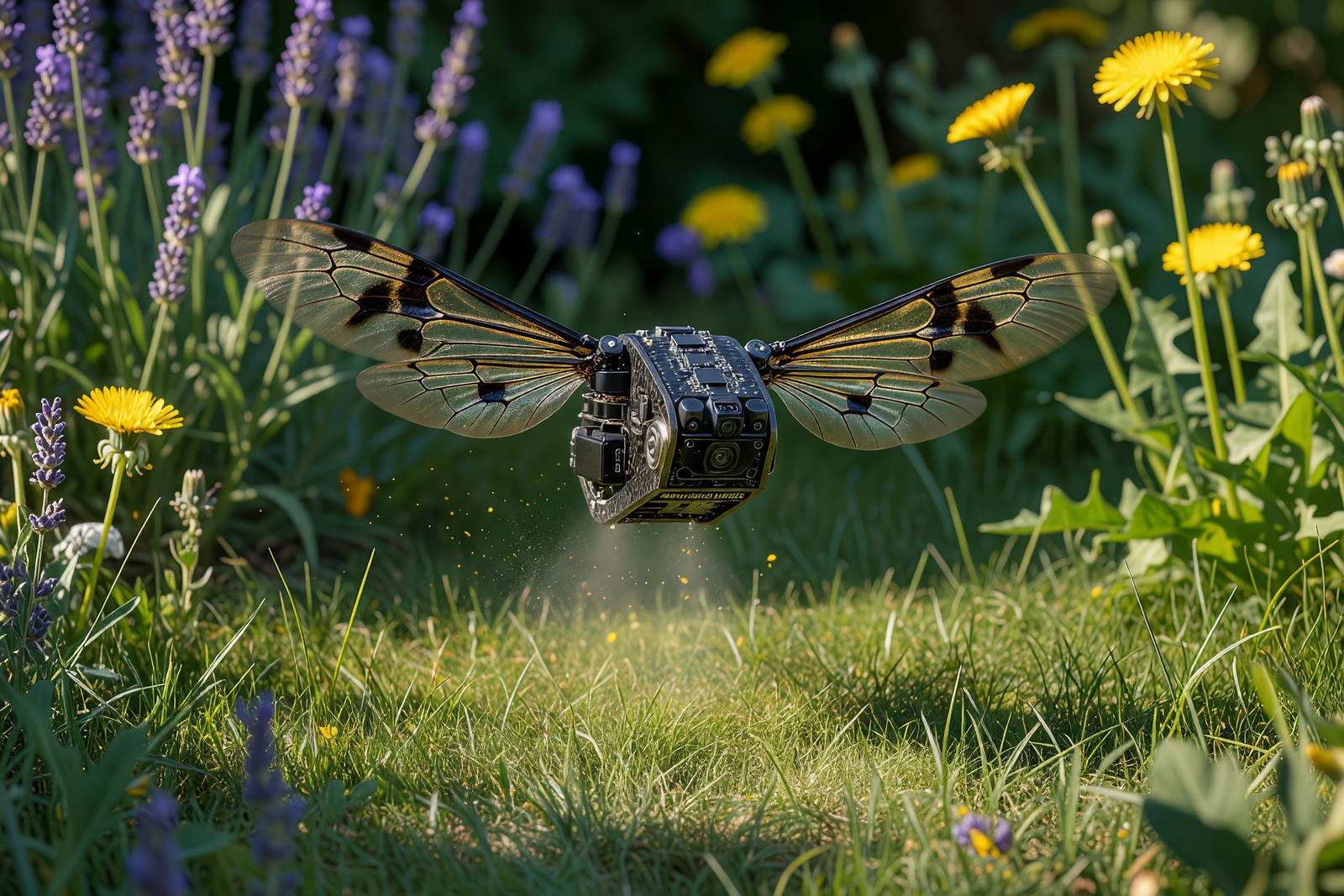
Bumblebees are among the most maneuverable insects in nature: they hover in the air, make sharp turns, and instantly change direction. The secret lies in vortex aerodynamics: with each wingbeat, vortices are formed, creating lift. However, flapping flight is extremely unstable, and without continuous processing of signals from sensory organs, the insect loses control. In the digital model, this stabilization system had to be recreated from scratch.
The developed algorithm controls the amplitude of the wingbeat, the trajectory position, and the wing's angle of rotation. At each step, it calculates how to maintain a given speed and return the apparatus to stable motion after an external disturbance. The effectiveness was tested in a digital wind tunnel – the virtual bumblebee maintained stability even in gusts of wind whose force was one and a half times its own weight. The stabilization time was from three to six seconds.
As noted at MIPT, the new technology will allow microdrones to operate in extreme environments: among trees, inside buildings, in debris after accidents, for infrastructure monitoring, and for pollinating plants in greenhouses. The development is of interest for reconnaissance and search and rescue operations.
Experts emphasize that stability is the main step from a beautiful model to a truly useful device. However, for practical application, technical challenges need to be solved, in particular, creating a compact and lightweight power source with sufficient energy reserves. Currently, the miniaturization limit for quadcopters is three inches, and insect aerodynamics are not yet applied in practice due to the lack of suitable batteries and a sufficiently powerful on-board AI system. Scientists have already developed an aerodynamic model and verified it using high-speed video footage of bumblebee flights.
Read more on the topic:
Never miss our newsAdd this site to your preferred sources to see us more oftenAdd on Google