Translated with AI from the Russian original.
Instead of large workshops, future productions could use small, wafer-sized chips. This technology is currently being developed by Russian scientists. AI-controlled microfluidic chips are set to completely change the traditional approach to creating chemical substances. Yulia Gorbunova, Rector of the Skolkovo Institute of Science and Technology and academician of the Russian Academy of Sciences, revealed the details.
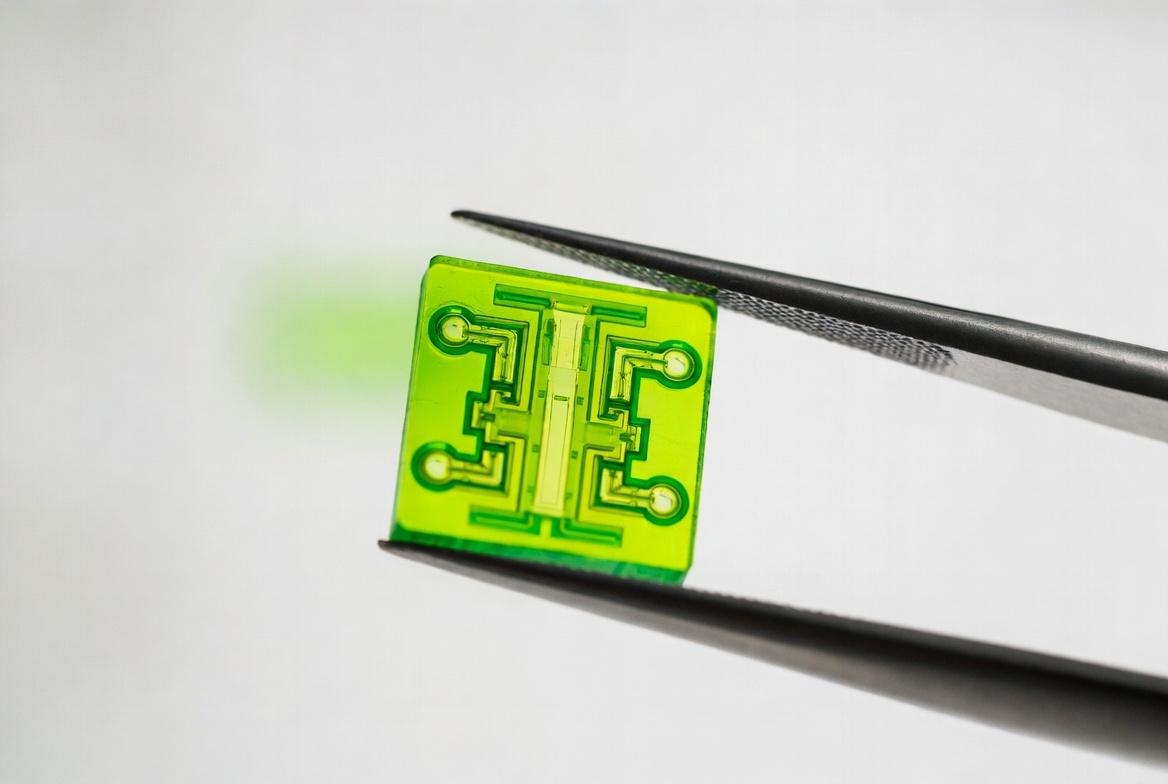
Benefits of AI-powered microfluidic chips
These are special microchips capable of quickly and inexpensively creating substances or performing complex analyses, replacing bulky and expensive equipment.
Instead of huge reactors and containers, all processes will occur within tiny channels – a kind of miniature "pipelines" on a chip. There, pressure, temperature, and reaction time can be controlled very precisely.
According to Yulia Gorbunova, such technologies can change the very principle of operation of the chemical industry. The main advantage of such systems is the ability to obtain the necessary substances faster and under more precise conditions.
The result of this work could be products needed by key sectors of the economy: new medicines, chemical substances for petrochemistry and agrochemistry, as well as materials for instrument engineering, mechanical engineering, and aircraft construction.
Where else can miniature installations be used?
Microfluidic devices can be used not only in industry but also in scientific research.
They allow complex chemical reactions to be carried out in compact systems with precise control of all parameters, and simultaneously analyze the resulting products directly during the process.
Scientists from Labadvance, a company created with the support of Skoltech (VEB.RF Group) and a resident of the Skolkovo innovation center, are engaged in the development of such chips.
Developments are also underway at the International Research Institute of Intelligent Materials of SFedU. Scientists are creating microfluidic chips, including using 3D printing, to accelerate the synthesis of functional materials. Researchers actively apply machine learning algorithms.
Rostec (NPP "Radiosvyaz", Rosel holding) has focused on medicine and developed a prototype electrochemical system "Biosensor" for early diagnosis of oncological diseases.
Read more on the topic:
Never miss our newsAdd this site to your preferred sources to see us more oftenAdd on Google

















