Specialists from the United Engine Corporation (ODK) explained what the bypass ratio of a turbofan engine is and why this parameter is critical for modern civil aviation.
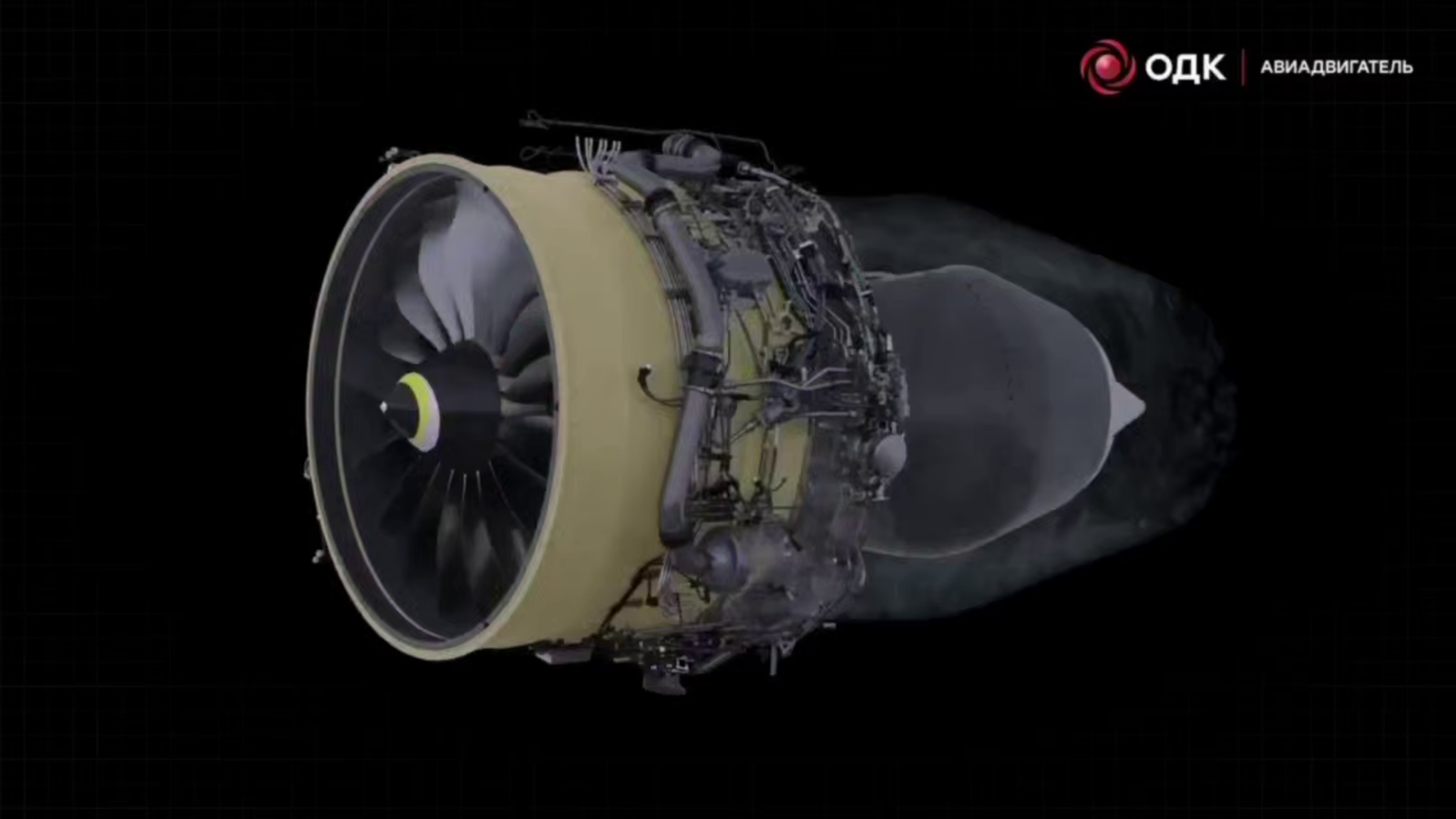
According to them, the bypass ratio is a design solution in which the air flow drawn in by the fan at the engine inlet is divided into two independent circuits. Part of the air is directed into the internal circuit, where it passes through the compressor, combustion chamber, and turbines, forming a jet stream and providing energy to drive the fan. The main mass of air moves through the external circuit, bypassing the gas generator, and is discharged through a common nozzle, or mixed with hot gases before exiting.
The key indicator of the effectiveness of such a scheme is the bypass ratio - the ratio of the mass flow rate of air in the external circuit to the flow rate in the internal circuit. As the engineers noted, values from 0.5 to 2 are typical for supersonic and high-subsonic aircraft. At the same time, for passenger aircraft operating at speeds of 800-1000 km/h, it is advisable to increase the bypass ratio to 5-6 and higher.
As the experts explained, increasing this parameter directly reduces specific fuel consumption, reduces noise, and increases thrust efficiency in subsonic modes - which is especially important for commercial aviation.
Read more materials on the topic:
- Russian luggage racks for SJ-100 and MS-21 have been developed and put into series production
- Who is behind the production of PD-8 and GTD-110M engines?
- An experienced aircraft mechanic revealed the secrets of the attractiveness of his profession
Never miss our newsAdd this site to your preferred sources to see us more oftenAdd on Google

















