Translated with AI from the Russian original.
The "National Computer Corporation" has presented a commercial version of the domestic computer-aided design system "SARUS+ Composites". The program is designed for technological preparation of the production of products from polymer composite materials.
This is the only Russian solution in its class, which has received the status of an analogue of foreign systems from the expert council of the Ministry of Digital Development and is included in the Unified Register of Software. The system is fully compatible with Astra Linux.
The software package allows you to simulate laying processes with high accuracy, form a digital model of the structure of a composite package and automatically calculate the mass and moments of inertia of parts, eliminating manual calculation errors.
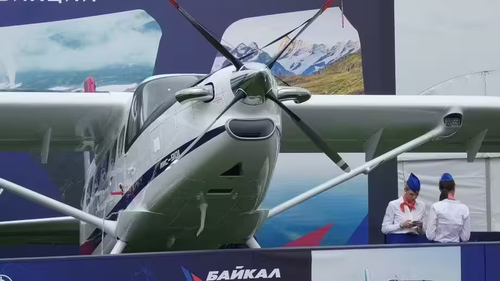
The functionality of the software has already been tested on models of products from the Ural Civil Aviation Plant (UZGA), the developer of the LMS-901 Baikal aircraft to replace the Soviet An-2.
The system provides a complete end-to-end design cycle for composite elements based on the original geometry without rebuilding it.
Earlier, former pilot Alexander Garnaev stated that Russia would not be able to make a replacement for the An-2. In his opinion, the LMS-901 Baikal programcan be considered a failure.
Read more materials on the topic:
- "They can't make a 'corncob' in 20 years!": the head of the communists is sounding the alarm because of the state of the aviation industry
- "Baikal" rises into the sky: the VK-800 engine will be brought to readiness in 2025
Never miss our newsAdd this site to your preferred sources to see us more oftenAdd on Google

















