Scientists at Novgorod State University (NovSU) have proposed new materials for creating small-sized and environmentally friendly magnetoelectric generators. The research is aimed at developing energy-efficient devices capable of converting mechanical energy into electrical energy without the use of fossil fuels.
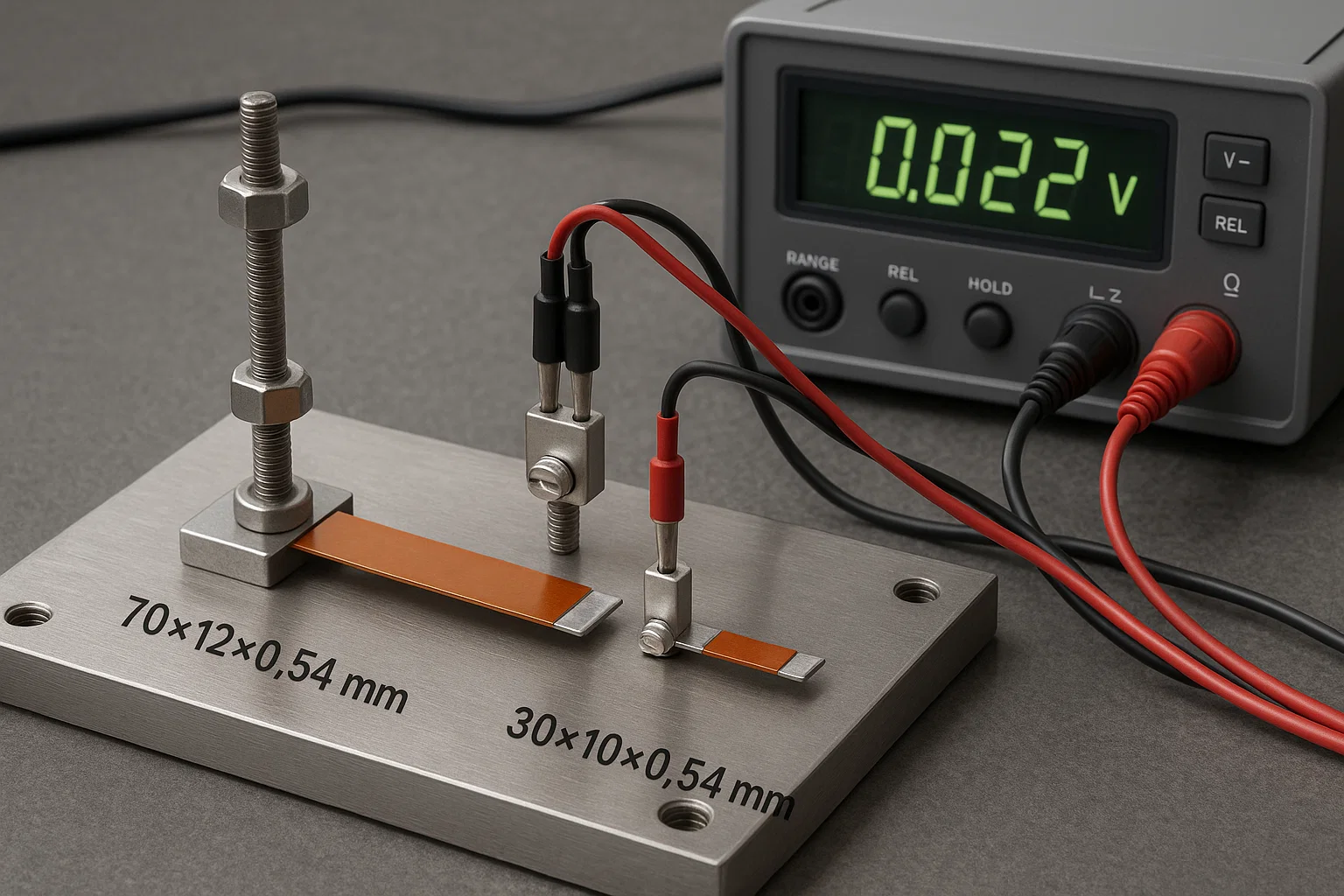
The work was carried out by Professor Roman Petrov, graduate student Vasily Misilin, and engineer-technologist of JSC "OKB-Planeta" Evgeny Kuzmin. They studied the properties of magnetoelectric (ME) elements - plates that convert vibrations into energy due to piezoelectric and magnetoelectric effects. The researchers tested elements with dimensions of 70×12×0.54 mm and 30×10×0.54 mm on a special measuring stand. At a resonant frequency of 51 kHz, one element showed an output power of about 1 mW, and the joint operation of elements in resonance increases the power by tenfold.
ME generators can be used in wind power, hydro generators, and turbo generators. Unlike solar panels, they are compact and do not require a large area. Compared to electromagnetic generators, ME elements are lighter and do not contain expensive copper.
The study showed that magnetoelectric elements have high potential for use in power generators. At the same time, their joint operation of ME elements in resonant mode significantly, by several orders of magnitude, increases the output power. This is a power of tens of millwatts, so such systems can already be used in energy-independent devices. Thus, the output power of one such element at a resonant frequency of about 51 kHz was about one millwatt.
The research, which began in 2015, is supported by a grant from the Ministry of Education and Science of Russia as part of the Decade of Science and Technology. The results will be used to create prototypes of new generator systems.
Read more materials on the topic:
New stand for studying electronics developed at St. Petersburg Electrotechnical University "LETI"
Never miss our newsAdd this site to your preferred sources to see us more oftenAdd on Google

















