Translated with AI from the Russian original.
Russian physicists have created a new theoretical model that consistently explains how vertical plasma instability arises. This phenomenon poses a serious threat to the safe operation of tokamak-type thermonuclear reactors.
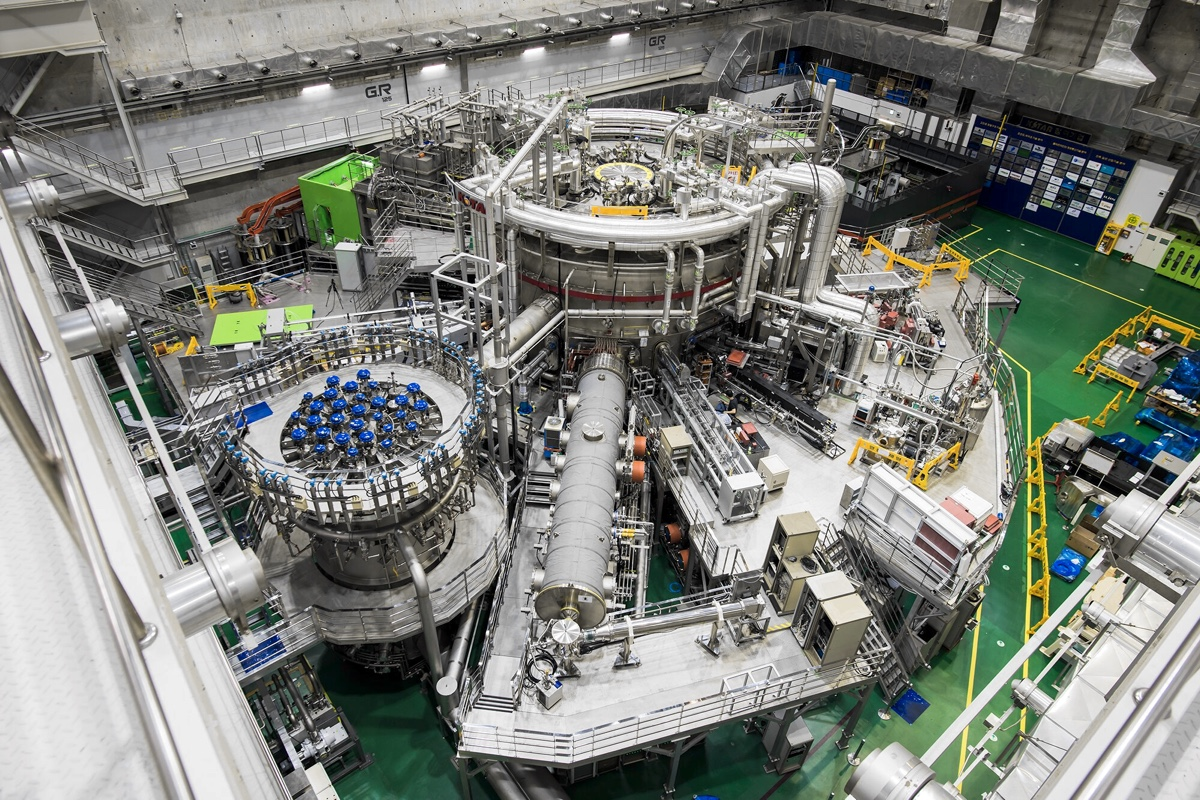
Previous models were elegant, allowed solving the problem relatively simply, but worked in very narrow, practically unrealizable frameworks. Suffice it to say that the initial assumptions required that the shape of the vacuum chamber also change when the shape of the plasma changes. We have created a universal method that can be applied to existing and designed tokamaks, including ITER.
Over the past 50 years, physicists have proposed several ways to create thermonuclear reactors. Tokamaks and stellarators are considered the most promising. Tokamaks are at a more advanced stage of development, which is facilitated by the international ITER project, which is being built in France with the participation of many countries. In tokamaks, plasma heated to hundreds of millions of degrees is held in the form of a thin cord. To increase power and efficiency, the plasma cord is stretched, but this makes it vulnerable to vertical displacements. There is a risk that the cord may shift and hit the reactor walls.
Physicists from MIPT and the Kurchatov Institute have proposed a new, universal research method capable of describing plasma and walls with any independent shapes. The calculation results demonstrate that the developed method provides a better match with experimental data compared to previous approaches to calculating vertical plasma instabilities. This paves the way for creating more accurate tokamak control algorithms capable of preventing such incidents.
Read more on the topic:
An environmentally friendly method of plastic recycling has been developed in Kabardino-Balkaria
Useful chewing gum developed at Sechenov University
In Russia, scientists have created more efficient "living batteries" from plants and microbes
Sechenov University trained a neural network to determine the location of brain tumors with high accuracy
Never miss our newsAdd this site to your preferred sources to see us more oftenAdd on Google

















