Ортез для реабилитации кисти после инсульта был разработан студенткой РТУ МИРЭА

The device actively restores motor skills thanks to a unique system of adjustable elements

A team of researchers from MIREA – Russian Technological University has developed a new generation orthosis designed to rehabilitate patients with impaired hand mobility after radial nerve injuries and stroke. Unlike traditional models that only restrict movement, this development stimulates the restoration of motor skills through active participation in the rehabilitation process.
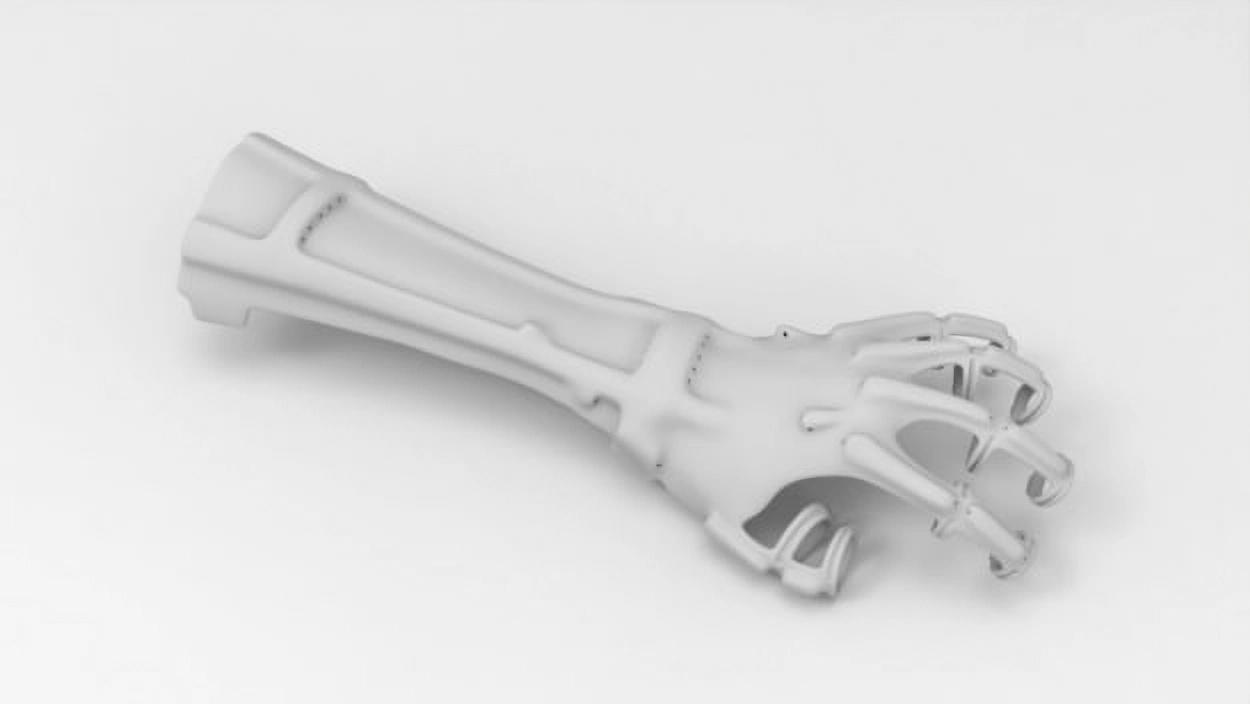
The photo shows the second prototype of the orthosis. For the patient's convenience, the inner part of the palm was left free. The holes are for tensioners (the tensioners are fixed on the phalanges of the fingers and then run along the hand, repeating the anatomy of the human hand).

The orthosis consists of 10 adjustable elements that mimic the work of tendons. Each of them can be individually adjusted to the anatomical features of the patient, which allows restoring even fine motor skills.

We have created a system that actively participates in the rehabilitation process, rather than just supporting the hand. This gives patients the opportunity to return to normal life faster.
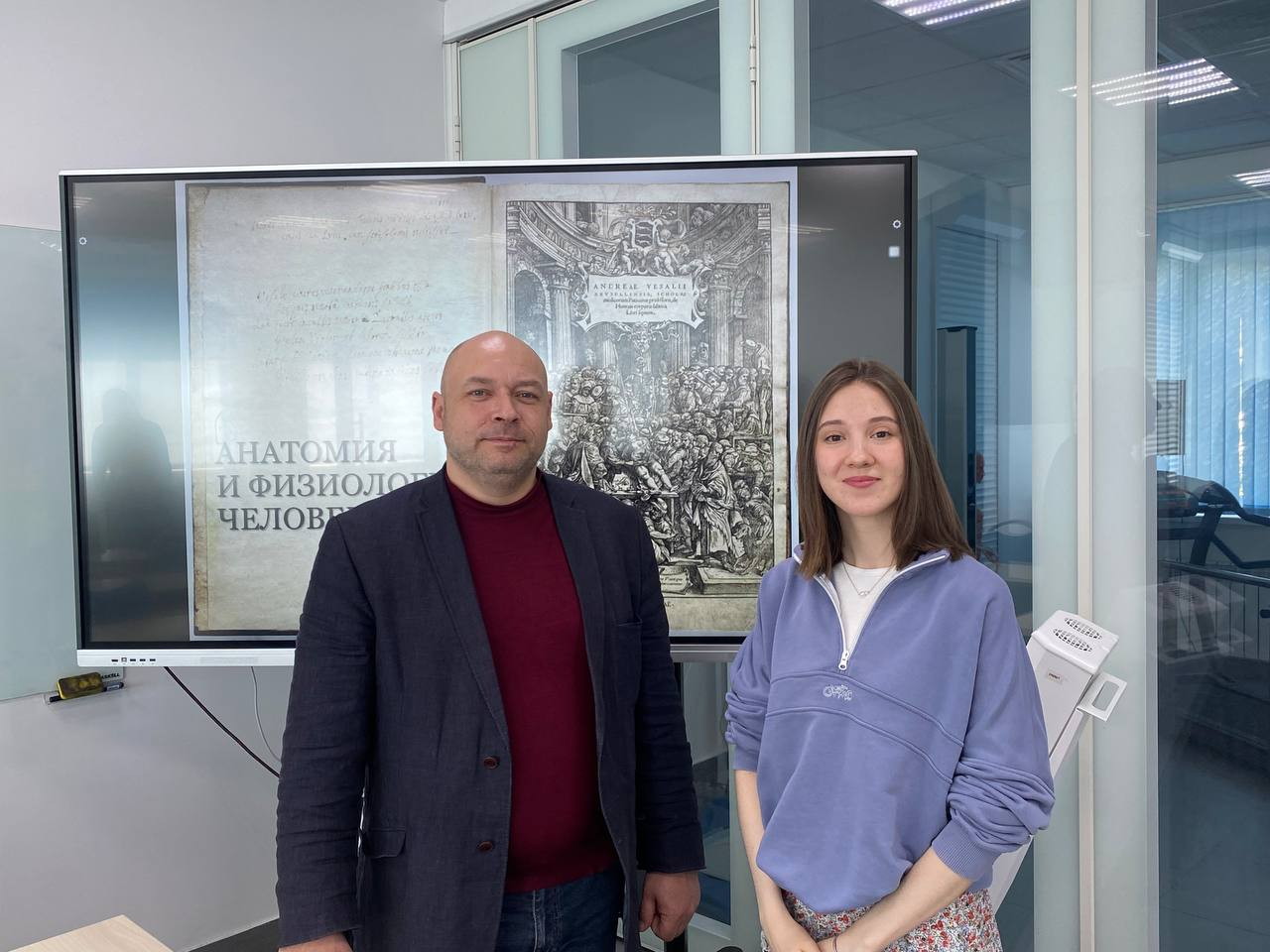
Daria Maslennikova, project author, 4th year student at the Institute of Artificial Intelligence, MIREA
The photo shows the research team from MIREA: Alexey Kirichenko, project supervisor, senior lecturer at the Department of Biocybernetic Systems and Technologies, MIREA, and Daria Maslennikova, project author, 4th year student at the Institute of Artificial Intelligence, MIREA
Existing analogues either rigidly fix the hand, limiting mobility, or use a single kinematic chain, synchronously extending all fingers. The uniqueness of our orthosis is that each finger can be bent and unbent separately thanks to two extensors on the phalanges. This is a new technology that has no analogues on the market yet.
Alexey Kirichenko, project supervisor, senior lecturer at the Department of Biocybernetic Systems and Technologies, MIREA

Another advantage is the location of the orthosis only on the back of the hand, which preserves the natural mobility of the palm and reduces discomfort. The project has already been supported by the «MIREA Accelerator», which will speed up its refinement and market launch.
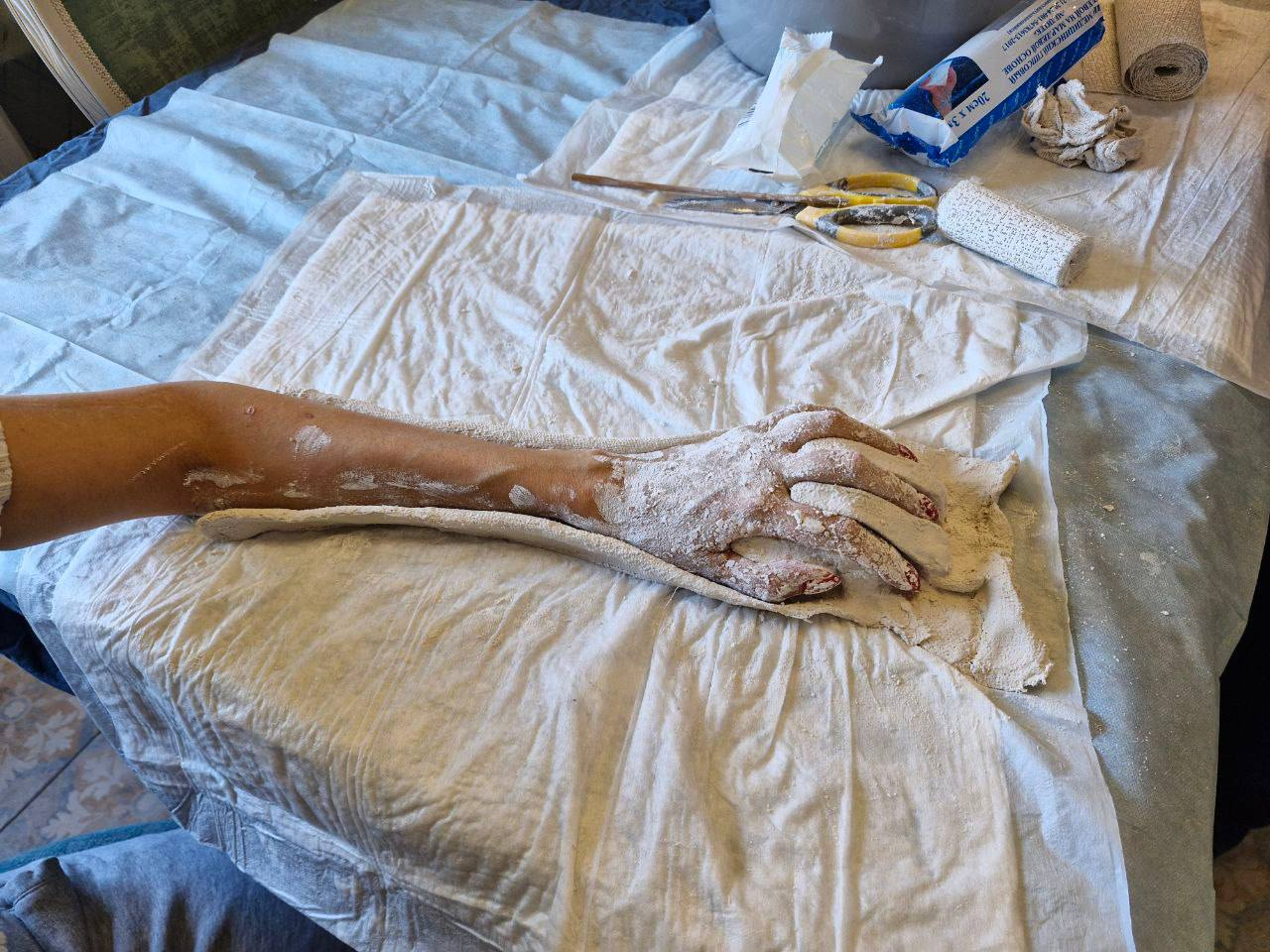
The photograph was taken during the process of obtaining a plaster cast of the hand. With flexor contracture of the hand, the hand is in the «clamp» position. To design an orthosis, you need to have a 3D model of the patient's hand in a straightened, natural position. The patient cannot hold the hand in this position on their own, so plaster bandages were used

About 450,000 cases of stroke are registered annually in Russia. 80% of people who have had a stroke have motor impairments. Radial nerve injuries are also a common problem, especially after fractures and industrial injuries. Most existing treatments only passively fix the hand, without promoting active recovery.

Read more on the topic:

Will pump up the heart: «CardioRobot» from Rosel has reached the stage of mass production

Technology that shortens the process of bone fusion with implants has been developed by scientists at the Sirius University

Biotechnology for the production of drugs for diabetes was created by Russian scientists

Now on home

















