Translated with AI from the Russian original.
Peter the Great St. Petersburg Polytechnic University (SPbPU) has presented the first comprehensive calculations of the impact of plasma on the walls of the International Thermonuclear Experimental Reactor (ITER). This was reported by the university's press service.
Using new approaches, we have for the first time calculated the potential impact of plasma on the surface of the walls at various points, taking into account all their numerous features and characteristics of the very complex shape of the reactor. Based on these calculations, which we have now presented, the management has decided to reconstruct the reactor and replace the beryllium walls with a tungsten surface.
ITER is a toroidal chamber with magnetic coils (tokamak) that will hold plasma heated to over 100 million degrees, which is necessary for thermonuclear fusion. The plasma in the tokamak is held by a magnetic field. This prevents it from directly contacting the material walls. However, one of the main problems is minimizing the destructive impact on the walls, the temperature of which can reach 10,000 degrees.
The new mathematical method of extended grids has significantly improved numerical modeling. This approach made it possible to calculate the parameters of the near-wall plasma for all possible cells of the tokamak, which was previously impossible.
The calculations used the supercomputers of SPbPU and the ITER project, and one calculation took about a month.
Initially, the tokamak walls were planned to be made of beryllium. In the case of tungsten as a suitable option, there were concerns that the surface would be sputtered and contaminate the plasma. We were able to calculate all the necessary parameters for this unique project, and based on our data, a collective decision was made to use tungsten.
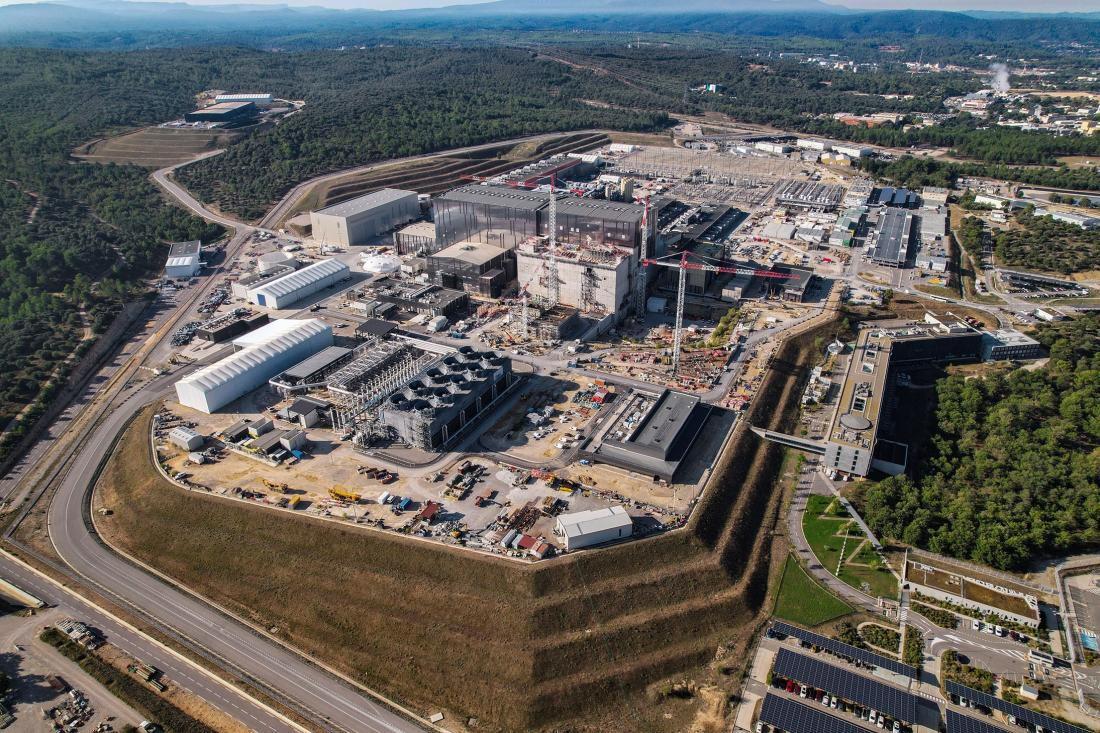
ITER is the world's first international thermonuclear experimental reactor of a new generation, being built in Provence, France. Its goal is to demonstrate the scientific and technological feasibility of using thermonuclear energy on an industrial scale. Russia's main contribution is the development and supply of 25 systems for the installation, and the first experiments on the reactor are scheduled to begin in 2034.
Earlier www1.ru reported that Rosatom is installing gyrotrons on the ITER reactor in France.
Read more on the topic:
The launch of the ITER thermonuclear reactor, which Russia is helping to build, has been postponed by more than 10 years
New technology for storing radioactive waste developed in Russia
Never miss our newsAdd this site to your preferred sources to see us more oftenAdd on Google

















