The Soyuz rocket with the Russian satellite "Condor-FKA" No. 2 was taken out and installed at the launch complex at the Vostochny Cosmodrome.
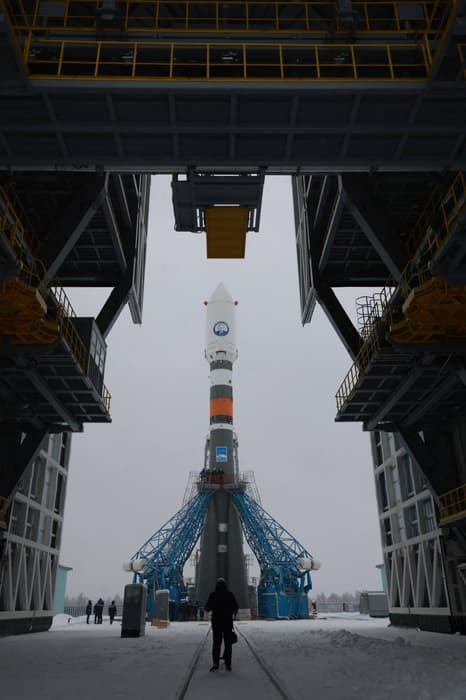
The payload of the Condor-FKA No. 2 satellite is a synthetic aperture radar developed by engineers of the Vega concern, which is part of Ruselectronics. It is designed to obtain high and medium resolution radar images and is capable of operating in various modes to solve a wide range of tasks.
Despite the snow and cold, according to Roscosmos, all work was carried out as planned.
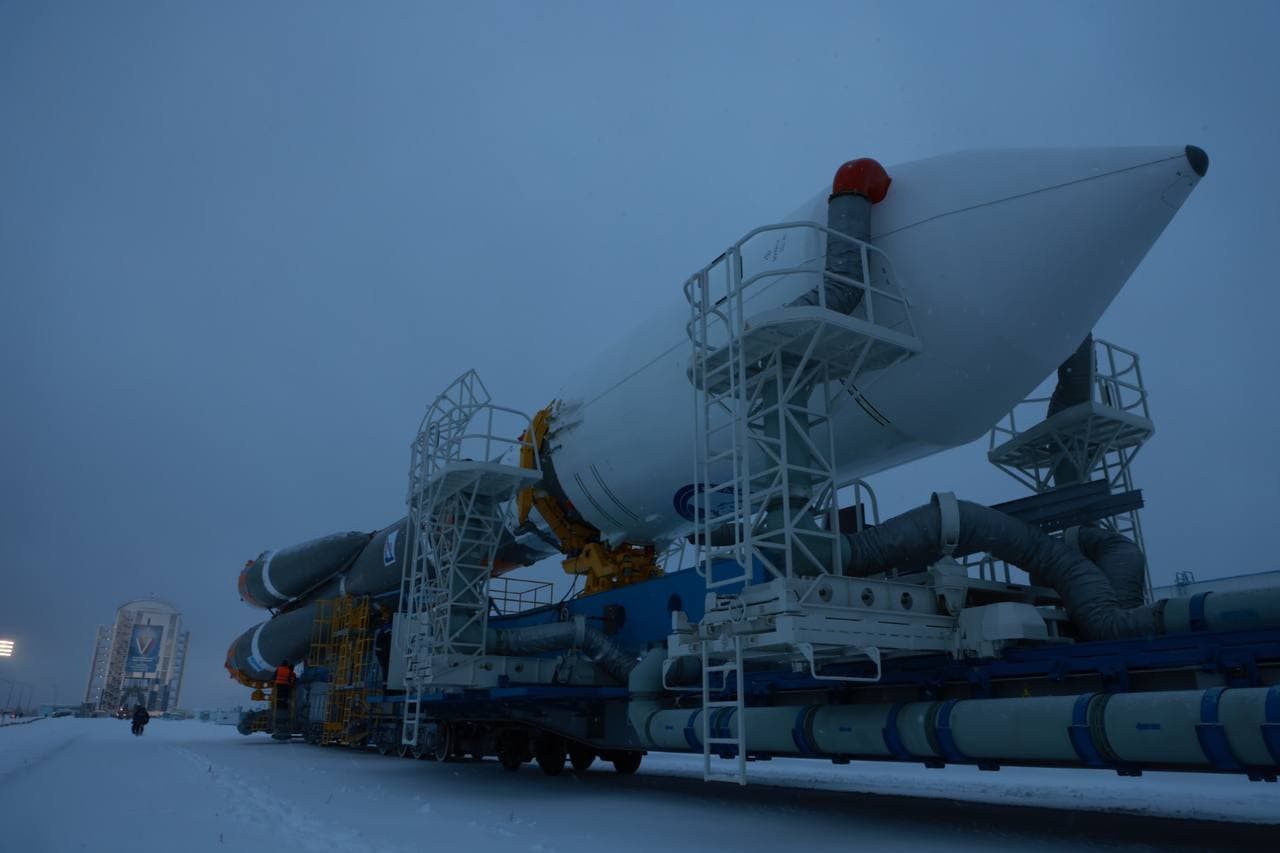
The rocket launch will take place on November 30 at 00:50 Moscow time. Traditionally, it will be broadcast online on Roscosmos social networks.

Satellites "Condor-FKA"
Satellite group for performing a number of tasks. "Condor-FKA" help agriculture, monitor the consequences of man-made and natural emergencies, conduct survey shooting to record the ice situation on the Northern Sea Route and provide highly detailed images of its sections.
The first of the satellites of this family has already completed flight tests, having been in Earth orbit for more than a year.
Two Condor-FKA satellites of the group plus an all-weather Obzor-R apparatus, which should also be launched into Earth orbit by the end of the year, will create a new satellite mini-network. It will provide coverage of the Northern Sea Route in no more than 14 hours.
Read materials on the topic:
Total liquidation: Roscosmos will sell off old space technology
Progress MS-28 saved the ISS from colliding with space debris for the second time in a week
Now on home

Start of deliveries scheduled for 2027

Over 51,000 new motorcycles were sold in Russia in 2025

The car will take at least a year to assemble

The application's audience has reached 20 million users

The model will be included in the list of cars for taxis, price - from 2.25 million rubles

All parking lots of the "Administrator of the Moscow Parking Space" are connected to the service

The cars will be supplied to the Moscow Transport Service Directorate
Deliveries to India may begin in 2028
The technology provides automated search for all types of defects in power units
The plane flew 500 km, accelerating to 425 km/h

The plant stated that the information about the termination of purchases for models 6 and 8 is not true
Scientists are using the "Ekran-M" installation
Articles
-
Russian An-124 "Ruslan" Stuck in Canada for 4 Years and Accrues Millions in Fines
26 Jan 2026
-
Coaxial Propellers: How Counter-Rotation Increases Turboprop Engine Efficiency
25 Jan 2026
-
Kazan Aviation Plant Breaks Old System: Tu-214 to be Assembled Like Cars
25 Jan 2026
-
How Engineers and Technicians Are Paid Today in the Russian Aviation Industry: An Overview with Figures
24 Jan 2026