The winner of the “Era” fund accelerator in the field of military technologies, the company “Veles Logistic”, will launch mass production of FPV drones of the aircraft type, resistant to electronic warfare (EW) equipment.
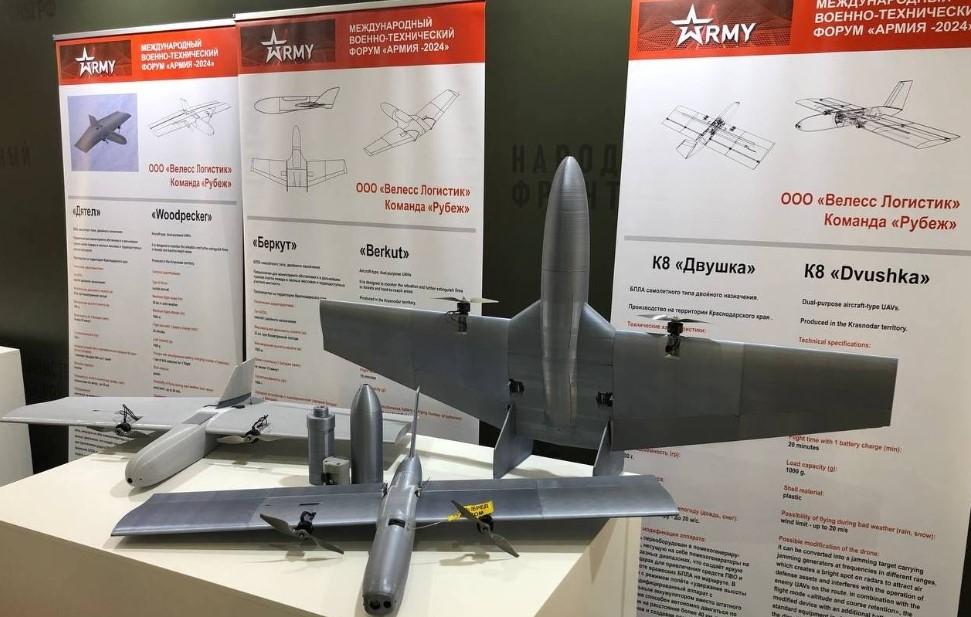
The company is expected to produce 1.5 thousand “K-8 Dvushka” aircraft-type drones.
The advantages of the product are as follows: resistance to enemy electronic warfare due to the use of an aircraft design, a two-circuit charge detonation system has been developed and applied, thereby ensuring the safety of the calculation.
“K-8 Dvushka” drones can deliver up to 5 kg of cargo and fly at speeds up to 150 km/h. Among other features, the developer company mentioned the possibility of launching the UAV from the hand, flying at wind speeds up to 20 m/s, as well as preparing for launch in just a couple of minutes.
These drones have been used by Russian military personnel in combat conditions since 2023. During this time, the troops received over 350 units of “K-8 Dvushka”.
Read more on the topic:
The development of the Novosibirsk University UAV “Zhuravl” was presented in the Moscow region
UAV “Inokhodets-RU” will be equipped with a transonic multi-purpose tactical missile
Never miss our newsAdd this site to your preferred sources to see us more oftenAdd on Google

















