The Russian spacecraft "Soyuz MS-25" successfully delivered not only an international crew to the ISS the day before, but also equipment for scientific work in orbit.
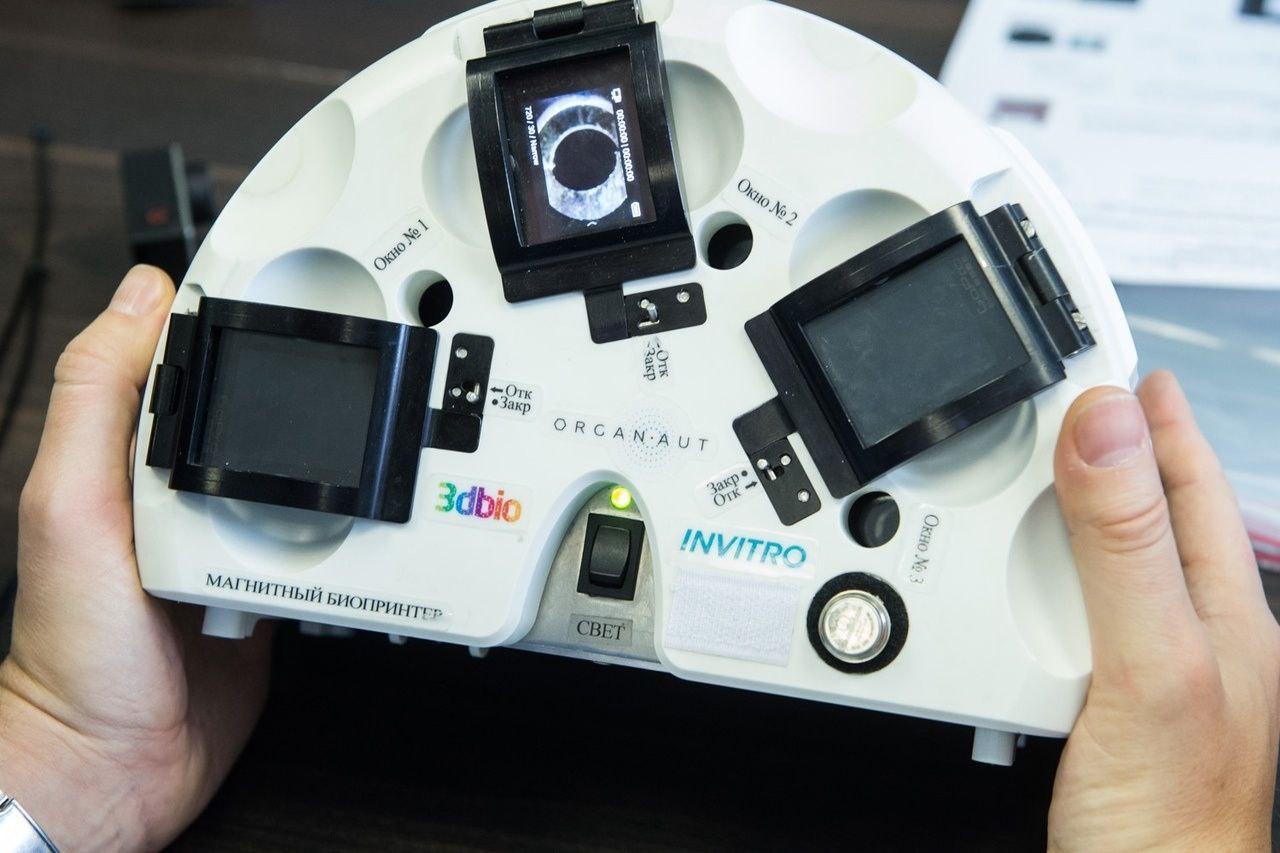
Now, cosmonaut Oleg Kononenko will be able to continue working on testing the technology for creating tubular human organs outside the Earth. These include, for example, branches of blood vessels, the aorta, and the urethra.
Tissues of cartilage, pancreas, and bone have already been created on the ISS. In zero gravity, this can be done without using large doses of paramagnetic substances. They are toxic in high concentrations. Tubular organs are the next level of complexity. [...] In special cuvettes there are plates with a shape memory effect. A layer of cells is applied to them. At a temperature of 35.5°C, the plate will curl up and the cells will be able to fuse, forming an analogue of the tubular organs of our body.
Two experimental sessions are planned — 24 and 48 hours. There are currently only four space magnetic bioprinters in the world, and they are all Russian — one on the ISS, one in the Museum of Cosmonautics at VDNH, and two at NUST MISIS.
Equipment for the space work of mission participant Marina Vasilevskaya from Belarus also arrived at the ISS as part of the cargo. She will have to complete a program of five scientific studies and two public works in the fields of medicine, biology, physiology, and remote sensing of the Earth.
As reported to IA "TASS" at the National Academy of Sciences of Belarus, Vasilevskaya will conduct spectral video photography of the planet's surface, as well as the "Lactoferrin" and "Hurricane" experiments.
[...] New data will be obtained on the preservation and properties of strains of lactic acid microorganisms and bifidobacteria, as well as their combinations in a state of anabiosis and after cultivation, and the parameters for obtaining fermented milk products in space flight conditions.
The research will be carried out thanks to the scientific equipment "Bioecology" and "Probiovit".
Never miss our newsAdd this site to your preferred sources to see us more oftenAdd on Google

















