The Project 22160 vessels from the "Northern PKB", which are on the balance sheet of the Russian Navy, are actively discussed online. Some of the vessels are already in service, while others are only being built in shipyards. The latest corvette of this project, transferred to the Navy, was the "Sergey Kotov", which was launched in 2021 and handed over to the military of the Black Sea Fleet in the summer of 2022. Vessels of this project are third-rank ships with guided weapons based on the modular concept. In total, four corvettes were built under this project, and two more are in the process. Here's what we know about them.
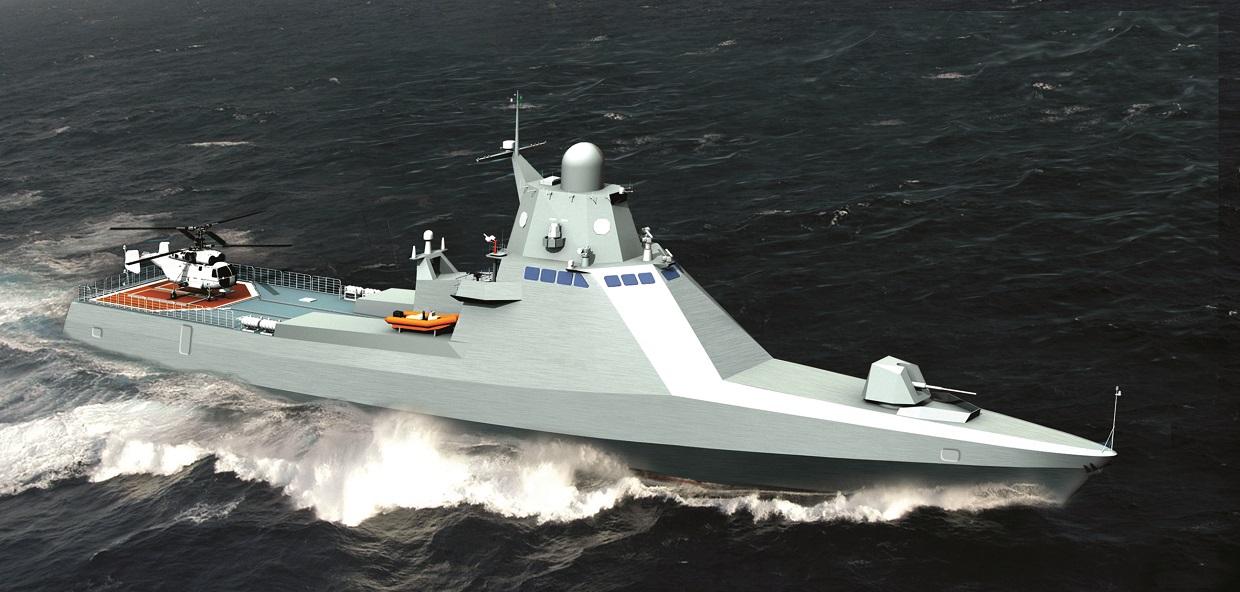
Project 22160 was developed by JSC "Northern Design Bureau" from St. Petersburg. The ships of the project are universal naval patrol corvettes that can be used to perform a variety of tasks independently or in tandem with other vessels. They can:
- carry out border patrol service to protect territorial waters;
- patrol the 200-mile exclusive economic zone in open and closed seas;
- fight pirates and smugglers;
- search for victims and help them in maritime disasters;
- conduct environmental monitoring;
- protect ships and vessels during sea passage;
- protect naval bases and water areas in order to warn of attacks by various enemy forces and means.
The ship also has a personal telescopic hangar and a take-off and landing pad with facilities for take-off, landing and maintenance of a search and rescue helicopter weighing up to 12 tons of the Ka-27 PS type.
There are currently four such vessels in service in Russia. "Vasily Bykov", "Dmitry Rogachev", "Pavel Derzhavin" and "Sergey Kotov" are already on the balance sheet of the Navy, and "Viktor Veliky" and "Nikolai Sipyagin" are in the final stages of construction. According to data from open sources, the last two vessels will be commissioned this year.
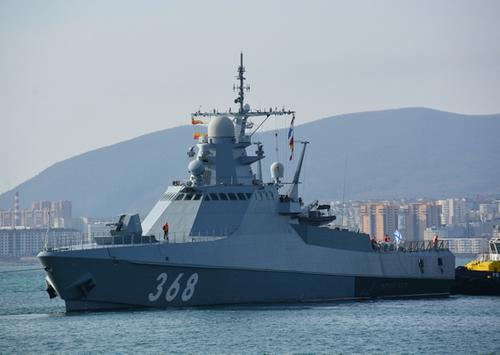
The vessels of the project have a displacement of about 1500 tons. They are 94 meters long and 14 meters wide. They develop a speed of up to 30 knots and can accommodate up to 80 military personnel.
The armament of Project 22160 includes a 57-mm A-220M artillery mount, one Gibka and Igla anti-aircraft gun each, and two 14.5-mm naval pedestal machine gun mounts for combating surface, coastal and air lightly armored targets.
The ships of the project are also equipped with a TK-25E complex for intercepting radiation from aircraft and ship radar detection and weapon control stations, radar homing heads of anti-ship missiles, automatic analysis of radiation, determining the most dangerous directions of attack on the ship, and creating interference in dangerous directions.
And for setting up short-range interference from surface ships and vessels of various classes, the project has a PK-10 complex. Its shells form false targets, providing protection for the ship from guided weapons with radar or optical guidance systems.
However, in 2023 it became known that the vessels of the project could be supplemented and modernized. In particular, during the modernization, they should have received the "Klub" missile system and the "Resource" anti-aircraft missile system.
Also, according to data from open sources, in 2023 the ships of the project were equipped with a universal artillery mount AK-176MA, two remotely controlled DP-65 grenade launchers, two 12.7 mm Kord machine guns and two DP-64 hand-held anti-sabotage grenade launchers.
Never miss our newsAdd this site to your preferred sources to see us more oftenAdd on Google














![Growth Point: After 5G Launch, Mobile Internet in Russia Accelerated by 20%","subtitle":"TelecomDaily recorded an upload speed increase of 19.7%, and download speed of almost 14%","announce":""}[]}],](https://media.ixbt.site/fit-in/320x/ixbt-data/1727896/ai-image-nvgq0a0v5cjnyxwoc8xpelva.webp)