The newest Russian T-14 "Armata" tank (developed by the Ural Design Bureau of Transport Machine Engineering) is in service with the Russian Armed Forces, but it is not used in combat. There are a number of reasons for this, according to Sergey Chemezov, head of Rostec.
According to him, the T-14 "Armata" surpasses all existing tanks in terms of its technical characteristics, but it is expensive.
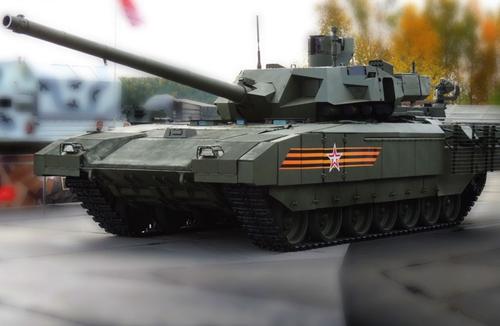
The "Armata" is expensive, so the army is unlikely to use it now. It's easier for them to buy the same T-90s
Experts Compare the T-14 Commander's Tank to the F-22 Fighter
Alexey Podberezkin, Director of the Center for Military and Political Studies at MGIMO, recalled that weapons such as tanks are constantly being modernized. He added that the famous T-34 was repeatedly improved during the Great Patriotic War.
Engineers were constantly inventing something new. This also applies to the T-14 "Armata". However, this tank is indeed too expensive, the expert emphasized.
This is a commander's tank, with the help of which a fairly large number of tanks are controlled - a battalion, or maybe more
The use of such a tank is not practical now. Podberezkin compared the T-14 "Armata" with the expensive American fifth-generation F-22 Raptor fighter. He explained that one flight of the F-22 Raptor costs hundreds of thousands of dollars.
That is why Russia is focusing on the production of the T-90M "Proryv". At the same time, the development of the entire line of tanks is too expensive, they choose those tanks that are effective on the battlefield and can be mass-produced, Podberezkin summarized.
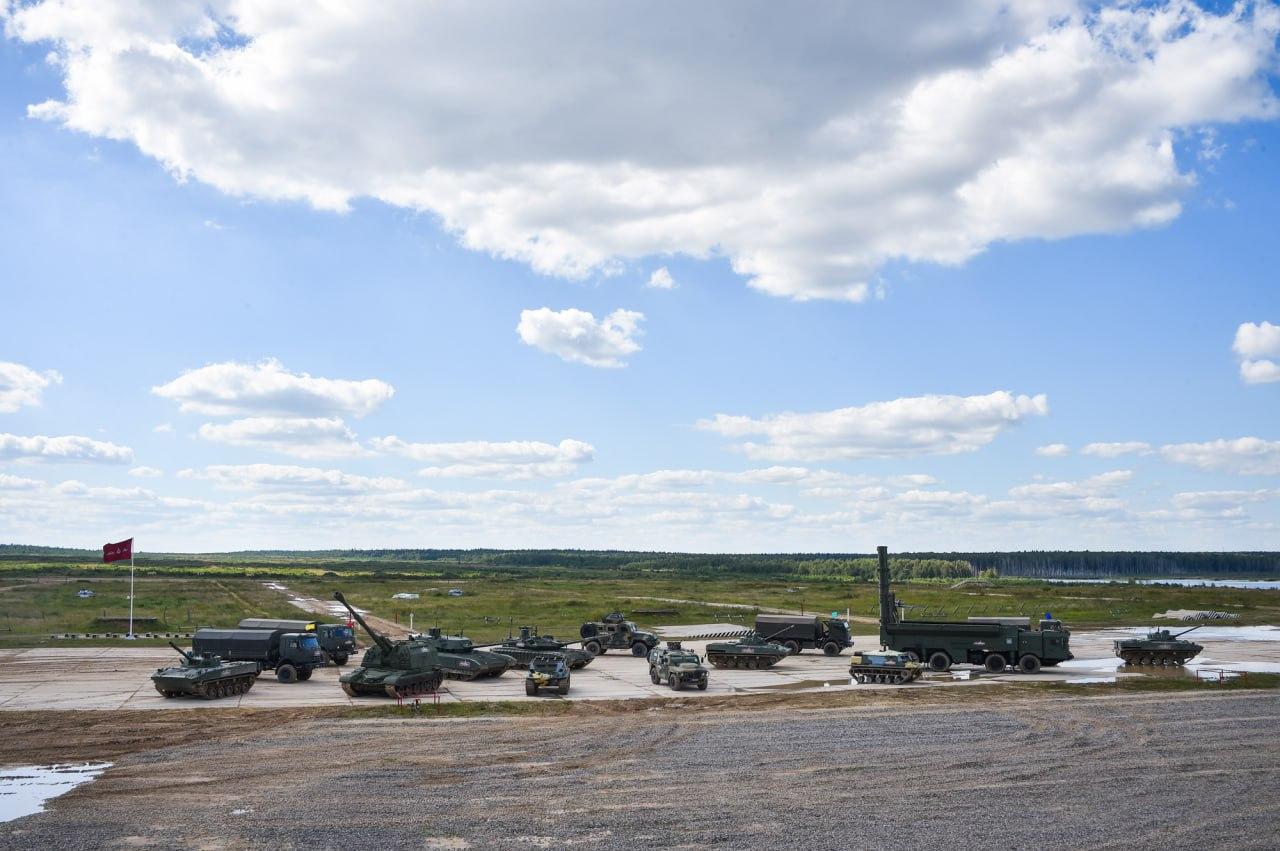
Tank for Reconnaissance, Target Designation, Battle Command
The T-14 "Armata" plays the role of a leader, said military political scientist Alexander Perendzhiev. It has an uninhabited turret, a universal tracked platform, as well as 11 subsystems that help the military perform a wide range of tasks, including controlling electronic warfare equipment, artillery and air defense.
In fact, various types of communication are integrated into the T-14 "Armata", including communication with drones and reconnaissance equipment. Thanks to this, the tank is excellent for reconnaissance, target designation, fire adjustment of self-propelled guns, T-90s and air defense systems. Another advantage of the T-14 is its ability to launch an onboard reconnaissance drone with a radar station.
The tank is equipped with protection that can intercept anti-tank shells and blind anti-tank guided missiles
This is indeed a very powerful combat unit, the expert summarized
Technical Characteristics of the T-14
The T-14 "Armata" tank is produced by UVZ. In the front of the combat vehicle there is an isolated armored capsule for three people.
- Multi-layer armor
- Dynamic protection "Malachite"
- Active protection complex "Afghanit"
- Gun 2A82-1M caliber 125 mm
- Firing range of guided missiles - up to 8 km
The tank was first presented in 2015, and began to be operated in 2021.
Read on the topic:
T-14 Compared to Israeli Merkava
Rostec Showed the Maneuverability of the T-90M "Proryv" Tank on a Snowy Training Ground
UVZ-Developed T-62M Equipped with a Roof to Protect Against Drones
Never miss our newsAdd this site to your preferred sources to see us more oftenAdd on Google

















