For the first time in the history of science, scientists at the Institute of Cytology and Genetics of the Siberian Branch of the Russian Academy of Sciences (IC&G SB RAS) have succeeded in reducing the nicotine content in tobacco plants several times over. This scientific breakthrough opens up new prospects for agriculture and the pharmaceutical industry.

Scientists emphasize that the task of obtaining tobacco plants with a reduced nicotine content has been set before many scientific groups around the world. However, the difficulty lay in the fact that the synthesis of the nicotine molecule was controlled by three families of genes at once, which complicated the genome editing process. Using the method of multiplex genome editing, scientists at IC&G SB RAS have developed genetically stable lines of tobacco plants with switched-off genes that control nicotine synthesis. The patent for the "method of obtaining non-transgenic mutant tobacco plants with reduced nicotine content" was obtained by scientists on January 24.
According to Sofya Gerasimova, a senior researcher at the institute, the work has opened up new horizons in the field of genetic modification of cultivated plants. Switching off certain genes led to different results, but ultimately allowed scientists to obtain patents for the two most promising ways to reduce the nicotine content in tobacco. The first method allows you to reduce the nicotine content in plants by half, while they even become slightly larger than the original ones, the second method allows you to reduce the nicotine content by five or more times.
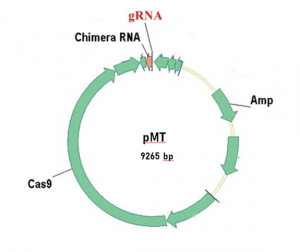
Nina Kostina, a researcher at IC&G SB RAS, noted that these results are important not only for science, but also have practical applications. The created plant lines can serve as the basis for creating tobacco varieties with a reduced nicotine content, which, of course, will not go unnoticed among smokers. The resulting plants can be used in the production of recombinant proteins, where a high content of nicotine and similar alkaloids is undesirable. Thanks to the possibility of getting rid of transgenicity in subsequent generations from self-pollination, this method simplifies the process of using tobacco in industry. In addition, such tobacco can be used as a bioreactor for the accumulation of useful substances or as a feed base for breeding insects, which opens up new prospects for scientific research and agriculture.
Compared with known methods, such as RNA interference, the new method has significant advantages. RNA interference, although it allows to reduce the nicotine content, has disadvantages, such as obtaining regenerants with a very wide range of nicotine content and instability of suppression. The development of Russian scientists allows to obtain genetically stable lines of tobacco plants with a reduced nicotine content.
Earlier www1.ru reported on another interesting invention of Russian scientists - wine for weight loss. Scientists of the Russian Biotechnological University managed to obtain a product that preserves the aroma, taste and strength of wine, which, at the same time, was enriched with bioadditives for a positive effect on the body.
Never miss our newsAdd this site to your preferred sources to see us more oftenAdd on Google

















