Translated with AI from the Russian original.
Physicists from the Center for Advanced Methods of Mesophysics and Nanotechnology at MIPT and several universities in France have discovered a new promising magnetic material. It is called BaFe2(PO4)2, or more simply, BFPO.
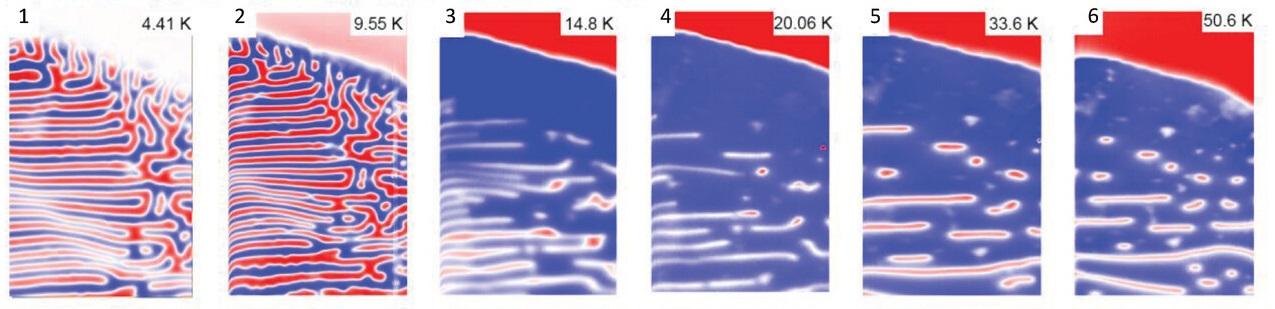
As noted in the journal Small Methods, the material is a path to creating non-volatile memory for hard drives with ultra-high density information storage.
How BFPO Properties Work
Typically, bits of information on magnetic disks are stored by correctly magnetizing domains - small areas on the working surface of the hard drive.
When it is magnetized, the atomic spins in the material change their position. If they are oriented only up, or only down, then you get zero or one - one bit of information.
With modern materials used, one domain equals one bit. But it is possible to increase the number of bits in a domain.
It is necessary to use a material for the hard drive, when magnetized, the atomic spins will look in different directions. This is the so-called intermediate state. At the same time, the spins in it must be resistant to demagnetization, so that the data in the disk memory is not erased.
It is these properties that the atomic spins of BFPO possess. Scientists have found that the material in the intermediate state is stable even at temperatures below 15 Kelvin. In Celsius - this is freezing at -258.15 degrees. At this temperature, there is a phase transition from a soft magnet to a superhard one.
To demagnetize and lose its memory storage properties, this material would require a very large magnetic field — more than 14 Tesla.
BFPO Research
The work was carried out in Russia, using cryogenic magnetic force microscopy. The equipment and technologies allowed this.
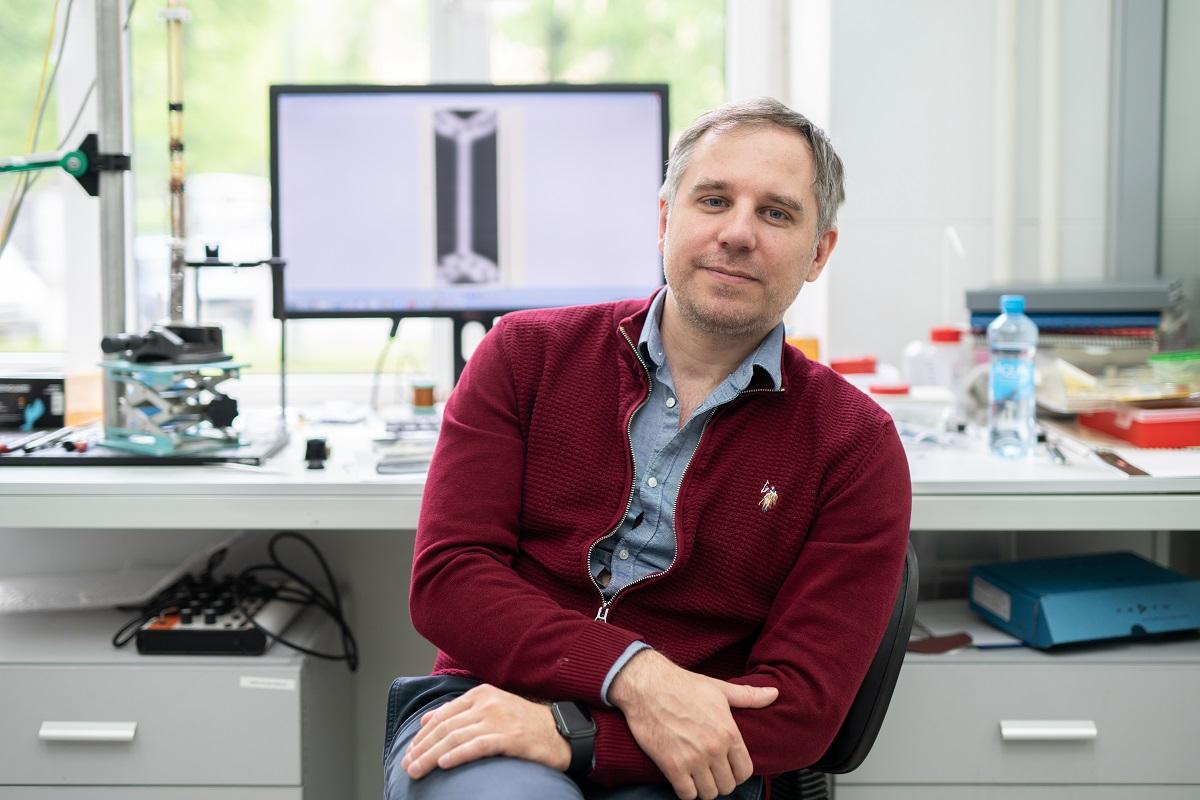
We have demonstrated for the first time its [BFPO] domain structure and its dynamics under the influence of an external magnetic field and temperature. It should be noted that such a study could not be carried out in France. But we also had to work hard: the studied crystals have microscopic dimensions, and for the study they had to be placed on a specially prepared substrate with a micromanipulator. They are also insulators, which leads to the accumulation of electric charge on their surface and additional, harmful to us, interaction with the cantilever.
Stolyarov noted that BFPO is «rich in various physical properties». According to him, the material can be useful in microelectronics.
In addition, BFPO can be used in superconducting digital and quantum electronics, where there is an urgent need for cryogenic non-volatile memory. For this sector, hard drives with ultra-high density information storage can be produced from the new material.
Never miss our newsAdd this site to your preferred sources to see us more oftenAdd on Google

















