Neurobiotics, a company from Zelenograd, has developed a technology that allows controlling the Geoskan Pioneer Mini drone with the power of thought. This was reported by the company's press service.
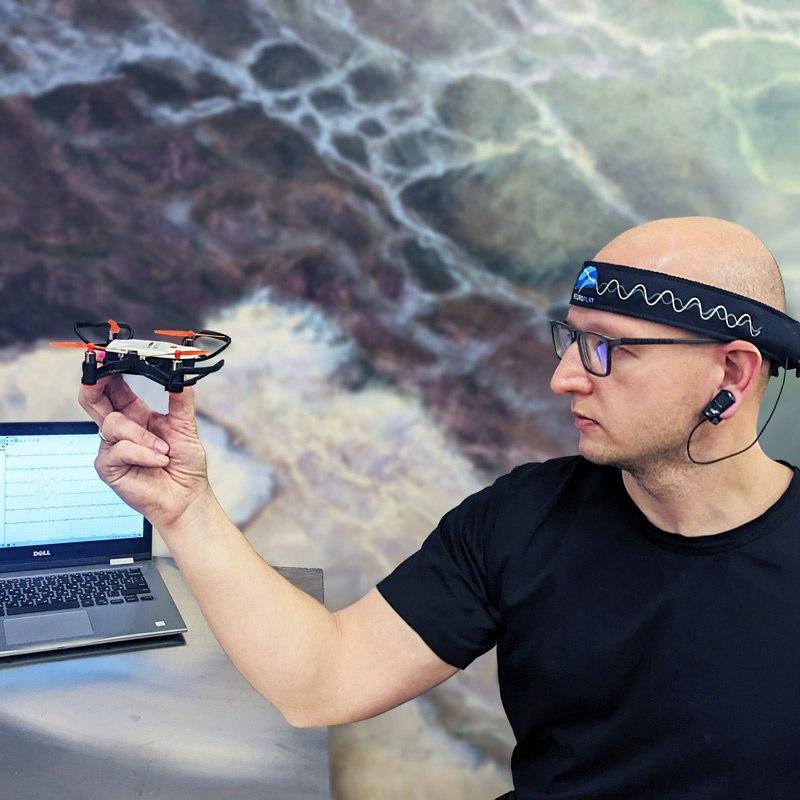
It is noted that drone control became possible thanks to the NeuroPlay neurointerface. Programmers shared a Python script written on Github, which connects to the Pioneer Mini and creates an http server, to which the NeuroPlayPro application connects.
Control occurs as follows. The operator puts on an optorhythmograph device on their head, which records mental processes. As explained in Geoskan, for the drone to take off, the operator needs to "strain": think about the copter gaining altitude and say "Up!". When the operator relaxes, the Pioneer Mini begins to descend.
The Pioneer Mini drone from Geoskan is a quadcopter designed for teaching robotics in the classroom. The device was developed within the framework of the STEM education concept (Science, Technology, Engineering, Mathematics - a model that combines natural sciences and engineering - editor's note www1.ru). The Pioneer Mini can perform autonomous flights indoors, according to the parameters specified in the program.
Earlier it was reported that Whoosh successfully tested the possibility of controlling a scooter using Neiry neuro-headbands. The scooter control technology was implemented by Russian developers.
Never miss our newsAdd this site to your preferred sources to see us more oftenAdd on Google

















