In connection with the appearance of the ATACMS missile system from the United States near the Russian borders, the special project of the Rossiyskaya Gazeta "Russian Weapons" analyzed how Russia can counter ATACMS attacks.
What is ATACMS
ATACMS (Army TACtical Missile System) is an army tactical missile system from Lockheed Martin using surface-to-surface missiles. ATACMS missiles reach speeds of up to 1500 m/s and, according to publicly available data, can fly up to 300 km to the target.
They can maneuver during flight and are highly accurate. The warheads of these missiles are high-explosive fragmentation, and there are also cluster modifications. The detonation can occur either upon direct impact or several meters from the ground, creating a barrage of fragments. This is dangerous for civilians and the military.
How Russia Will Respond to ATACMS
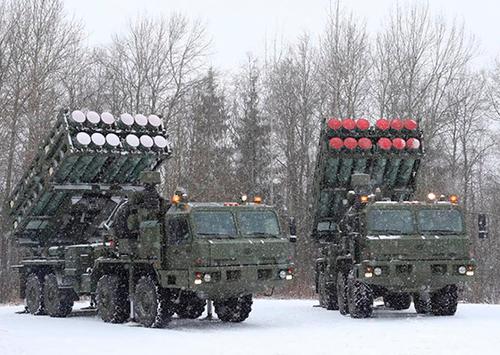
Experts at Russian Weapons believe that Russian air defense systems will cope with this missile. The S-350 Vityaz air defense system from Almaz-Antey Air and Space Defence Corporation is the most promising in this regard.
It works in close cooperation with the long-range S-300V4, S-400 and S-500 systems, designed to destroy long-range radar detection aircraft, as well as strategic and tactical aviation at long ranges.
Deployment takes only five minutes. The Vityaz's target engagement range is up to 60 kilometers, and the altitude is up to 30 kilometers. It can engage targets at speeds up to 4800 meters per second.
It is noted that the basing locations of ATACMS can be hit by Russian Iskander operational-tactical complexes of various modifications from the Engineering Design Bureau (part of the Rostec State Corporation structure).
The range of their missiles, depending on the modification, reaches 500 km, and they can be deployed anywhere without prior preparation. Also, the locations of ATACMS can be hit by a complex of long-range cruise missiles and guided aerial bombs in service with Russia.
Never miss our newsAdd this site to your preferred sources to see us more oftenAdd on Google

















