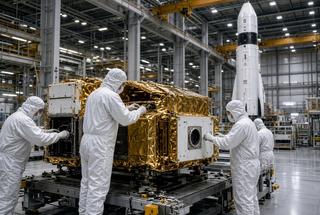
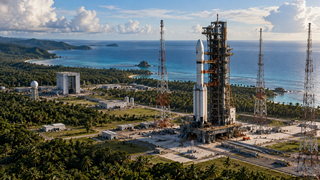
Rostec has developed a technology that, according to its creators, has no analogues in Russia or abroad: a unique non-hermetic housing-thermostat for the first Russian radar Earth remote sensing satellite "Condor-FKA" allows to increase the spacecraft's lifespan by four times.
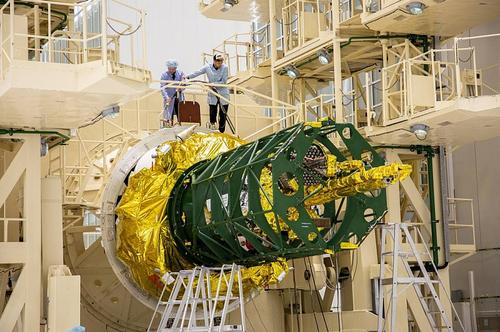
The sealed housing of spacecraft eventually deteriorates from collisions with space debris, which disrupts the temperature regime of the equipment and causes the satellite to fail. The non-hermetic housing of the "Condor-FKA", manufactured by ONPP "Tekhnologiya", maintains the temperature necessary for the satellite to operate in non-hermetic conditions.
«There are more than 70 satellites in orbit today that use Rostec products, and "Condor-FKA" is one of them. When creating its housing, a technology was used that has no analogues in Russia or abroad. The housing of the device is not hermetic, which made it possible to increase the lifespan from 3-5 to 10-12 years and create it in a record short time – less than three months. In addition, thanks to this technology, the weight of the satellite was significantly reduced, and its internal volume was increased by 15%», – said Andrey Silkin, General Director of ONPP "Tekhnologiya".
Never miss our newsAdd this site to your preferred sources to see us more oftenAdd on Google