Moscow Polytechnic has compiled a top 5 list of the university's breakthrough inventions: from rehabilitation devices to new alloys for aircraft engines and electrodes for electric vehicle batteries. Some projects have already undergone testing, while others are at the prototype stage.
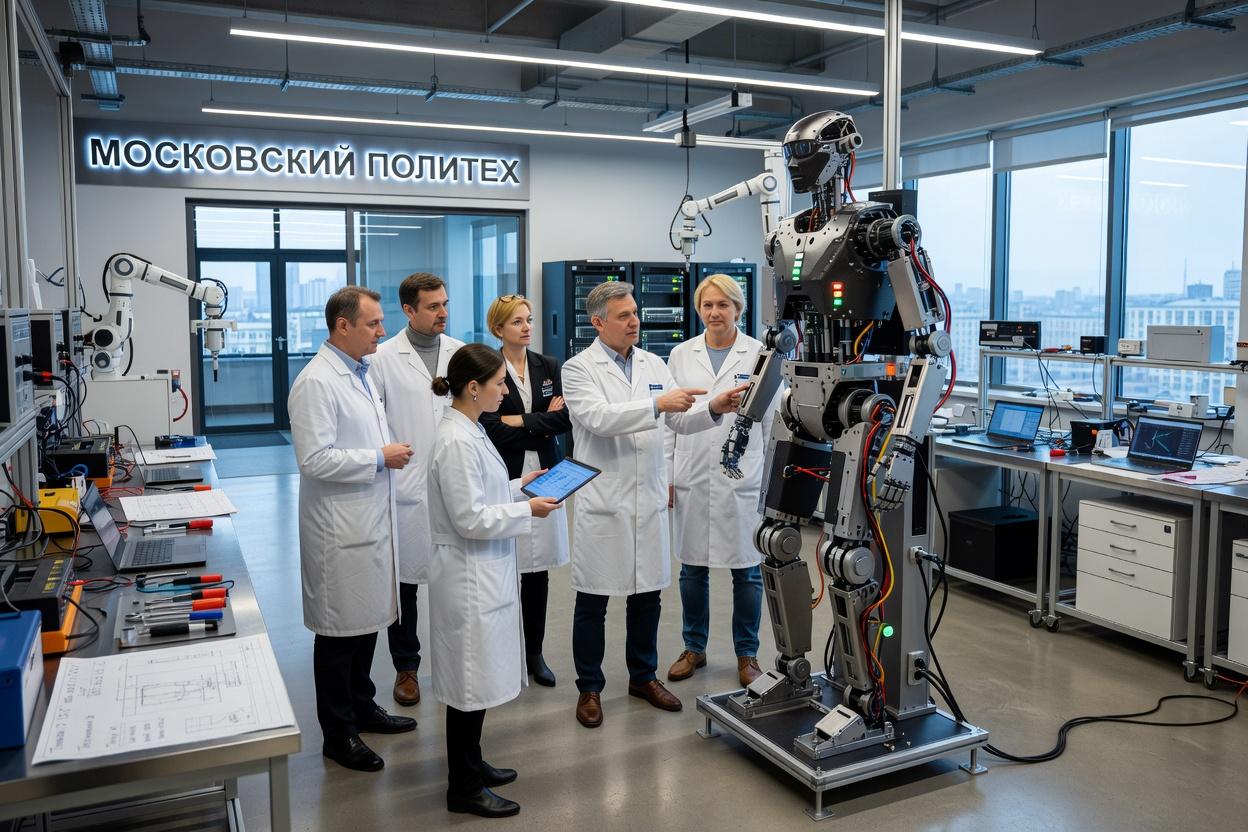
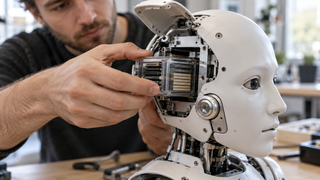
Exoskeleton control system that recognizes the intention to move
Moscow Polytechnic specialists have created a system that synchronizes a rehabilitation exoskeleton with the patient's intention to start moving. The device reads three physiological indicators: electroencephalogram, electromyogram of leg muscles, and electrodermal response of the skin. Based on these, a “movement intention marker” is formed, and the exoskeleton selects one of four assistance modes – from fully automatic to manual. 40 patients after ischemic stroke participated in the trials. In the experimental group, the increase on the Berg Balance Scale was 22 points, in the control group – 12. Currently, developers are working on the accuracy of signal classification and the exoskeleton's reaction speed.
Reusable biosensor for creatinine determination
The university is creating a reusable biosensor for creatinine control – a key indicator of kidney function. The project is supported by a grant from the Russian Science Foundation, led by Associate Professor Alexander Kim.
Scientists propose placing enzymes inside polyelectrolyte microcapsules. This allows the same enzyme to be used dozens of times, unlike single-use test systems. The biosensor is based on a cascade of three enzymes that sequentially break down creatinine with the formation of hydrogen peroxide, which is detected by an electrode.
The developers expect the device to remain operational for at least six months and withstand at least 50 measurement cycles. In the future, such a device could be used at home, without a visit to the laboratory.
New alloys for aircraft engines
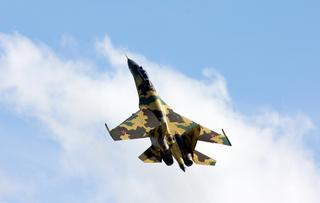
Together with researchers from NUST MISIS, Moscow Polytechnic scientists are working on new generation powder alloys based on titanium aluminides for 3D printing of aircraft and rocket engine parts.
The task is to simultaneously reduce the weight of parts and increase their strength and heat resistance. According to calculations, the density of new alloys will decrease to 4–4.2 g/cm³, the strength will exceed 1100 MPa, and the operating temperature range will rise above 650°C. Parts with the same reliability will weigh 10–15% less, which directly translates into fuel savings. Laser printing parameters for each composition are planned to be selected using machine learning.
Electrodes for electric vehicle batteries
Moscow Polytechnic is developing new electrode materials for lithium-ion and sodium-ion batteries and supercapacitors. The basis is thin films of nanostructured tungsten oxide, deposited by electrochemical deposition.
The samples already obtained demonstrate specific capacitance up to 630 F/g for supercapacitors and 685 mAh/g for lithium-ion batteries, which corresponds to the level of the best world analogues. A hybrid system, where the supercapacitor takes on peak loads and the battery provides range, allows extending battery life. The project is being carried out with the support of a grant from the P. L. Kapitsa competition within the framework of "Priority 2030".
Experimental production site for electronic device assembly
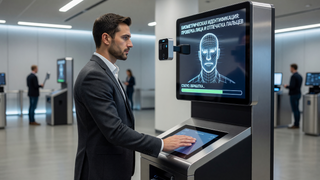
The university is creating a full-cycle contract development and assembly center for electronic devices – from technological audit and design documentation to serial assembly of radio-electronic products.
The site is equipped with automatic optical inspection, in-circuit and functional testing, SMD and THT technologies. The center will become the production base of the Advanced Engineering School of Technological Leadership FDR, which develops electric transport and unmanned systems. Potential customers are R&D divisions, startups, and industrial companies. In parallel, the center will train personnel for the radio-electronic industry – operators, technologists, and quality engineers.
Read more on the topic:
- Quantum Computers Won't Break It: A New Data Protection Method Developed at Moscow Polytechnic
- Brains for UAVs go into production: Moscow Polytechnic launches full-cycle electronics assembly site
- Combine harvester without a driver? Moscow Polytechnic University develops AI system for precise harvesting
Never miss our newsAdd this site to your preferred sources to see us more oftenAdd on Google