On June 5, 2026, Rosaviatsiya officially issued a re-issued type certificate for the Il-114-300 turboprop. The aircraft is legally ready for serial production. However, regional airlines continue to debate whether the new aircraft can fully replace the An-24, which, although 50 years old, is unpretentious.
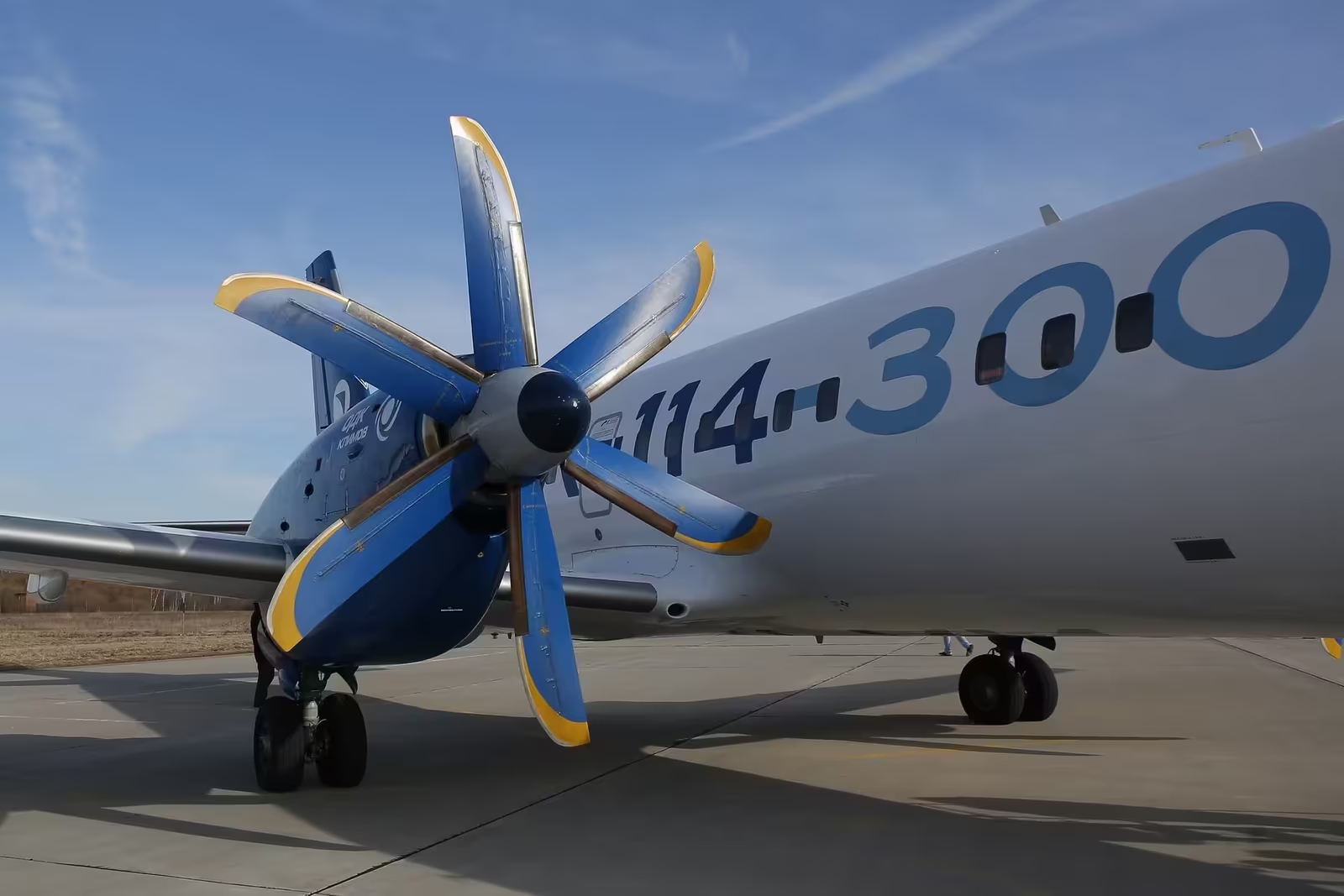
The main subject of disputes among engineers and operators has been the technical limitations of the "low-wing" design and the specifics of the AV-112-114 propellers' operation near the ground surface.
48 Centimeters Above Ground Level
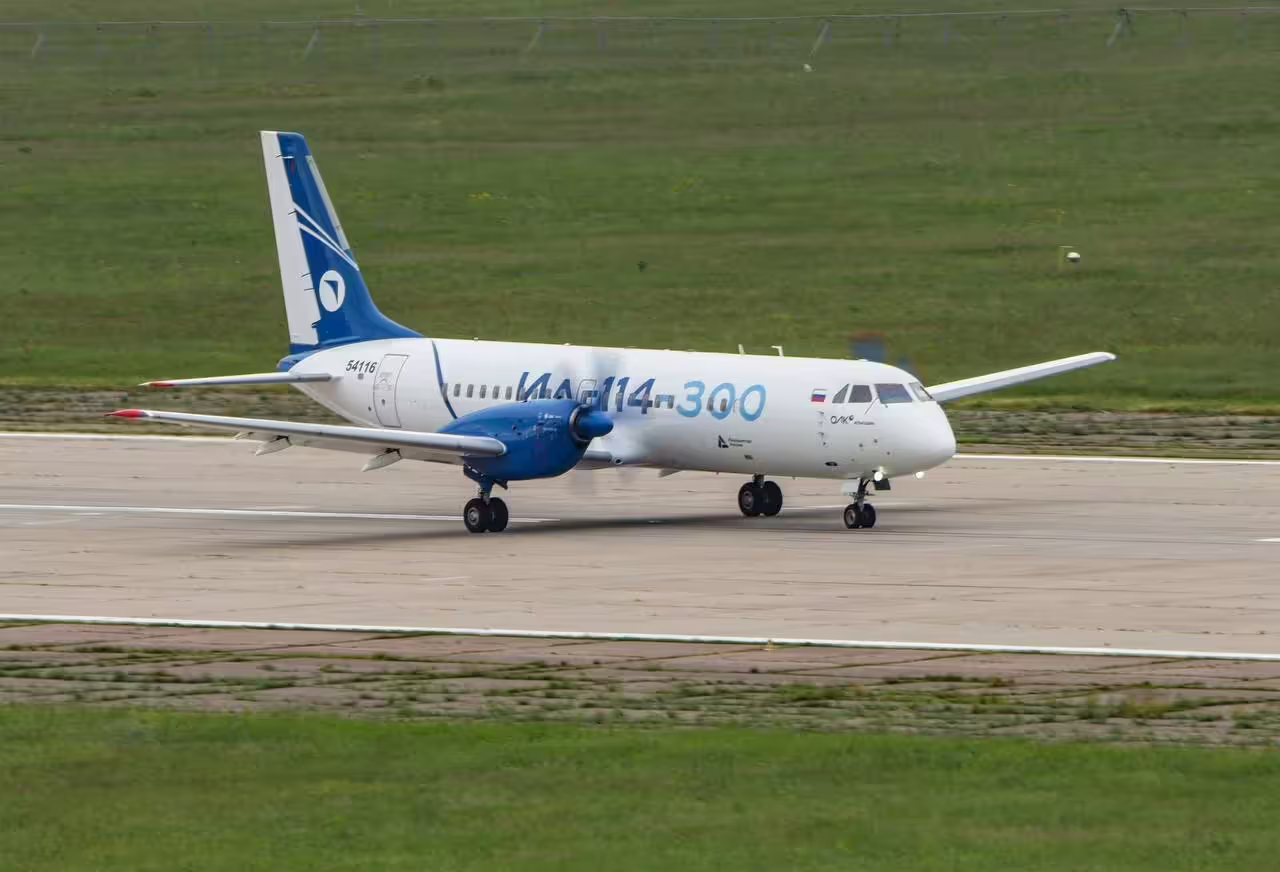
Ilyushin designers built the Il-114-300 with a "low-wing" design – the wing is located in the lower part of the fuselage. The modernized version was equipped with new TV7-117ST-01 engines with six-bladed AV-112-114 propellers. The diameter of the propellers, compared to the basic Soviet version of the Il-114, increased to 3.9 meters.
Because of this, the distance from the lower edge of the blade to the ground (the so-called clearance) is only about 40–48 centimeters.
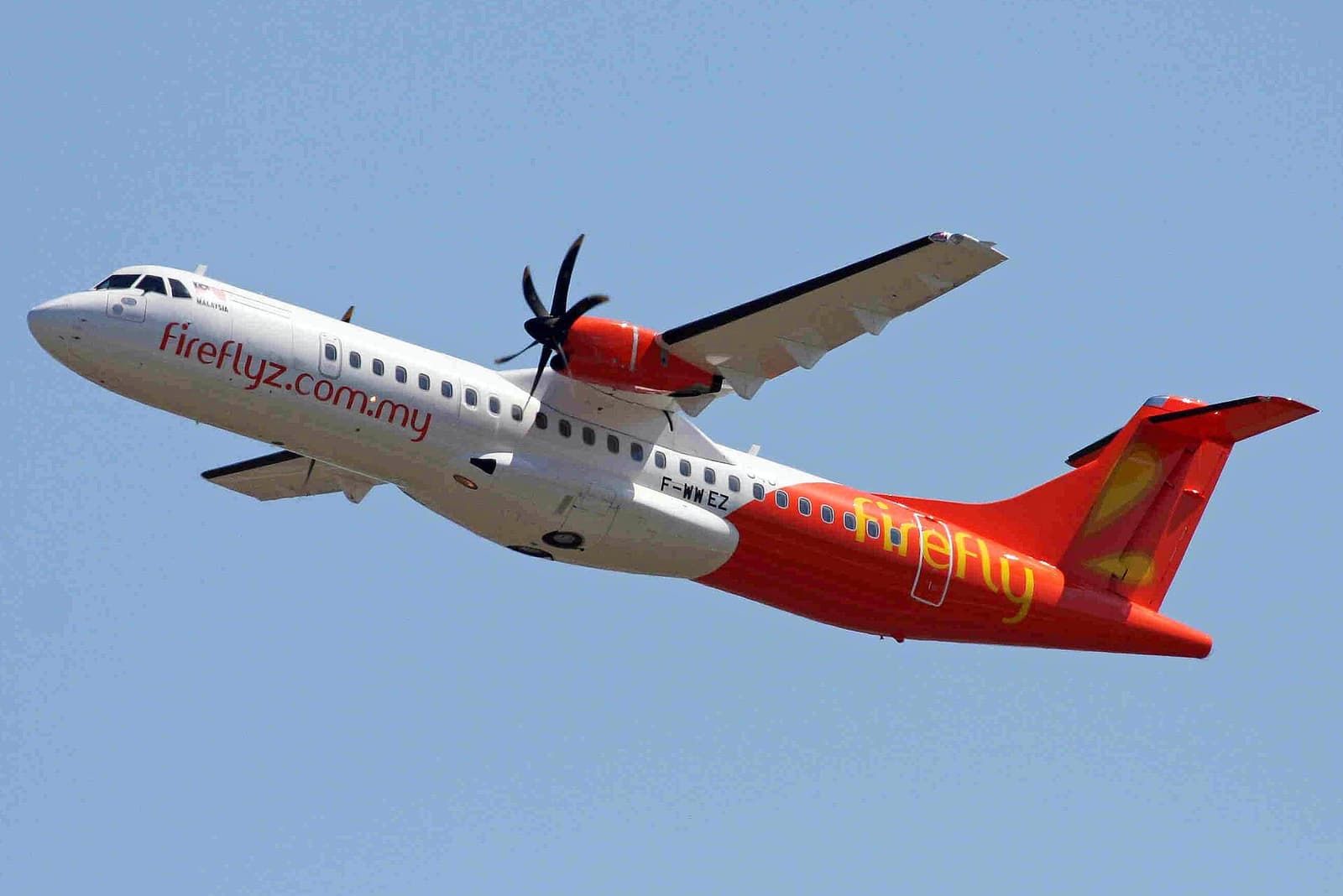
For comparison, the main foreign competitors from ATR or Dash 8/Q400 have the wing located at the top (a "high-wing" design), and the propellers are high above the ground – at a height of up to 97 centimeters.
Risk of FOD Damage: The Physics of the Process
When engines operate on the ground, a vortex rope effect occurs. The propellers create a powerful local vacuum, forming an air vortex from the ground surface directly to the blades. This "vacuum cleaner" sucks small stones, sand, pieces of ice, and foreign objects from the runway surface.
For aviation, this is a classic source of FOD (Foreign Object Damage) from foreign objects. Flying stones cause abrasive wear and pitting on propeller blades. Gravel ricochets and punctures the lower fuselage skin. Small fractions can disrupt the operation of the engine's components.
If the Il-114-300 was created to replace the veteran An-24 and An-26, then a stark contradiction arises here. The "Ans" are high-wing aircraft with propeller clearance of more than a meter. They are capable of safely landing and taking off even from unprepared dirt, snow-covered, and muddy regional runways in Siberia and the Far East.
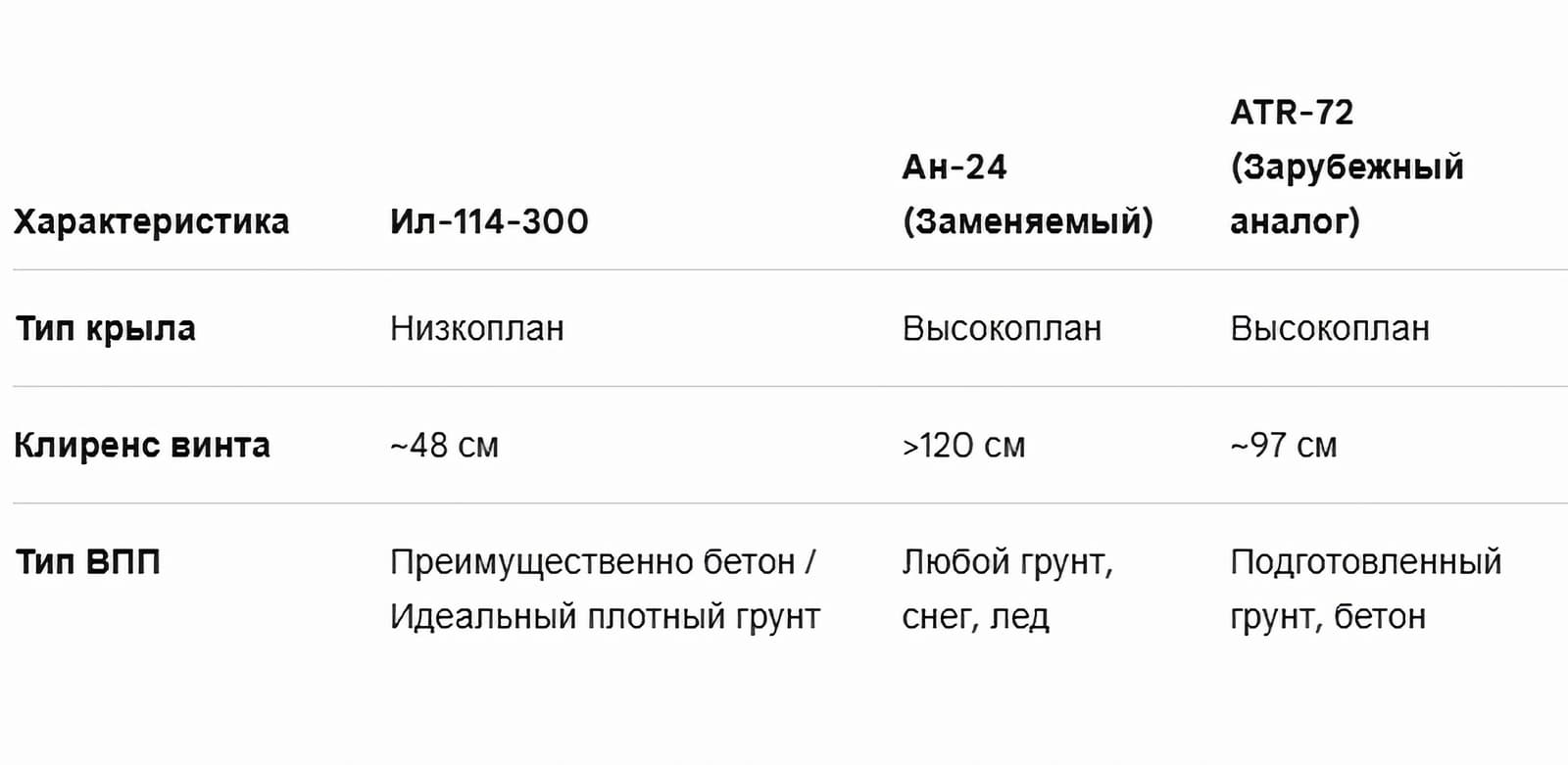
The Il-114-300 with its current clearance will require perfectly clean artificial runways (asphalt or concrete), which simply do not exist in many remote settlements of the North.
The Problem is Being Refined
PAO "Il" designers are aware of the operators' concerns and are consistently modernizing the airframe. In particular, the wing's transverse V-shape was increased, which allowed the engine nacelles with engines to be slightly "raised" higher above the concrete.
Aviation expert Oleg Panteleev noted that engineers also devised some kind of engine protection, which is installed additionally. However, no photos have been released to the public yet, so it is impossible to judge this.
Read more on the topic:
Never miss our newsAdd this site to your preferred sources to see us more oftenAdd on Google