Scientists have long been observing solar flares. Studies have shown that the Sun can erupt with powerful explosions approximately once a century.
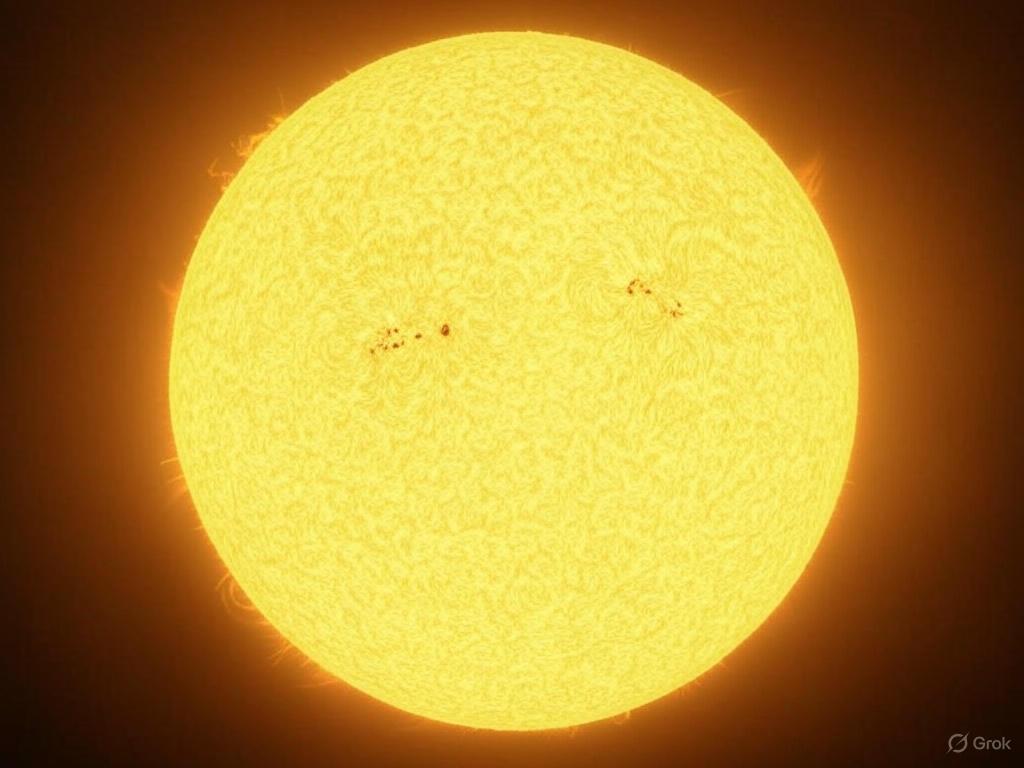
Sudden bursts of light with the emission of subatomic particles are called solar flares. The most powerful of these was recorded in 2003. Scientists suggest that the Sun may produce even more powerful flares, known as superflares. They can release up to 10^29 joules of energy, which corresponds to the Sun's radiation for 20 minutes.
A recent study in the journal Science in late 2024 identified 2,889 probable superflares on 2,527 sun-like stars. This indicates that approximately one such flare occurs once a century.
Despite the potential power of superflares, the consequences for life on Earth would be minimal due to our planet's magnetic field, which acts as a shield against incoming subatomic particles. The atmosphere would also absorb most of the high-energy electromagnetic radiation.
However, technology may suffer. A huge flare could disable electronics on all but the most protected satellites and disrupt power grids. This could lead to widespread and prolonged power outages.
Earlier, www1.ru reported that spots of incredible size have been recorded on the Sun at the Crimean Astrophysical Observatory.
Read more on the topic:
Several magnetic storms are expected on Earth in May 2025: forecast by Russian astronomers
Hold on to your heads: magnetic storms have increased 2.5 times compared to last year
Never miss our newsAdd this site to your preferred sources to see us more oftenAdd on Google