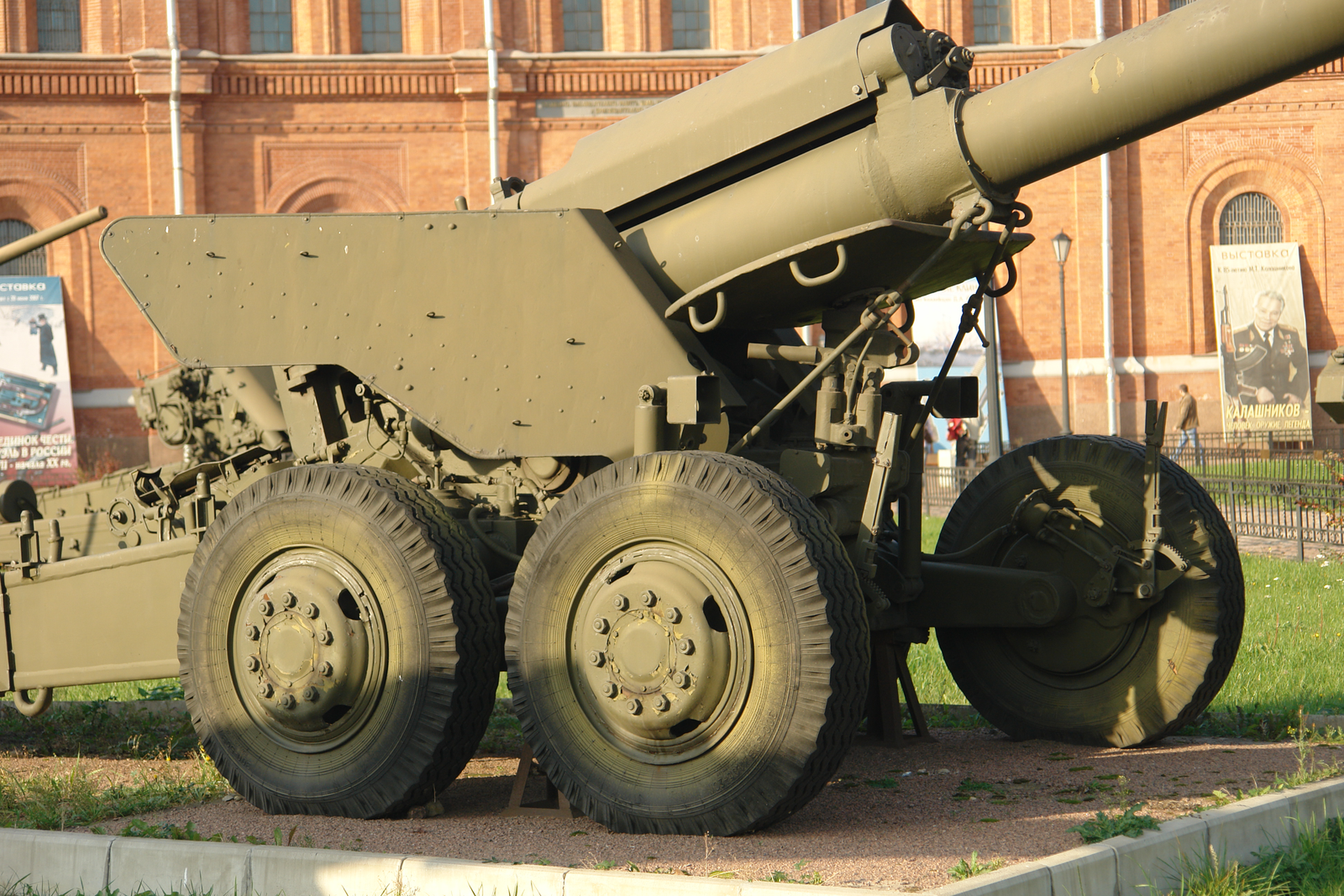
The crews of 152-mm "Hyacinth" guns for the first time began firing at a distance of 40 km thanks to new "Berkut" ammunition. Previously, the firing range was 28.5 km with a conventional OF-29 high-explosive fragmentation shell and up to 33.5 km with a ZOF30 active-rocket shell.
Military expert Boris Dzherelievsky explained that now the military has the opportunity to use long-range artillery as an alternative to drones.
Which is more powerful, to a certain extent cheaper, requires less involvement of personnel, and nevertheless gives very good results.
By reaching the 40 km mark, "Hyacinth" eliminated the previous technological advantage of NATO artillery in terms of range.
Now the Russian gun is capable of conducting counter-battery combat with its main Western counterparts - the German PzH 2000 self-propelled howitzer, the French CAESAR, and the Swedish Archer, whose firing range is 40–42 km.
Earlier it became known that the Russian military replaced the barrel liners of an artillery gun and improved the accuracy of combat operations.
Read more on the topic:
- When rate of fire is only a plus: "Hyacinth-B" crews began preparing for fire in record time
- The way to improve the "Hyacinth-S" self-propelled gun to impose counter-battery combat on the Western Paladin, Caesar and Archer is named
- Guns instead of butter: powerful shots of the combat work of the 2A36 "Hyacinth-B" gun
Never miss our newsAdd this site to your preferred sources to see us more oftenAdd on Google